
Reviewed · GOBUSTAN & MUD VOLCANO TOURS
Gobustan & Absheron Tour with Free Old City Walking Tour
The best thing about this tour is the way it links ancient rock art with Azerbaijan’s still-burning fire sites. In one long day, you move from prehistoric carvings at Gobustan to the flames of Yanar Dag, then finish among the stone lanes of Baku’s Old City. I like the range, and I like that the Old City walk adds real time in Baku rather than treating the capital as a pickup point. The main caution is the length: 12 hours is a full day, and entry fees are not included in the basic $3 price.
I also like the chance to see mud volcanoes, one of Azerbaijan’s oddest natural sights, though the exact plan can change with weather and road conditions. Guides including Gaya, Guya, and Aydin have been praised for clear answers, strong knowledge of local culture and religion, and an engaging approach. Bring sturdy shoes and extra cash, since the mandatory mud volcano fee is payable on site.
Key points at a glance
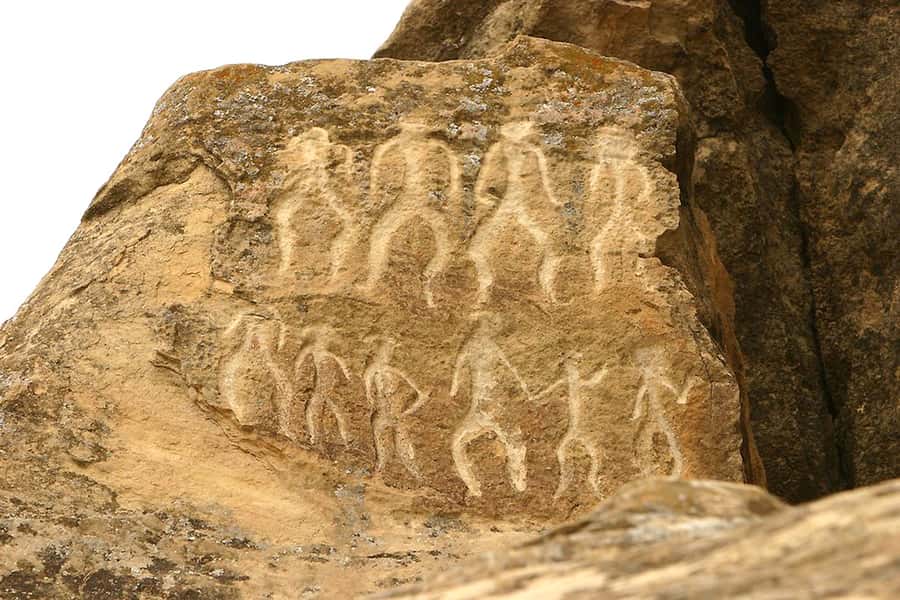
- Gobustan’s prehistoric carvings: See hunting scenes, dances, rituals, and signs of early human life carved into the rocks.
- Mud volcanoes may be part of the day: Rain redirects the tour to the Mud Volcanoes Complex, where a 30 AZN cash fee still applies.
- Azerbaijan’s fire story comes alive: Visit the Ateshgah Fire Temple and the natural flames of Yanar Dag.
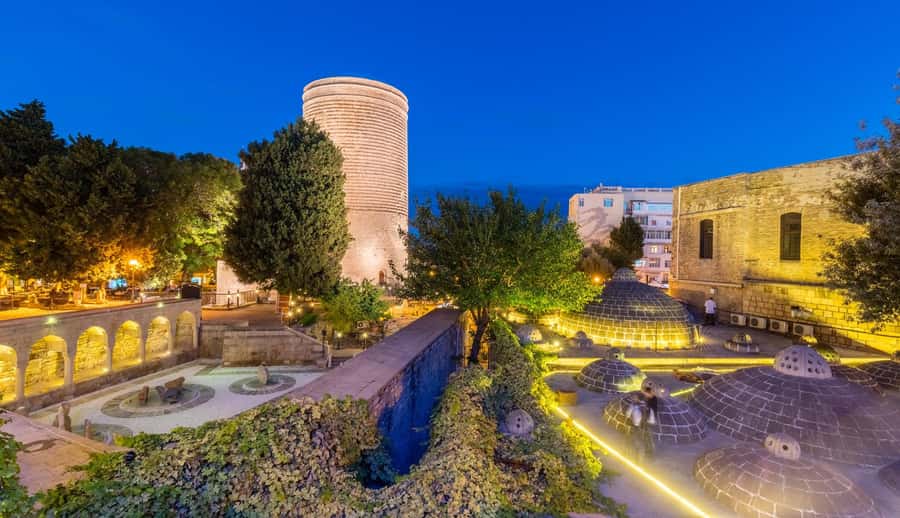
- Old City time is on foot: Walk past the Maiden Tower, Shirvanshahs’ Palace, city walls, caravanserais, and traditional stone buildings.
- The low headline price needs context: The $3 base cost does not include standard entrance tickets unless you select the entrance-included option.
- Guides are a major part of the value: English, Russian, and Arabic tours are available, with Gaya, Guya, and Aydin among the named guides associated with the experience.
Why this full-day route works
Azerbaijan can feel scattered when you first look at a map. Gobustan lies outside Baku, the Absheron Peninsula reaches in another direction, and the Old City is in the middle of the capital. This tour solves that problem by joining the major sights into one organized day.
You get three different kinds of history. Gobustan shows human activity from tens of thousands of years ago. Ateshgah explains the religious side of Azerbaijan’s fire tradition. Icherisheher, Baku’s Old City, brings you into the medieval city of caravanserais, defensive walls, palaces, and narrow stone streets.
I think the route suits you best if this is your first stay in Baku and you want a broad introduction without arranging several separate trips. It is less suited to anyone who prefers a slow pace, long meals, or time to study every museum display. The schedule covers a lot of ground.
The tour lasts about 12 hours, with hotel pickup and drop-off and transport between the main sites. The Old City section is different: this part is a guided walk, so expect time on your feet over uneven stone surfaces.
More Gobustan and mud volcano runs:
- Baku: Gobustan, Mud Volcano, Fire Mount, Temple Lunch Entry
★ 4.9 · 3,246 reviews - BEST Gobustan, Volcanoes & Absheron Fire Tour (Group or Private)
★ 5.0 · 1,254 reviews - Gobustan and Absheron tour (All inclusive)
★ 5.0 · 1,014 reviews
Gobustan’s carvings and the first chapter of human history
Gobustan National Park is the day’s most important stop for ancient culture. Its rock carvings show early people hunting, dancing, taking part in rituals, and living in a world very different from modern Azerbaijan.
The carvings are not presented as isolated pieces of art. Their value comes from the scenes they record. You can look for human figures, animals, boats, hunting activity, and group dances, then use the guide’s explanation to understand how these images fit into early life. The exact details you notice will depend on the route and the guide, but the site gives you a direct visual link to people who lived here thousands of years ago.
I recommend looking closely at the rock surfaces rather than rushing from one carving to the next. Some images are easier to make out than others, and sunlight can affect what you see. A guide makes a real difference here because the site needs context. Without it, you may see scratches and shapes. With it, you begin to read the rocks as a record of daily life and ceremony.
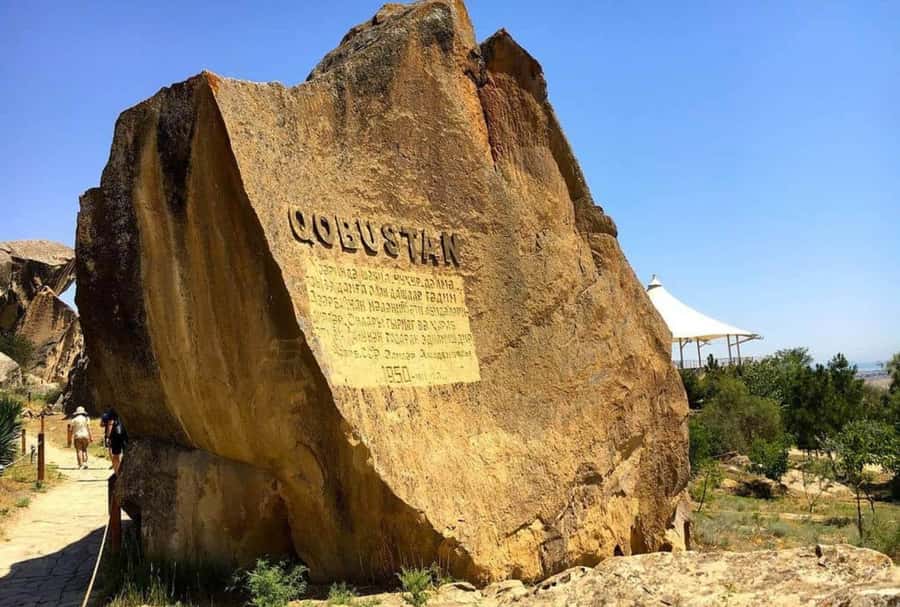
Gobustan is a UNESCO World Heritage Site, and that designation reflects both the age of the carvings and their importance as a group. This is not simply a scenic stop for photographs. It is an archaeological site where small details matter.
The modern interactive museum adds a useful second layer. After seeing the original carvings, you can use the displays to learn more about the people, animals, tools, and natural setting connected with Gobustan. I like this pairing because the museum helps explain what you have just seen instead of replacing the outdoor visit.
Wear shoes with a firm sole. The ground can be uneven, and comfortable footwear will make the outdoor portion far more pleasant.
Mud volcanoes and a changeable route
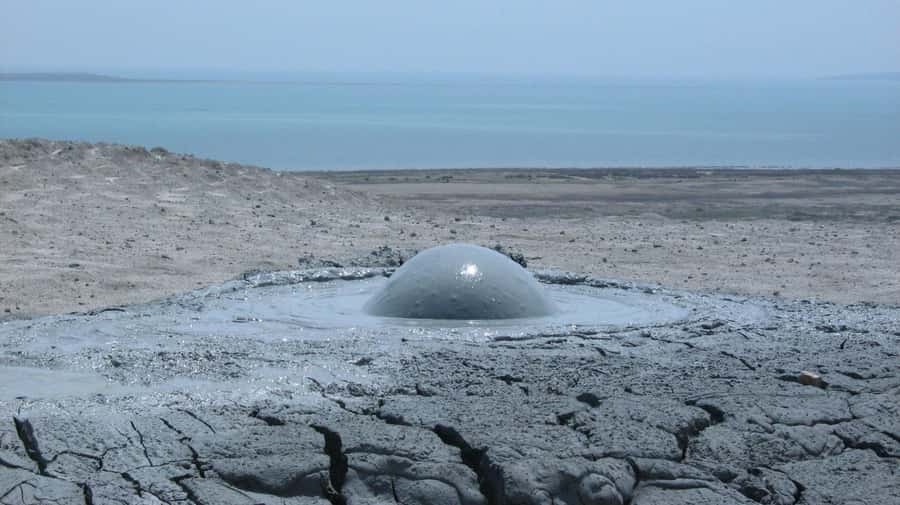
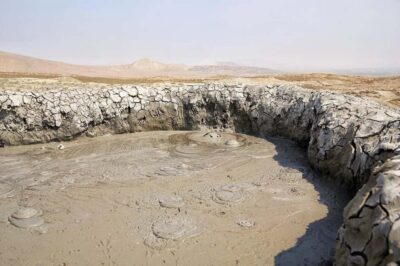
Mud volcanoes are one of Azerbaijan’s most unusual natural features. If weather and road conditions allow, the tour may include the Mud Volcanoes Complex near Gobustan. Instead of hot lava, these cones release cool mud and gases, creating a strange, bubbling setting.
The plan is weather dependent. Rain redirects the tour to the Mud Volcanoes Complex, and the fee remains the same even in wet conditions. That is important when comparing the basic price with the actual cost of the day.
The mud volcano visit has a mandatory 30 AZN cash charge. Gobustan admission is 10 AZN, while Ateshgah and Yanar Dag together cost 15 AZN under the stated fee structure. That brings the standard on-site charges to 55 AZN if all listed stops are visited, before food and drinks.
You are advised to bring an empty bottle so you can collect mud as a small souvenir. Use a container you can seal, and keep it separate from anything valuable in your bag. This is a fun detail, but do not treat it as a reason to skip the rest of the site. The volcanoes are brief and unusual; Gobustan’s carvings carry the deeper cultural weight.
Because the tour may adjust this part of the route, ask the guide at the start of the day which version is planned. That will help you understand the timing and avoid surprises about the cash fee.
Ateshgah Fire Temple and the old fire faith
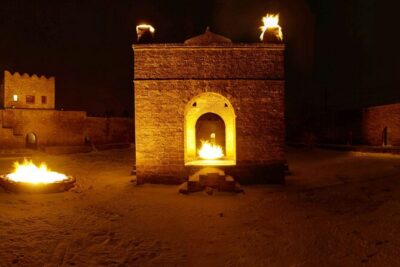
The tour then moves to the Absheron Peninsula, the part of Azerbaijan most closely linked with its fire traditions. Ateshgah Fire Temple is a historical religious complex associated with Zoroastrian fire worshippers and merchants who traveled along the Silk Road.
The site is built around a central fire area and a courtyard of small rooms. Its importance comes from the meeting of religion and travel. Fire held sacred meaning for Zoroastrians, while the temple’s position also connected it with traders and visitors moving through the region.
Atesgah is best understood as a place of belief rather than simply a photogenic courtyard. The guide can explain why fire mattered, how worship took place, and how the temple fits into Azerbaijan’s wider identity as the Land of Fire. The experience is strongest when you take time to look at the individual cells, stonework, and central structure.
The entrance fee is 15 AZN for Ateshgah and Yanar Dag together according to the supplied information. Tickets are not included in the basic package unless you choose the entrance-included option. If you dislike carrying cash or stopping at ticket counters, that upgraded option may be worth considering.
Do not expect a huge complex. Ateshgah is compact, and the visit is more about the story than the amount of ground covered. The guide’s explanation matters here, especially if you are unfamiliar with Zoroastrian traditions or the old trade routes across the region.
More walks inside the old city walls:
- Baku Walking Tour (Old City)
★ 5.0 · 127 reviews - Baku Old City Tour (officially by Old City Tours)
★ 4.5 · 46 reviews - Baku Tour (Old City-Modern Baku)
★ 5.0 · 36 reviews - Baku Old City Wonders: A Walking Tour Through Time
★ 5.0 · 36 reviews
Yanar Dag, where the hillside burns
Yanar Dag means Burning Mountain, though the site is a natural gas fire on a hillside rather than a mountain in the usual sense. Flames rise from the ground and continue burning, showing why fire has such a strong place in Azerbaijan’s national image.
The sight is most striking when you focus on the contrast between the ordinary hillside and the persistent flames. This is not a theatrical show with scheduled effects. It is a natural gas fire, and the point is seeing a phenomenon that has shaped local stories and outside descriptions of the country for centuries.
Yanar Dag is usually a short stop, but it completes the fire theme introduced at Ateshgah. At the temple, people built a place of worship around sacred flame. At Yanar Dag, the fire comes from the earth itself. Seeing both in the same day gives you a clearer idea of how natural conditions helped shape religious traditions.
Admission to Yanar Dag is included in the combined 15 AZN Ateshgah and Yanar Dag fee listed for the tour. Again, the basic $3 booking price does not cover this unless you choose the entrance-included option.
I would not book this tour solely for Yanar Dag. The flames are unusual, but the stop is relatively focused. Its real value comes from the connection to Ateshgah and the wider story of fire worship.
Baku’s Old City on foot
The free Old City walking tour is a useful bonus, but it should not be treated as an afterthought. Icherisheher is a UNESCO World Heritage Site and gives you a close look at Baku’s medieval core.
You can expect narrow stone lanes, old walls, traditional buildings, caravanserais, and major monuments including the Maiden Tower and Shirvanshahs’ Palace. Walking is the right way to see this district. A vehicle would carry you past the details that make the area memorable: doorways, masonry, changes in street level, and the way the lanes open into small spaces.
The Maiden Tower is one of Baku’s best-known symbols. Its exact early purpose has prompted different interpretations, while its thick stone form remains a powerful reminder of the city’s defensive past. The Shirvanshahs’ Palace gives the Old City a more formal royal dimension, with courtyards and buildings connected to the ruling dynasty of medieval Shirvan.
The city walls and caravanserais tell another story. Baku was not only a seat of power; it was also a place where merchants, pilgrims, and other long-distance visitors passed through. That makes the Old City particularly useful for understanding the connection between local culture and the wider Silk Road world.
One practical point: the Old City portion involves walking, and one booking account described the transport for this part as simply using one’s feet. That is not a criticism of the tour. It is a reminder to wear shoes that can handle stone streets and to pace yourself after the longer countryside stops.
The guide can make or break this section. Gaya, also spelled Guya in the supplied information, is praised for explaining Baku’s architecture, history, culture, and religions, and for answering questions promptly. Aydin is also named as an engaging guide who clearly enjoys his work. The guide’s ability to connect buildings with stories is especially useful in the Old City, where a short lane can hold several centuries of change.
Some versions of the walk may also include Little Venice, described as a small and pleasant stop where one booking account finished with tea at a restaurant. Treat that as a possible extra rather than a guaranteed centerpiece, since the main Old City route is the part clearly built into the experience.
What the $3 price really means
At $3 per person, the advertised base price is unusually low for a day with transport, a guide, hotel pickup, hotel drop-off, and a free Old City walk. But you should not read it as the full cost of the day.
The standard package excludes entrance fees to the museums and attractions. The listed charges are:
- Gobustan National Park: 10 AZN
- Mud Volcanoes Complex: 30 AZN in cash, mandatory when that visit is part of the route
- Ateshgah and Yanar Dag: 15 AZN
If you visit all the listed paid sites, plan for 55 AZN in admissions. Food and drinks are also extra. The entrance-included option costs more at booking, but it may be the better value if you want a simpler day with fewer cash payments.
I would compare the final price rather than the headline figure. The base fare is attractive, especially for solo visitors, but the admission charges form a much larger share of the day’s expense. There are no hidden charges according to the provided information, yet the excluded fees should still be part of your budget.
The value is strongest if you would otherwise pay separately for transport to Gobustan, the Absheron sites, and an Old City guide. It is weaker if you plan to visit only one or two places independently and prefer to set your own pace.
Who will enjoy this tour most
I would recommend this day to first-time visitors who want an efficient look at Azerbaijan’s main sights around Baku. It is also a good match if you enjoy archaeology, unusual natural features, religious history, and guided city walks in equal measure.
The route suits you if you like having transport arranged and want an English, Russian, or Arabic-speaking guide. The 4.9 rating from 15 listed ratings, along with repeated praise for the guides’ explanations and friendly manner, suggests that the human side of the tour is one of its strongest features.
You may want a different plan if you dislike long days or want several hours at each stop. Gobustan, the mud volcanoes, Ateshgah, Yanar Dag, and the Old City cover a lot of ground. The reward is variety. The tradeoff is that no single stop receives the relaxed pace of a dedicated half-day visit.
Free cancellation up to 24 hours before departure and reserve-now, pay-later booking add flexibility. Starting times depend on availability, so check the selected date before booking.
Should you book the Gobustan and Absheron tour?
Book it if you want a packed introduction to Baku and its surroundings, especially if the combination of prehistoric carvings and fire sites appeals to you. The Old City walk gives the day a strong finish, and the guides named in the information, particularly Gaya, Guya, and Aydin, add value through explanations of architecture, religion, and local culture.
Before paying, check whether you are selecting the entrance-included option. If not, carry enough AZN for the 55 AZN in listed fees, including 30 AZN cash for the mud volcanoes. With sturdy shoes, an empty bottle for mud, and realistic expectations about the long schedule, this is a good-value way to see several of Azerbaijan’s most distinctive sights in one day.
FAQ
How long does the Gobustan and Absheron tour last?
The tour lasts 12 hours.
What languages are available?
The live guide is available in English, Russian, or Arabic.
Is hotel pickup included?
Yes. Hotel pickup and drop-off are included.
Is transportation provided between the sites?
Yes. Transportation is included for the full-day route.
Is the Baku Old City walking tour included?
Yes. A guided walking tour of Baku’s Old City is included at no additional tour charge.
Are attraction entrance fees included?
Not in the standard price. You must pay the listed entrance fees on site unless you select the entrance-included option.
How much is Gobustan National Park admission?
The listed Gobustan admission fee is 10 AZN.
How much is the mud volcano fee?
The Mud Volcanoes Complex fee is 30 AZN and must be paid in cash. The fee still applies when rain redirects the tour to the complex.
How much are the Ateshgah and Yanar Dag entrance fees?
The listed combined fee for Ateshgah and Yanar Dag is 15 AZN.
Can I cancel for a full refund?
Yes. You can cancel up to 24 hours in advance for a full refund.
More Walking Tours in Baku
- Baku: Stunning Walking Tour of Historical and Modern City
★ 4.9 · 270 reviews - Baku Oil Heritage & Old Town Walking Tour
★ 5.0 · 232 reviews - Baku Old Town Walking Tour with a Local
★ 5.0 · 64 reviews - Baku Downtown Original Walking Tour
★ 5.0 · 36 reviews
More of the Absheron Peninsula
- Baku: Gobustan Absheron Tour Entry Tickets included
★ 4.9 · 329 reviews - Baku: Gobustan-Absheron Tour with Hotel PICK UP and DROP OFF
★ 4.8 · 170 reviews - Baku: Gobustan/Absheron guided tour with lunch and tickets
★ 4.8 · 158 reviews - Gobustan and Absheron peninsula ( Group or Private ) TOUR ( All inclusive )
★ 5.0 · 130 reviews
Just added around Baku
- Lunch included Qobustan, Mud Vulcano, Ateshgah Temple & Yanardag Fire Mountain★ 4.5 · 3 reviews
- Guba and Shahdag City Tour★ 5.0 · 3 reviews
- Baku’s Ancient Heart★ 5.0 · 3 reviews
- Baku: Secret Tour with Surprise Activity★ 5.0 · 3 reviews
- Baku: Old City Guided Walking Tour★ 4.6 · 3 reviews
- Majestic Journey to Qobustan and Absheron★ 4.5 · 3 reviews
- Lahij – village of masters★ 4.5 · 3 reviews
- Baku night tour★ 5.0 · 3 reviews
Gobustan & Mud Volcano Tours, compared.
Gobustan, Mud Volcano, Fire Mount, Temple Lunch Entry
Read our review →
BEST Gobustan, Volcanoes & Absheron Fire Tour (Group or Private)
Read our review →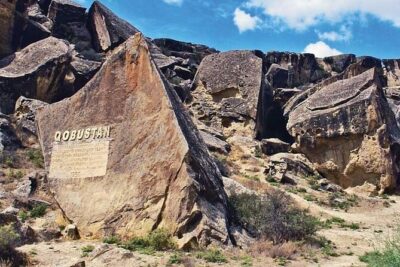
Gobustan, Volcanoes, Fire Temple and Yanardag Day Trip
Read our review →
Gobustan-Mud Volcan-Fire Temple and Mountain Tour/Entrance inc
Read our review →
Gobustan Mud Volcanoes Temple & Entry tickets included
Read our review →
Gobustan-Absheron Tour with Hotel PICK UP and DROP OFF
Read our review →Browse the lists this tour appears in