
Reviewed · GOBUSTAN & MUD VOLCANO TOURS
Gobustan-Mud Volcan-Fire Temple and Mountain Tour/Entrance inc
Gobustan’s bubbling mud volcanoes and ancient rock carvings make this one of Baku’s more unusual day trips. You move from prehistoric art to sacred fire sites, with Bibi-Heybat Mosque and the sweeping Heydar Aliyev Center adding two very different views of Azerbaijan.
I like the small-group format, which keeps the day more personal than a large coach trip. I also like the mix of natural oddities and cultural sites: the rough off-road ride to the volcanoes feels very different from the calm grounds of Ateshgah.
The main catch is time. You spend two to three hours in transport, and traffic can stretch the day well beyond the advertised seven to eight hours. Check exactly which ticket option you book, since entrance coverage is tied to the selected option.
Key points to know before booking
- The mud volcano ride is part of the adventure: A cash off-road vehicle fee may apply, although it is included with the group tour.
- Gobustan combines nature and archaeology: You see both bubbling mud cones and ancient rock carvings in the same area.
- The fire stops are genuinely different: Ateshgah is a built religious site, while Yanardag is a natural gas flame rising from the ground.
- Guide quality matters: Elshad, Rosi, and Dinara are guide names associated with particularly engaging outings.
- The day is transport-heavy: Allow extra time if traffic, pickup delays, or long stops affect the schedule.
- Ticket terms need checking: Gobustan rock art, Ateshgah, and Yanardag tickets are included when the appropriate option is selected.
Why this Baku day trip is worth considering
At $30 per person, this is an appealing price for a long day outside central Baku, especially when hotel pickup, hotel drop-off, an air-conditioned vehicle, bottled water, a guide, and selected entrance tickets are included.
The value comes from the range of places covered. You are not paying for one museum visit and a short drive. You get a mosque, a semi-desert area filled with mud volcanoes, prehistoric rock art, a fire temple, a natural flame, and a major modern building.
That variety also explains the compromises. The stops are spread around the Baku and Absheron region, so the vehicle becomes your base for much of the day. If you want a slow visit at each place, this may feel rushed. If you want a broad first look at Azerbaijan’s unusual sights, the format works well.
The tour is capped at 15 people, according to the supplied details. That is small enough to make questions possible, though the actual comfort depends on the vehicle used. One account praised the guide but criticized bus comfort, so I would not assume every departure has the same seating experience.
More Gobustan and mud volcano runs:
- Baku: Gobustan, Mud Volcano, Fire Mount, Temple Lunch Entry
★ 4.9 · 3,246 reviews - BEST Gobustan, Volcanoes & Absheron Fire Tour (Group or Private)
★ 5.0 · 1,254 reviews - Gobustan and Absheron tour (All inclusive)
★ 5.0 · 1,014 reviews
Bibi-Heybat Mosque begins the day with calm and ceremony
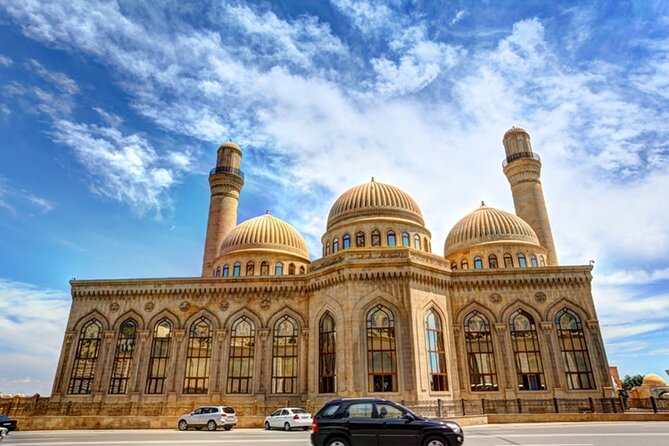
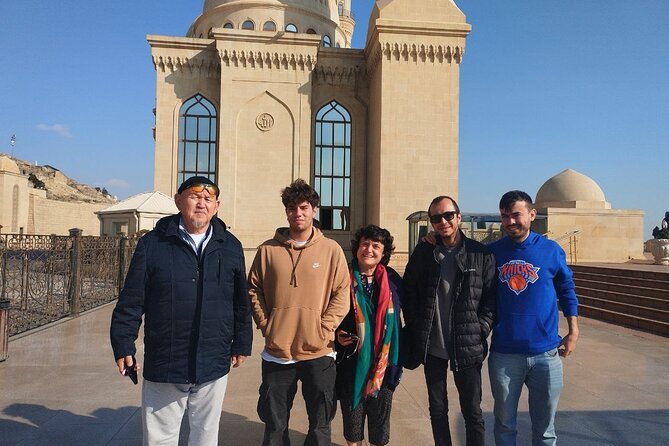
The first stop is Bibi-Heybat Mosque, usually planned for about 30 minutes. That is a short visit, but the setting gives the day a thoughtful start.
You can look at the mosque’s exterior and interior design, walk through the gardens, and take in views toward the Caspian Sea. A guide explains its cultural importance, which helps you read the building as more than a photo stop.
The mosque is also useful as a contrast to the sites later in the day. Here, the focus is active religious life and Islamic architecture. At Ateshgah, you will be looking at a much older fire-centered religious tradition and the movement of pilgrims from India.
Dress and behavior should be respectful at a functioning mosque. The supplied information does not give a formal dress code, so keep clothing modest and follow local instructions inside.
Thirty minutes will not allow a long visit. Think of Bibi-Heybat as an introduction rather than a full architectural tour.
Gobustan’s mud volcanoes require a rougher ride
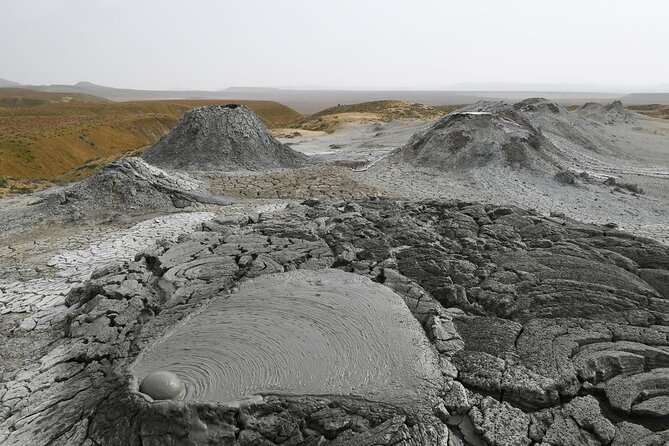
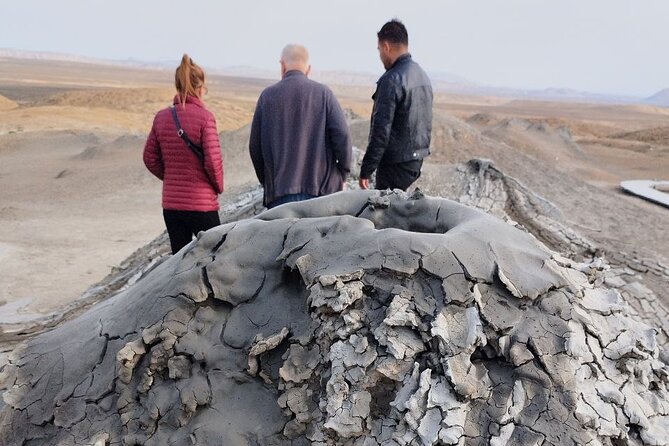
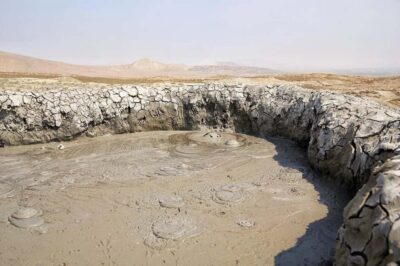
The mud volcanoes are among the most distinctive parts of the outing. Azerbaijan is home to an estimated 300 of the world’s roughly 700 mud volcanoes, including those around Gobustan and the Caspian Sea.
These are not classic volcanoes with red-hot lava. Mud, gas, and mineral material bubble up from the ground, producing low cones and puddled, otherworldly surfaces. The effect is quiet and strange rather than dramatic, so your expectations matter.
The drive to the site may be the most memorable part. An off-road vehicle, described in one account as a Lada-style rally ride, carries you over rough ground. A separate cash off-road car fee may apply, although the information says this is included in the group tour. Confirm that point before setting out.
The planned stop lasts about an hour. You may see people bathing in the mud, which is locally associated with medicinal qualities, but the tour information does not promise a bathing session or provide facilities. Do not pack for a spa treatment. Pack for an outdoor stop on uneven ground.
Some people find the volcanoes underwhelming once they arrive. Their appeal is their odd geology, not size or spectacle. The off-road route adds energy, but you should not book this day solely for a huge volcanic view.
Gobustan rock art puts the region in human perspective
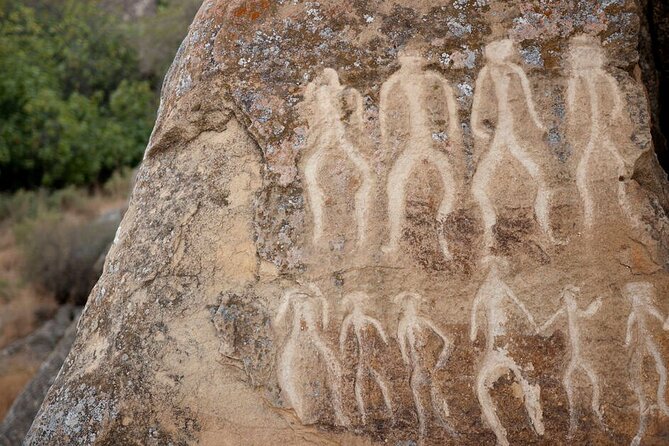
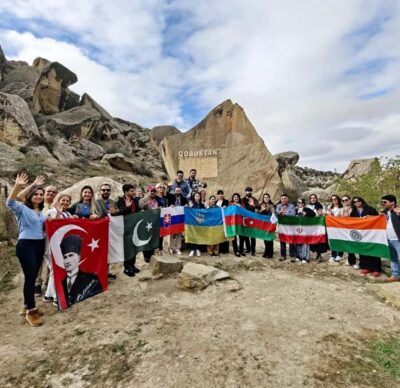
Gobustan’s rock carvings give the mud volcano area a cultural anchor. The petroglyphs date back thousands of years and show human figures, animals, hunting scenes, and daily activities.
An hour here gives you time to examine the carved rock surfaces and listen to explanations from the guide. The pictures are simple, but that is part of their power. They offer a direct record of people observing animals, working, hunting, and marking their world long before modern Azerbaijan existed.
This stop is more rewarding when your guide adds context. Guides named Elshad, Rosi, and Dinara have been associated with outings praised for clear explanations, warmth, and humor. Guide quality can shape the visit because the carvings are easier to appreciate when someone points out what you are seeing.
The entrance ticket is included only with the relevant ticket option. The headline for the experience presents entrance as included, but the detailed terms qualify this by saying tickets for Gobustan rock art, Ateshgah, and Yanardag are covered if that option is selected. Check your booking choice carefully, especially because one account reported paying separate entrance fees.
More fire temple and burning mountain trips:
- Baku: Gobustan, Volcanoes, Fire Temple and Yanardag Day Trip
★ 4.7 · 433 reviews - Gobustan & Mud, Fire Temple, Burning Mountain (Group & Private)
★ 4.5 · 418 reviews - Gobustan, Mud volcanoes, Fire temple, Fire mountain PRIVATE TOUR
★ 5.0 · 47 reviews - Gobustan & Mud, Fire Temple, Burning Mountain, H.A. Center
★ 4.6 · 46 reviews
Ateshgah Fire Temple explains the sacred fire tradition
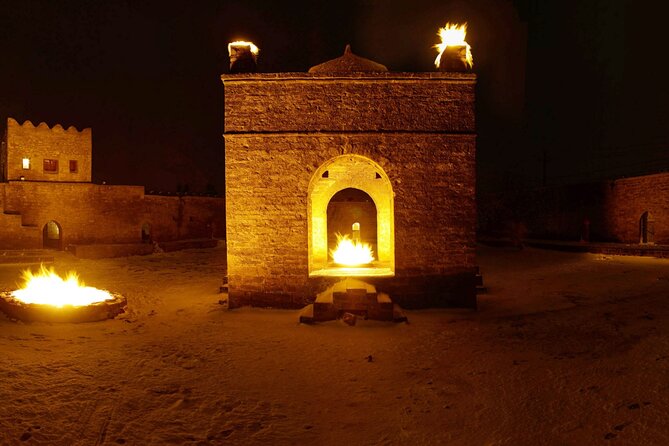
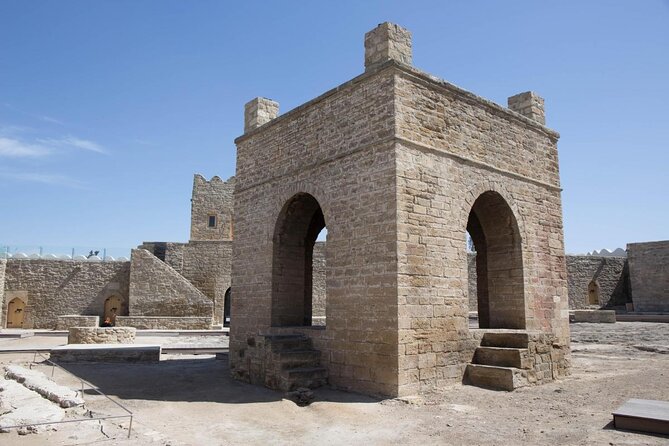
Ateshgah, the Fire Temple of Baku, is given about an hour. It was built around a natural gas vent where flames once burned, and the site is linked with Hindu, Sikh, and Zoroastrian traditions.
The temple’s enclosed layout, stone cells, and central fire area make it different from the open mud volcanoes. You can walk through the complex while learning how natural gas shaped religious practice in this part of the Absheron Peninsula.
The fire may not be as powerful as you expect from old descriptions. Gas extraction across the region reduced the natural flow, and the flames at some sites are now maintained or affected by modern conditions. Even so, the combination of architecture and fire makes Ateshgah one of the day’s strongest stops.
Allow time to look beyond the central flame. The surrounding rooms and stonework help show how the temple functioned as a place of devotion and shelter. One guide account called the fire temple the highlight of the day, and I can see why. It gives the tour a clear cultural focus after the more geological morning.
Lunch is not included. The day’s timing may allow a stop at a local restaurant or cafe, but the exact lunch arrangement is not guaranteed in the supplied details. Bring money and do not assume food is covered by the $30 price.
Yanardag is a natural flame with an easy viewing stop
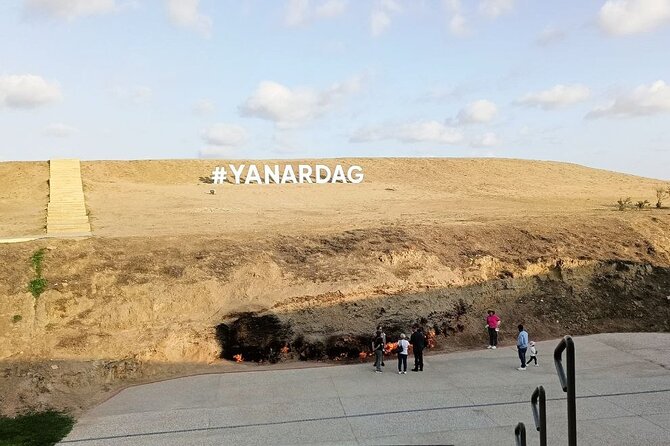
Yanardag, or Fire Mountain, is located in Digah village. Natural gas comes out of the ground here and burns at the surface. The fire is said to have been burning for many centuries, although its size has decreased as gas resources in the Absheron region were heavily used.
The planned visit lasts about an hour. You can watch the flames from the viewing area, then take a short break at a nearby cafe with a view toward the fire.
Yanardag is less about a large site to explore and more about witnessing a natural event. It also helps to visit after Ateshgah because the two stops show different sides of Azerbaijan’s fire heritage. Ateshgah is a temple built around sacred flame, while Yanardag is the flame itself rising from the earth.
The stop may be especially appealing in cooler or darker conditions, but the tour requires good weather and can be canceled if conditions are poor. The supplied information does not promise a particular flame size or weather.
The Heydar Aliyev Center brings the day into modern Baku
The final listed stop is the Heydar Aliyev Center, a striking building designed by Zaha Hadid. Its white curves and lack of right angles make it a sharp contrast to Gobustan’s rough rock and Ateshgah’s stone walls.
The center hosts exhibitions, concerts, and cultural events. The planned stop is about an hour, but the information does not guarantee admission to a particular exhibition or enough time for a full interior visit.
That distinction matters. You may have time to see the building from outside and take photographs without having a long indoor visit. One account specifically wished there had been more time to go inside, while also noting that starting earlier was not ideal. The stop is still useful, but check whether your main interest is architecture, exhibitions, or photography.
The building also gives you a final reminder that Azerbaijan is not defined only by ancient sites. The day moves from prehistoric carvings and old religious customs to a modern cultural building linked to the country’s recent political and architectural identity.
Transport takes more of the day than the stops suggest
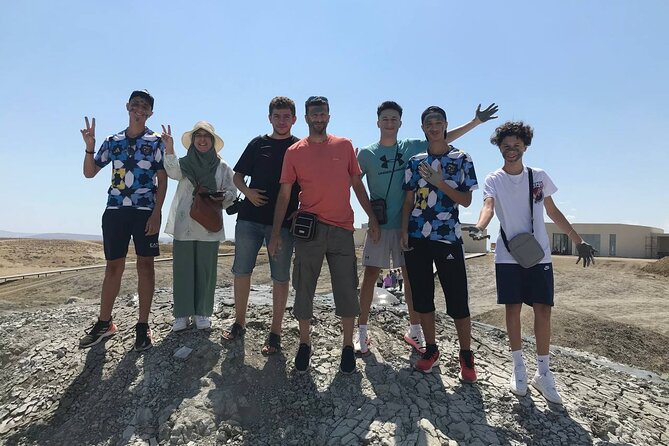
The headline duration is approximately seven to eight hours, but the practical timing deserves attention. The listed stops add up to about five and a half hours, and the remaining two to three hours are used for transport between places.
That is a lot of vehicle time. The routes between Gobustan and the Absheron fire sites cross different parts of the Baku region, and city traffic can slow the return journey. One outing began about 30 minutes late and ended around three hours later than planned.
I would avoid scheduling an evening flight, dinner reservation, or other fixed appointment after this tour. Pickup from your hotel and drop-off at the end are included, but exact pickup timing can vary.
The air-conditioned vehicle is a welcome feature in warm weather. Bottled water is also included in the stated services, though one negative account reported no water being available. It is sensible to carry your own bottle as backup.
The group limit of 15 keeps the outing from becoming a huge bus tour. Still, comfort may vary by departure. If you have strong preferences about legroom or vehicle size, ask before booking rather than assuming the word small-group means a minivan.
Guides can turn a long ride into useful context
The guide is important here because the tour covers several subjects that need explanation. Mud volcanoes benefit from a geology lesson, Gobustan needs archaeological context, Ateshgah calls for religious background, and the Heydar Aliyev Center needs architectural interpretation.
English, Arabic, Russian, Spanish, and Turkish guiding are listed. Named guides connected with particularly well-received outings include Elshad, Rosi, and Dinara. Elshad has been described as fun and informative, Rosi as welcoming and full of information, and Dinara as friendly and effective at keeping the group interested.
Do not treat those names as a guarantee that one of them will lead your departure. The guide assigned to your date may be different, and the quality of the day can depend heavily on who is working.
There is one serious warning in the supplied feedback: a private-car booking involved a driver who spoke no English and provided little information. That appears to be separate from the positive small-group experiences, but it shows why you should confirm whether you are booking the group tour or a private option, along with the language and inclusions.
Price, tickets, and the details that affect value
At $30, the group tour is priced attractively for a seven to eight-hour excursion with pickup, drop-off, transport, guiding, water, photo opportunities, and selected admissions.
The value is strongest if you want convenience. Arranging Gobustan, the volcanoes, Ateshgah, and Yanardag independently would require working out transport across widely separated sites. This outing handles that in one day.
The ticket wording needs care. The detailed inclusions specify that entrance tickets for Gobustan rock art, Ateshgah, and Yanardag are included if the selected option includes them. Mud volcano access may involve an off-road vehicle fee paid in cash, but the group-tour information says that fee is included.
Lunch is not included. You should budget separately for food, and the tour may stop at a restaurant or cafe depending on timing. Group discounts are available, and confirmation is received at booking.
Free cancellation is available up to 24 hours before the start time for a full refund. Inside 24 hours, changes and cancellations are not accepted for a refund. The tour needs good weather and a minimum number of people. If the operator cancels for either reason, you are offered another date, another experience, or a full refund.
Who should book this outing
I would choose this tour if you have limited time in Baku and want the region’s main unusual sights in one organized day. It suits first-time visitors, couples, families, and anyone who prefers a guide to explain the sites rather than simply arrange a car.
It is also a good fit if you enjoy contrast: bubbling earth in the morning, ancient carvings, a fire temple, a natural flame, and modern architecture by the end.
I would hesitate if you dislike long drives, rough off-road roads, fixed group schedules, or short visits. You should also think twice if the Heydar Aliyev Center interior is your main goal, since the stop may not allow a full exhibition visit.
Should you book the Gobustan and Fire Temple tour?
Book it if you want broad coverage and solid convenience at a low group-tour price. The best parts are the unusual sequence of sites, the memorable off-road route to the mud volcanoes, the thoughtful contrast between Ateshgah and Yanardag, and the chance to see both ancient and modern Azerbaijan in one day.
Before paying, confirm three things: the exact ticket option, the off-road fee, and the expected pickup and return time. If you accept a long day and some time in the vehicle, this is a practical way to see places that are difficult to connect on your own.
FAQ
How long does the Gobustan and Fire Temple tour last?
The tour is advertised as approximately seven to eight hours. Around two to three hours may be spent traveling between stops, and traffic or delays can make the day longer.
Is hotel pickup and drop-off included?
Yes. Pickup from your hotel and drop-off at your hotel are included.
Are entrance tickets included?
Tickets for Gobustan rock art, Ateshgah, and Yanardag are included when the appropriate option is selected. Check the exact option at booking because the detailed terms make this conditional.
Is the mud volcano off-road fee included?
The tour information says the off-road car fee is included in the group tour, while also stating that the fee may be payable in cash. Confirm this before departure.
Is lunch included?
No. Lunch is not included in the tour price.
What languages can the guide speak?
Guiding is listed in English, Arabic, Russian, Spanish, and Turkish.
Can I cancel for a full refund?
You can cancel at least 24 hours before the local start time for a full refund. Cancellations or changes made within 24 hours are not refunded. If poor weather or insufficient participation causes the operator to cancel, you are offered another date, another experience, or a full refund.
Just added around Baku
- Guba and Shahdag City Tour★ 5.0 · 3 reviews
- Lunch included Qobustan, Mud Vulcano, Ateshgah Temple & Yanardag Fire Mountain★ 4.5 · 3 reviews
- Baku’s Ancient Heart★ 5.0 · 3 reviews
- Baku: Secret Tour with Surprise Activity★ 5.0 · 3 reviews
- Baku: Old City Guided Walking Tour★ 4.6 · 3 reviews
- Majestic Journey to Qobustan and Absheron★ 4.5 · 3 reviews
- Lahij – village of masters★ 4.5 · 3 reviews
- Baku night tour★ 5.0 · 3 reviews
Gobustan & Mud Volcano Tours, compared.
Gobustan, Mud Volcano, Fire Mount, Temple Lunch Entry
Read our review →
BEST Gobustan, Volcanoes & Absheron Fire Tour (Group or Private)
Read our review →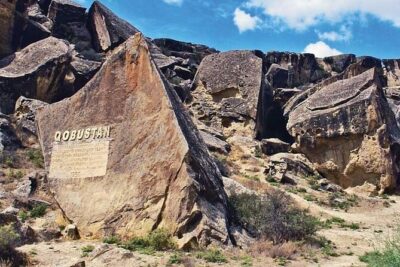
Gobustan, Volcanoes, Fire Temple and Yanardag Day Trip
Read our review →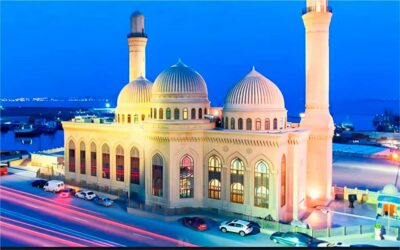
Gobustan Mud Volcanoes Temple & Entry tickets included
Read our review →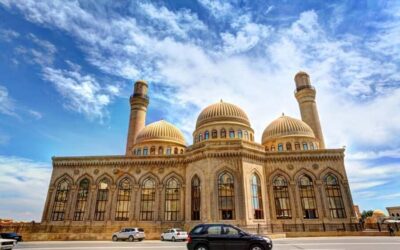
Gobustan-Absheron Tour with Hotel PICK UP and DROP OFF
Read our review →
Gobustan/Absheron guided tour with lunch and tickets
Read our review →Browse the lists this tour appears in