
Reviewed · BAKU TOURS
Baku’s Ancient Heart
Baku’s ancient core is best understood on foot, one cobbled lane and carved stone doorway at a time. This tour brings together the city’s major sights, from the mysterious Maiden Tower to the grand Shirvanshahs’ Palace, while leaving room for small museums, artists’ workshops, and old trading courtyards.
I like the broad range of stops, especially the chance to see both famous monuments and less obvious places such as the 15th-century Hadji Bani hammam. I also like the personal touch of local artisans’ shops and traditional Azerbaijani tea, which give the walk a sense of present-day Baku rather than making it only a history lesson.
The main consideration is pace. With many sites listed, some visits may be brief, and the Old City’s stones and stairways require steady footing. The tour is not suitable for people over 70, and the exact duration and group size are not provided.
Key points to know before you book

- Maiden Tower begins the story: Climb its spiral staircase for views across Baku, the Caspian Sea, and the surrounding city.
- The palace is the tour’s grand centerpiece: Shirvanshahs’ Palace brings together courtyards, carved stonework, museum displays, and Islamic and Persian design.
- The route reaches beyond the headline sights: See the old city walls, Double Gates, Juma Mosque, caravanserais, an underground bathhouse, and former khan residences.
- Local culture is part of the walk: Stop at Ali Shamsi art gallery, craft shops, Mugam Club, and places connected with carpet weaving and copper work.
- Heydar leads in English or Russian: The guide’s friendly, well-informed approach was singled out in the available feedback.
- The price is modest, but check inclusions: At $25 per person, the walk offers strong value for a guided introduction, though entry fees, tea, and other extras are not clearly itemized.
Entering Icherisheher through the Double Gates
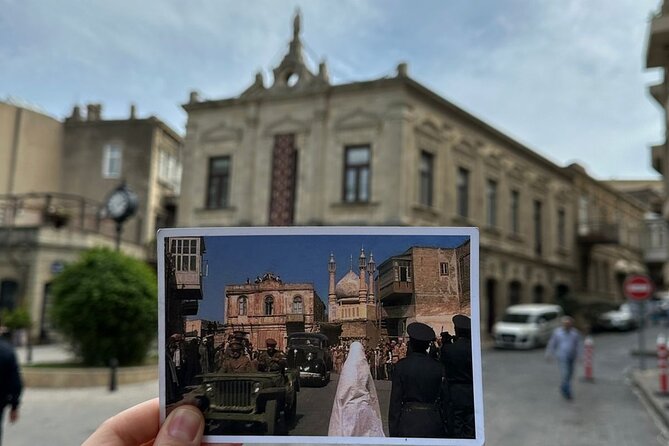
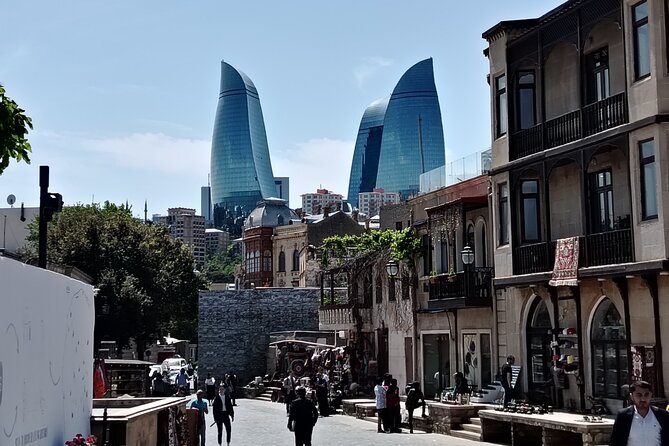
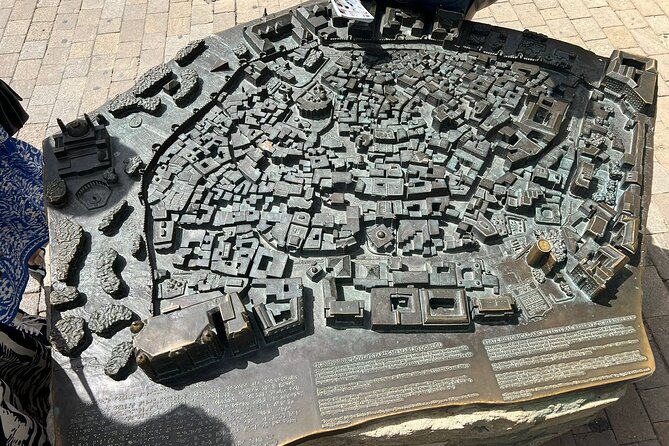
The tour starts at the Double Gates, the main entrance to Icherisheher, Baku’s walled Old City and a UNESCO World Heritage site. This is a useful starting point because the gates mark a clear change in scale. Outside, modern Baku spreads around you. Inside, the streets narrow, the stone walls rise close to the path, and the city’s older trading life begins to make sense.
Your guide, Heydar, leads in English or Russian. The available feedback praises him for being friendly and well informed, which matters on a walk like this. The Old City can look simple at first glance, with lanes that twist and buildings that seem to blend together. A good guide helps you notice what you would otherwise pass without a second look.
The route is on foot, so wear comfortable shoes. Cobblestones, uneven paving, and stairs are part of the setting, not a minor detail. You should also be ready for a sightseeing day that covers many stops rather than one long visit at only two monuments.
The exact meeting point can change depending on the option you book, so check your confirmation carefully. The walk ends back at the meeting point, which makes it easier to plan the rest of your day in Baku.
More days with local hosts:
- Baku Old Town Walking Tour with a Local
★ 5.0 · 64 reviews - Learn with LOCAL
★ 4.8 · 13 reviews - Become a Baku resident in a day
★ 4.8 · 12 reviews
Maiden Tower and the view over Baku
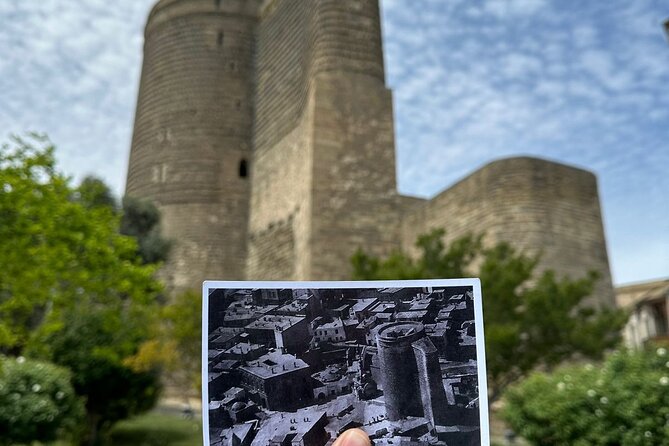
The Maiden Tower is the first major stop and one of Baku’s most recognizable buildings. Dating to the 12th century, it is also one of the city’s enduring puzzles. Its purpose and original story have inspired many interpretations, and the tower’s thick stone form gives the visit a strong sense of age even before you hear the explanations.
Inside, a spiral staircase leads upward. The climb is worth considering when deciding if this tour suits you. At the top, you can look across Baku, toward the Caspian Sea, and over the surrounding city. The view helps you read the Old City as a compact fortified quarter rather than a collection of unrelated lanes.
The tower can be a highlight for anyone who likes architecture, old legends, or city views. It may be less comfortable for people who find narrow stairways difficult. Since the tour is not recommended for people over 70, older visitors should pay particular attention to the stairs and the amount of walking involved.
Small traces of faith and daily life
The route includes the remains of the Saint Bartholomew chapel, a quieter stop that adds another layer to Baku’s past. It is not presented as a grand surviving church. Its value is in the reminder that different religious communities left marks on this old port and trading city.
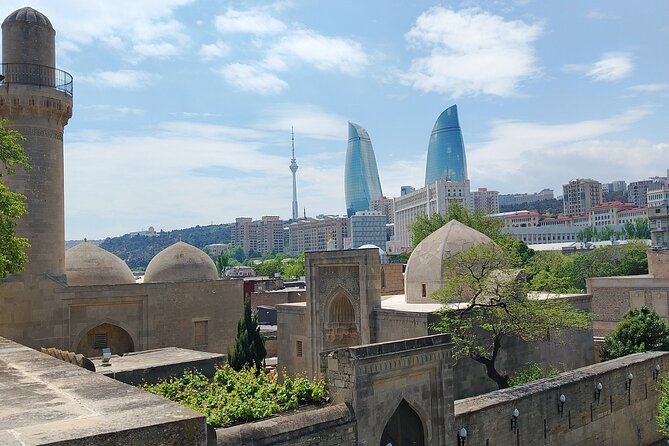
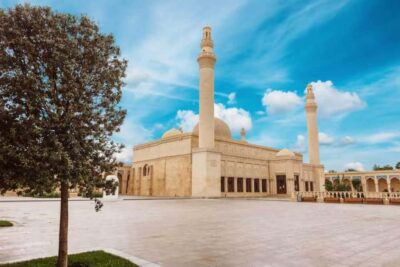
You will also see the Juma Mosque, described as the biggest mosque in the Old City and one of Azerbaijan’s oldest. This is an important contrast with the palace and tower. The mosque keeps the focus on worship and community life, not only rulers and fortifications.
The tour also includes the remnants of the Baku City Walls. These defenses once guarded the settlement from attackers, and they help explain why the Old City feels enclosed. As you move through the lanes, you are following the practical shape of a fortified town, where homes, religious buildings, markets, and rulers’ quarters had to fit inside a protected boundary.
A 15th-century hammam beneath the streets
One of the more unusual stops is the Hadji Bani underground hammam, a bathhouse from the 15th century. A bathhouse may sound less dramatic than a palace, but it offers a better glimpse of ordinary urban life.
Public baths were places for washing, social contact, and routine. An underground setting also shows how older builders used the space below the crowded city. This is the kind of stop that gives the tour variety. You are not simply moving from one impressive facade to another.
The Old City also includes an open-sky museum. The supplied details do not specify exactly which displays or objects are presented there, so you should think of it as an additional heritage stop rather than plan around a particular exhibit. Heydar’s explanations will be especially useful here, since the value of a small historical site often depends on context.
A few more Baku half-days to weigh up
- Baku: Gobustan, Mud Volcano, Fire Mount, Temple Lunch Entry
★ 4.9 · 3,246 reviews - Baku: Guba, Shahdag, Laza & Lunch w/ Free City & Night Tour
★ 4.8 · 1,455 reviews - BEST Gobustan, Volcanoes & Absheron Fire Tour (Group or Private)
★ 5.0 · 1,254 reviews - Gobustan and Absheron tour (All inclusive)
★ 5.0 · 1,014 reviews
Caravanserais and Baku’s Silk Road connections
The Multani and Bukhara caravanserais show Baku’s role as a stopping place for merchants. These inns offered traders a place to rest, store goods, and conduct business as they moved along long-distance routes.
The buildings are important because they connect the Old City to a wider world. Baku was not only a royal center behind stone walls. It was also a port and trading point where people, goods, languages, and customs met.
You may find the caravanserais more rewarding if you picture them as working spaces rather than polished monuments. Their courtyards and enclosed forms were practical. They protected people and merchandise while keeping commerce close to the city’s main streets.
The Mugam Club restaurant and museum adds another cultural stop. Mugam is a traditional Azerbaijani musical form, and this visit broadens the tour beyond architecture. The available information does not promise a live performance, so do not book expecting a concert. Instead, view it as a place tied to local music and dining culture.
Palaces, khans, and the city’s ruling class
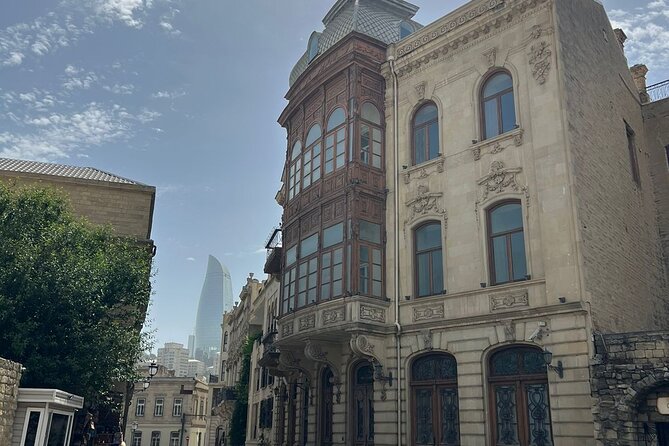
The Shirvanshahs’ Palace is the largest royal sight on the route. It was once home to the Shirvanshah dynasty and includes courtyards, carved details, and a mixture of Islamic and Persian design influences.
I would allow yourself time to look upward and across the stonework here. The palace is not one single room that delivers everything at once. Its courtyards and connected buildings make the complex feel like a working royal center, with formal spaces alongside more private areas.
Museum artifacts help explain the dynasty and the city’s political past. The palace is likely to be the most rewarding stop for visitors who want architecture and history in one place. The tradeoff is that a long list of stops can make it hard to linger. If the group moves quickly, ask Heydar which palace details deserve your attention first.
The route also includes the former residence of the Bakuvian khans. This stop shifts the focus from the ruling dynasty to local elite life inside the city. You get a broader picture of how power was spread through Baku, rather than hearing only about the most famous rulers.
Another notable building is Ismailliya House, now connected with the Presidium of the Azerbaijan Academy of Sciences. It brings the route into a later period of Baku’s story and shows that the Old City is not frozen in one century.
Art, books, and living traditions
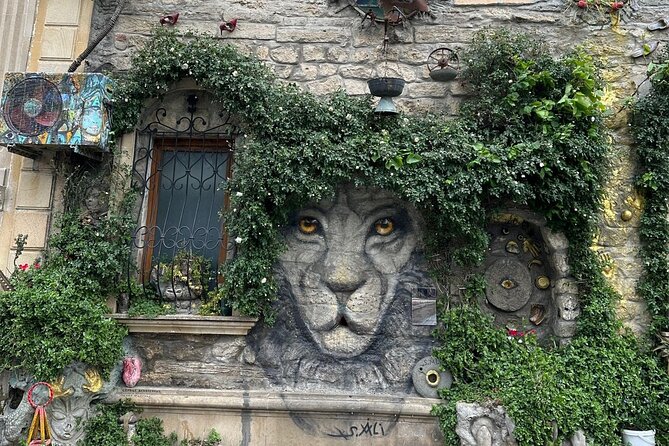
The Ali Shamsi art gallery gives the walk a creative pause. Local art spaces can be useful stops because they show how Baku’s old setting continues to support modern expression. The provided details do not specify the gallery’s current works, so your experience will depend on what is on display when you visit.
The miniature book museum is another distinctive stop. It has been included in the Guinness Book since 2014, giving it a place among Baku’s more unusual attractions. Small books are easy to underestimate, but the collection offers a different kind of museum visit than the large palace or tower.
You will also pass local artisans’ shops, with traditional crafts including carpet weaving and copper engraving. I like this part of the route because it connects the historic streets with skills that are still presented as part of Azerbaijani culture. It also gives you a chance to ask questions and browse at a human pace.
Keep your buying decisions separate from the tour price. A craft shop visit does not mean you need to purchase anything, and the experience is useful even if you only watch the work and learn about the materials. If you are considering a carpet or metal piece, ask about size, care, and shipping before committing.
Tea and the Old City’s everyday atmosphere
A cup of Azerbaijani tea served in a traditional glass gives the tour a welcome pause. Tea is not just a refreshment here. It is a way to slow down and notice the rhythm of the district after several monuments and museums.
The information provided does not clearly state if tea is included in the $25 price, so confirm that before you book if this matters to your budget. The same applies to admission costs at the tower, palace, or museums. The route lists these places, but it does not give a separate breakdown of what the fee covers.
This is also where the walk feels most connected to daily life. You are not only looking at fortified walls and royal buildings. You are seeing shops, art spaces, restaurants, and streets still used as part of Baku’s living center.
Is $25 good value for this walking tour?
At $25 per person, I consider the tour a good-value introduction to the Old City, especially if you want a guide to connect a large number of sights. The price is modest for a walk that includes the Maiden Tower, Shirvanshahs’ Palace, Juma Mosque, caravanserais, the bathhouse, museums, and historic gates.
The value depends on how much time you prefer at each stop. A route with roughly 15 listed points gives you range, but it may not give you a long, quiet visit at every location. If you are the kind of person who studies every display or photographs every carving, you may want to return to your favorite sites independently.
The unclear point is what the price includes beyond the guided route. Confirm admission fees, tea, and any optional purchases before setting your budget. Reserve and pay later is helpful if your plans are still shifting, and cancellation is allowed up to 24 hours before the tour for a full refund.
Who will enjoy this walk most?
This experience suits first-time visitors who want a clear introduction to Baku’s oldest district. It is also a good match for people who prefer walking tours to sightseeing from a vehicle, since the narrow streets and small cultural stops are best reached on foot.
History fans will appreciate the mix of medieval defenses, royal buildings, mosques, a bathhouse, and caravanserais. Art and culture fans have the Ali Shamsi gallery, miniature book museum, Mugam Club, craft shops, and tea stop to break up the stone architecture.
I would be more cautious if you have trouble with uneven surfaces, stairs, or extended walking. The Maiden Tower includes a spiral staircase, and the tour is specifically not suitable for people over 70. Since no duration or group size is provided, ask for those details if you need a very measured pace or prefer a small group.
Should you book Baku’s Ancient Heart?
Book this tour if you want a well-rounded first look at Icherisheher and prefer having Heydar explain the details as you go. The strongest reasons are the range of stops, the chance to see less obvious sites such as the Hadji Bani hammam and caravanserais, and the inclusion of local art, crafts, music, and tea.
Skip it if you want an unhurried, specialist visit to only the Maiden Tower and Shirvanshahs’ Palace. You may find the schedule broad rather than deeply focused. For most visitors who want history, architecture, and a taste of present-day Old City life for $25, the balance is favorable.
FAQ
How much does Baku’s Ancient Heart cost?
The price is $25 per person.
Who leads the tour?
Heydar is the listed guide. The tour is offered in English and Russian.
What sights are included?
The route includes Maiden Tower, the remnants of Saint Bartholomew chapel, Hadji Bani underground hammam, an open-sky museum, Multani and Bukhara caravanserais, Encyclopedia House, the residence of the Bakuvian khans, the Double Gates, Ismailliya House, Ali Shamsi art gallery, Shirvanshahs’ Palace, the miniature book museum, the bust of Aliaga Vahid, Juma Mosque, and Mugam Club restaurant and museum.
Where does the tour start and finish?
The meeting point may vary depending on the option booked. The activity ends back at the meeting point.
What should I bring?
Bring comfortable shoes for the cobbled streets and walking route.
Can I cancel or pay later?
You can reserve and pay later, with nothing due today. You can cancel up to 24 hours in advance for a full refund. The tour is not suitable for people over 70 years old.
Just added around Baku
- Guba and Shahdag City Tour★ 5.0 · 3 reviews
- Lunch included Qobustan, Mud Vulcano, Ateshgah Temple & Yanardag Fire Mountain★ 4.5 · 3 reviews
- Baku: Secret Tour with Surprise Activity★ 5.0 · 3 reviews
- Baku: Old City Guided Walking Tour★ 4.6 · 3 reviews
- Majestic Journey to Qobustan and Absheron★ 4.5 · 3 reviews
- Lahij – village of masters★ 4.5 · 3 reviews
- Baku night tour★ 5.0 · 3 reviews
- Gobustan Magic of Mud Volcanoes and Ancient Petroglyphs★ 5.0 · 3 reviews
Baku Tours, compared.
Gobustan, Mud Volcano, Fire Mount, Temple Lunch Entry
Read our review →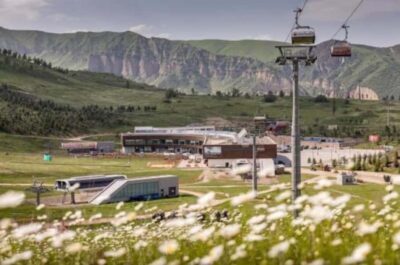
Guba, Shahdag, Laza & Lunch w/ Free City & Night Tour
Read our review →
BEST Gobustan, Volcanoes & Absheron Fire Tour (Group or Private)
Read our review →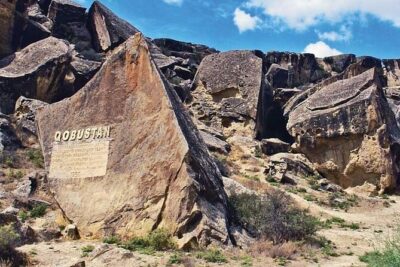
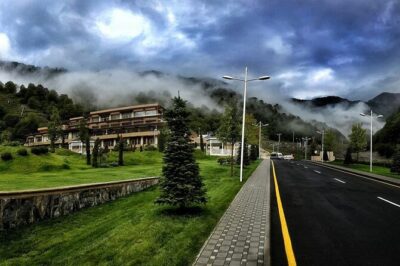
Candy Cane, Guba, Khinaliq village with Homemade Lunch
Read our review →
Guba & Sahdag Tour Lunch included and Laza Waterfall
Read our review →Browse the lists this tour appears in