
Reviewed · GOBUSTAN & MUD VOLCANO TOURS
Baku: Gobustan, Volcanoes, Fire Temple and Yanardag Day Trip
Baku’s strangest sights sit beyond its polished center: Stone Age carvings, bubbling mud volcanoes, sacred flames, and a hillside fire that refuses to go out. This day trip links them in one long outing, with a stop at the world’s first industrialized oil well near Bibi-Heybat Mosque.
I like the no-shopping-stop promise, since your time goes to Azerbaijan’s archaeology, geology, and fire traditions instead of carpet or souvenir stores. I also like the range: Gobustan feels ancient and open, while Ateshgah and Yanardag explain why Azerbaijan is known as the Land of Fire.
The catch is the pace. Six to eight hours covers a lot of ground, and one guest found the schedule tight. Mud volcanoes are also weather-dependent, so rain can remove one of the day’s most unusual stops.
Key points to know before booking
- Gobustan’s petroglyphs show prehistoric people, animals, boats, hunting scenes, and daily life carved into rock.
- The mud volcano ride may use old Soviet Lada vehicles for the rough final stretch, an entertaining part of the outing for many people.
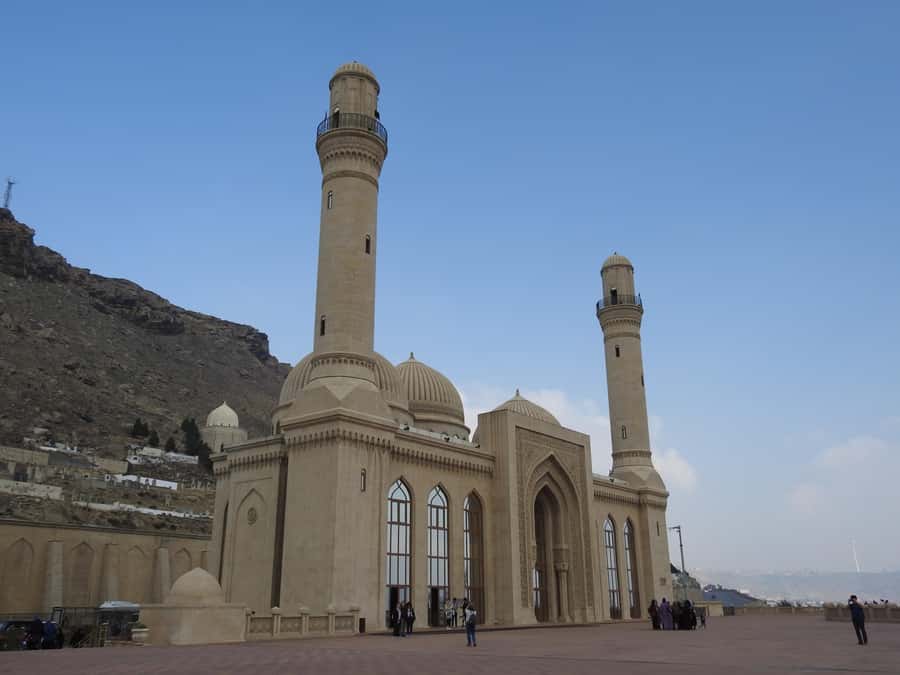
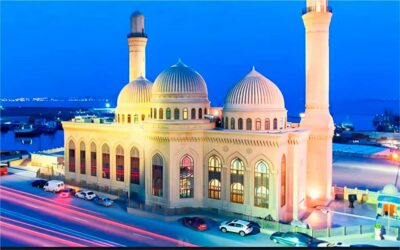
- Bibi-Heybat combines a major mosque area with a look at Azerbaijan’s early oil industry.
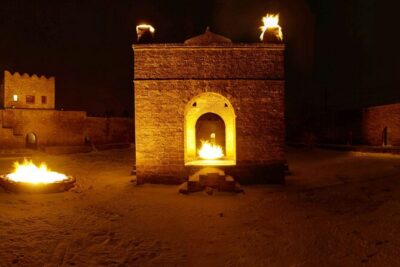
- Ateshgah Fire Temple connects the Absheron Peninsula with Zoroastrian fire worship.
- Yanardag burns naturally from gas rising through the hillside, though the fire visit lasts only about 30 minutes.
- Lunch costs extra, usually $8 to $12 at a buffet-style local restaurant.
Why this makes a strong day outside Baku
Baku can keep you occupied for several days, but the city alone does not explain Azerbaijan’s unusual mix of oil, fire, mud, and prehistoric art. This tour gives you a useful regional picture in one day.
You travel across the Absheron Peninsula and toward Gobustan, roughly 70 kilometers from Baku. The road time is part of the deal. You are not simply moving between downtown attractions. You are seeing how the city connects to a dry, geologically active part of the country.
I would choose this outing if you want a broad introduction rather than a slow archaeological visit. You see several major sights, receive explanations in English or Russian, and return to one of the listed hotel or central meeting points. The tour can run as a private trip or in a small group, so the exact feel depends on the option you select.
The price, about $29 per person, is particularly good if museum admission, transport, guide service, and hotel pickup are included in your selected option. Lunch is separate, but the suggested $8 to $12 is easy to factor into the day. You are paying mainly for the long-distance transport and the chance to combine places that would be awkward to arrange independently.
More Gobustan and mud volcano runs:
- Baku: Gobustan, Mud Volcano, Fire Mount, Temple Lunch Entry
★ 4.9 · 3,246 reviews - BEST Gobustan, Volcanoes & Absheron Fire Tour (Group or Private)
★ 5.0 · 1,254 reviews - Gobustan and Absheron tour (All inclusive)
★ 5.0 · 1,014 reviews
Bibi-Heybat and the story of Azerbaijan’s oil
The first stop is near Bibi-Heybat Mosque, where you spend about 30 minutes with a guide. The focus here is an industrialized oil well described as the first of its kind in the world.
This is a short stop, not a full oil museum visit, so keep your expectations sensible. Its value is the context. Baku’s fortunes were transformed by oil, and the Absheron Peninsula’s petroleum wealth helps explain the city’s dramatic growth and modern identity.
The nearby mosque gives the stop a second layer. You begin with religious architecture and local culture, then shift to the industrial force that helped shape modern Baku. That contrast is useful, especially if your main interest is history rather than simply taking photographs.
If you are short on time in Baku, this stop also helps connect the city’s center with the wider region. The guide’s explanation matters here because the oil well itself may not seem spectacular without the story behind it.
Gobustan Museum and the Stone Age rock art
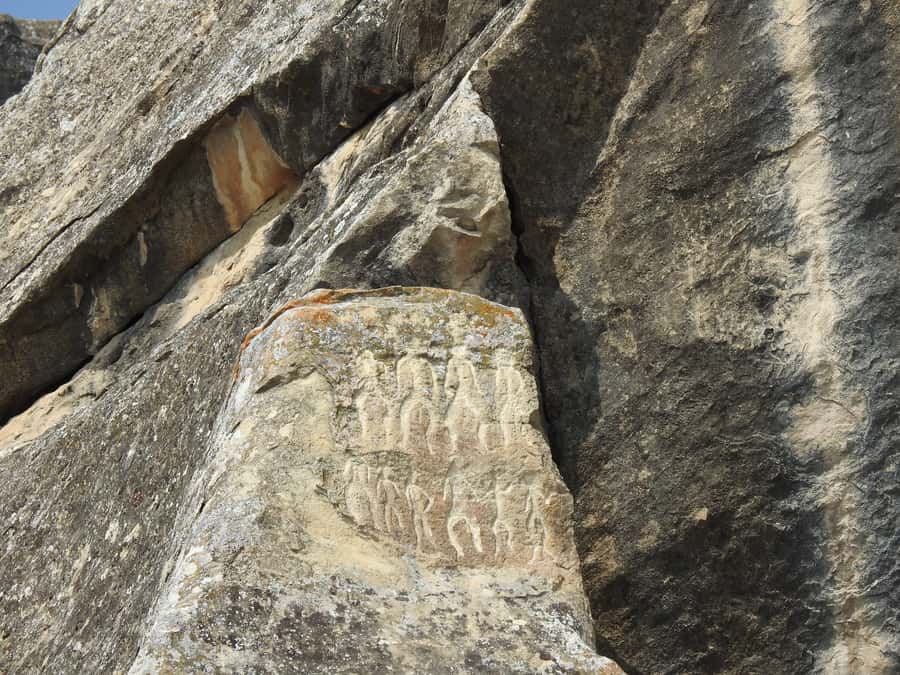
Gobustan is the day’s main archaeological stop. You spend about an hour at the indoor and outdoor museum, where prehistoric carvings cut into rock walls and cave surfaces record the lives and ideas of ancient people in the region.
The drawings reflect hunting, animals, boats, dancing, and other parts of early society. They are not polished artworks in the modern sense. Their importance comes from what they reveal about culture, work, and the way people understood their surroundings thousands of years ago.
I like the indoor and outdoor format. The museum gives you background before you see the carvings, while the outdoor section lets you look at the actual rock surfaces. That combination is more helpful than arriving at a cluster of markings with no explanation.
The guide is especially important at Gobustan. Guides such as Sayed, Mahabat, Leyla, Musa, and Elcan have been praised for making the explanations clear, adding stories, and answering questions. The strongest guides do not just point at a carving. They explain what it may show and why the site matters.
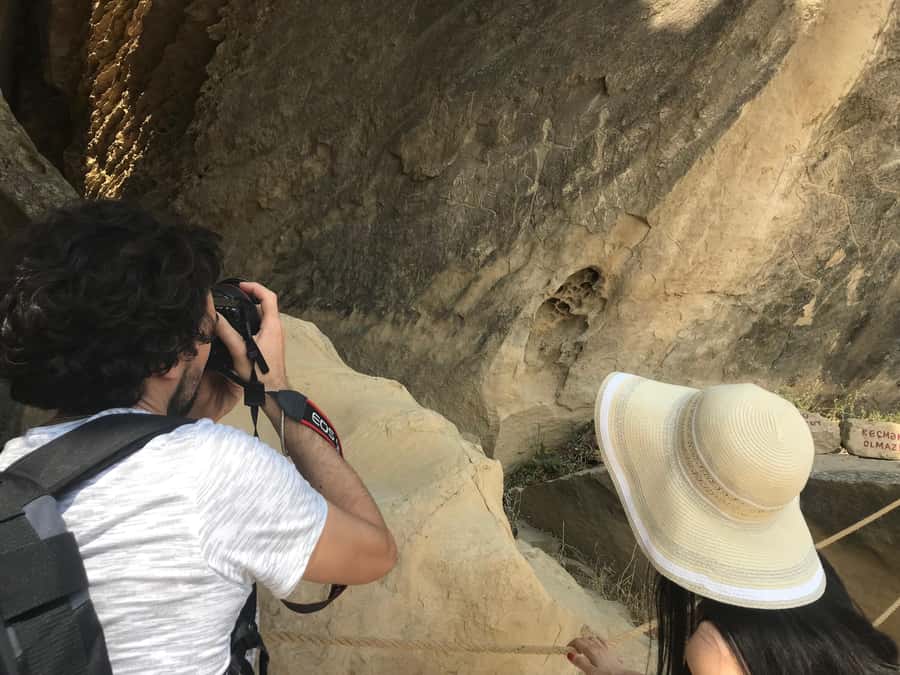
You should allow yourself to look closely. Some carvings are easy to miss if you rush from one panel to the next. At the same time, this is not a quiet half-day museum visit. The one-hour schedule gives you a solid introduction, but someone fascinated by prehistoric art may wish for more time.
Crowds can affect the experience. One guide, Mahabat, was specifically praised for handling a busy visit to Gobustan well. A small group can make it easier to hear the guide and ask questions, while the private option gives you the most control over timing.
Mud volcanoes and the rough ride beyond Gobustan
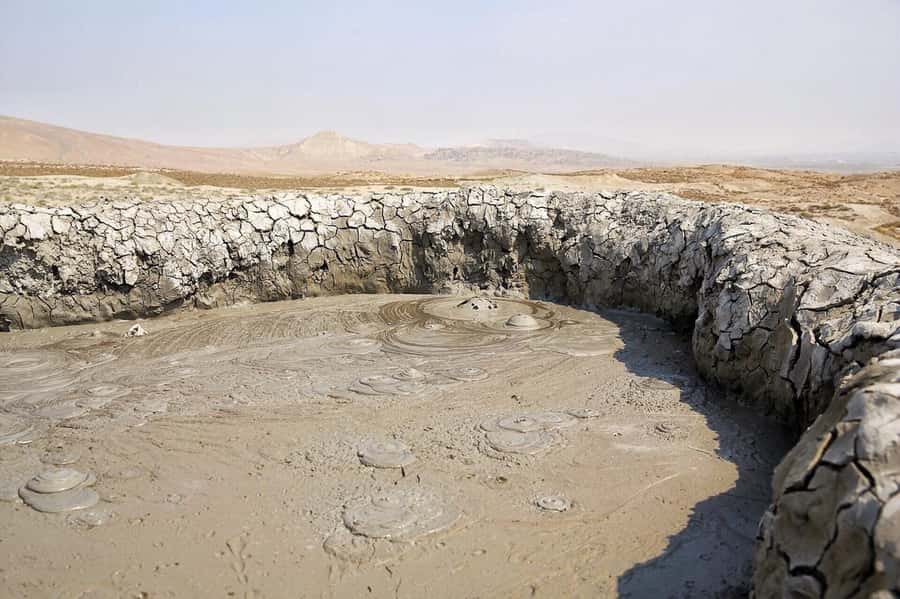
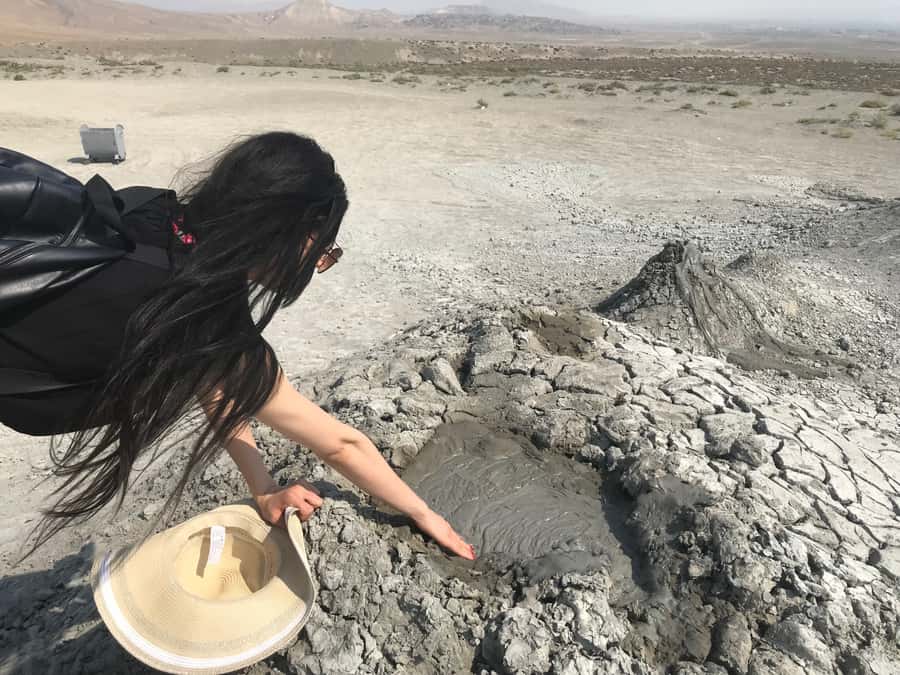
Azerbaijan is home to about 400 mud volcanoes, and this is one of the tour’s most distinctive stops. You spend around 20 minutes sightseeing, watching mud bubble or push through small volcanic cones in a stark coastal setting.
Do not expect lava or a towering eruption. These are mud volcanoes, not hot-rock volcanoes. The appeal is their oddness: the ground releases cold mud and gases, creating formations that look more like another planet than a conventional tourist attraction.
The final approach may be the most memorable part. Several people singled out the ride in old Soviet Lada vehicles, used for the rough route to the volcanoes. That transport is not luxury, but it fits the setting and adds a bit of character. If you prefer a smooth, polished excursion, this may feel basic. If you enjoy local vehicles and unusual roads, it is part of the fun.
The stop is short, so you will not spend hours wandering among the cones. You will have time to see the activity, take photographs, and hear the geological explanation before continuing.
Rain can change the plan. For safety, the mud volcano stop is skipped on rainy days. A December outing had to leave the volcanoes out because of heavy rain, but the rest of the day continued. This is the clearest reason not to judge the tour solely by the advertised list of stops. Weather can remove one of its headline attractions.
More fire temple and burning mountain trips:
- Gobustan & Mud, Fire Temple, Burning Mountain (Group & Private)
★ 4.5 · 418 reviews - Gobustan-Mud Volcan-Fire Temple and Mountain Tour/Entrance inc
★ 5.0 · 267 reviews - Gobustan, Mud volcanoes, Fire temple, Fire mountain PRIVATE TOUR
★ 5.0 · 47 reviews - Gobustan & Mud, Fire Temple, Burning Mountain, H.A. Center
★ 4.6 · 46 reviews
Lunch at a local buffet, with the cost kept separate
After the mud volcanoes, the group stops at a local restaurant for lunch. The meal is not included, and you should budget about $8 to $12 for the buffet-style offering.
That arrangement gives you some choice. You can select Azerbaijani dishes rather than commit to one fixed plate, and several people found the selection good. The meal has also been described as delicious and generous enough to suit different tastes.
The tradeoff is quality consistency. Some guests wanted the lunch venue improved, so I would treat it as a practical meal stop rather than a special culinary event. You are eating to keep the day moving, not booking a standalone food experience.
The tour does not state that bottled water is supplied. In hot weather, bring your own water, since one summer guest specifically wished water had been available in the vehicle. This is a small point, but the day includes outdoor stops and time in the sun.
Ateshgah Fire Temple and the old fire-worship tradition
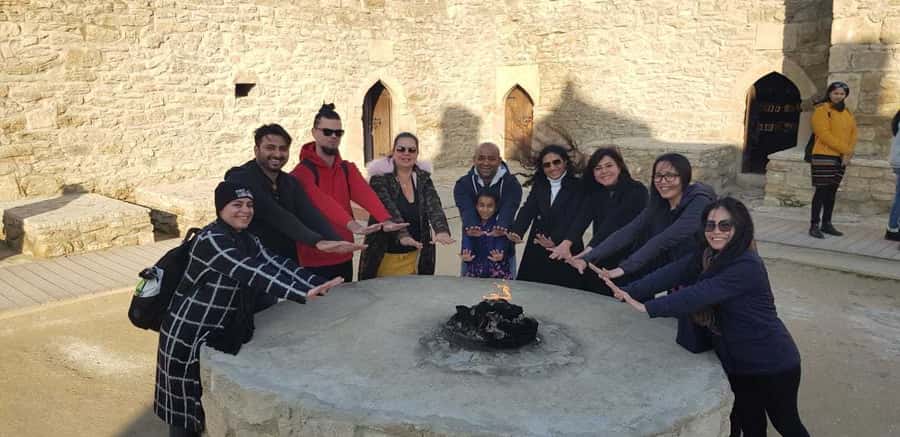
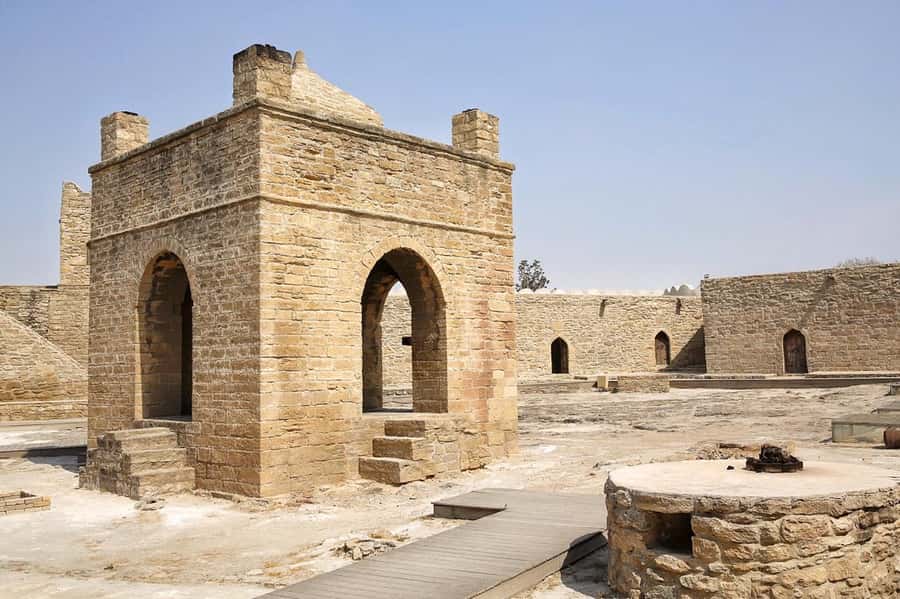
Atesgah, or the Fire Temple of Baku, is the most atmospheric historical stop after Gobustan. You spend about 40 minutes visiting this former place of worship associated with Zoroastrian fire worship.
The temple helps explain the region’s long connection with natural flames. Gas once escaping through the ground could burn continuously, creating a powerful religious symbol. The site also reflects the movement of people and beliefs across the region, rather than being an isolated local curiosity.
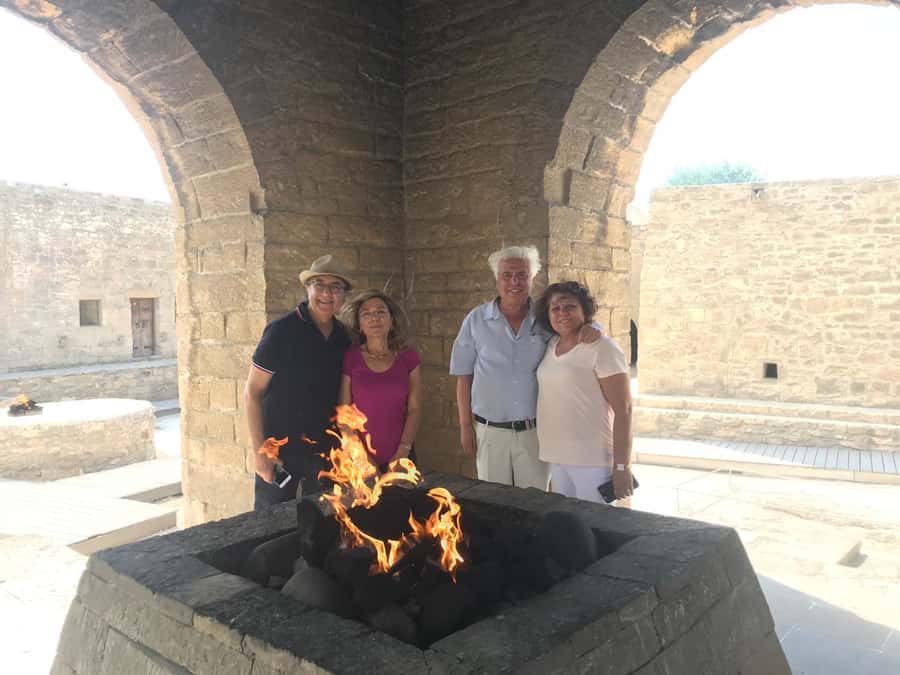
The name Ateshgah is often connected with fire, and the structure’s central flame area gives the visit its focus. Your guide’s explanation is useful here because the site can otherwise seem like a compact courtyard with surrounding rooms. The story turns the architecture into a place of pilgrimage, ritual, and trade.
The visit lasts longer than the Yanardag stop, giving you more time to hear the background and look around. Still, 40 minutes is enough for an introduction, not an exhaustive study. If you want extensive detail about Zoroastrian practice, ask questions while you are there.
This is also a good point in the schedule for families and first-time visitors. The symbolism is easy to grasp, and the site offers a clear link between Azerbaijan’s natural gas and its religious past.
Yanardag, the hillside fire that keeps burning
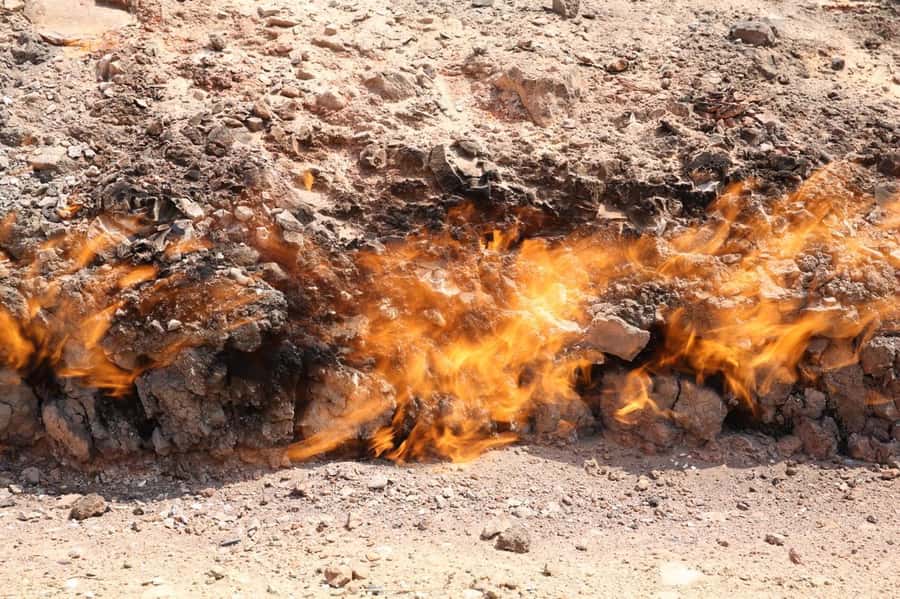
The final major sight is Yanardag, a natural gas fire burning continuously on a hillside of the Absheron Peninsula. The visit lasts about 30 minutes.
Yanardag is visually simple but memorable. You see flames rising directly from the ground, which makes the phrase Land of Fire feel less like a slogan and more like a description of the region’s geology. The fire is not a staged performance, and that natural origin is the point.
I would place Yanardag among the most accessible stops on the trip. You do not need to understand a long archaeological timeline to appreciate it. The guide can explain the gas and the cultural meaning, then you have time to watch the flames and take photographs.
The short visit may frustrate you if you want a long walk or a detailed nature stop. This is a focused attraction, and the tour moves on after about half an hour. Seen alongside Ateshgah, though, it completes the day’s fire story nicely: one stop shows how people worshipped fire, and the other shows the natural force that inspired such beliefs.
Guides, vehicles, and the pace of the day
The quality of the guide is one of the most important parts of this tour. The strongest feedback centers on guides including Sayed or Said, Mahabat, Leyla, Elcan, Musa, Samir, Ughur, and others who explain clearly, answer questions, help with photographs, and keep the group comfortable.
Sayed is repeatedly described as warm, funny, and able to explain Azerbaijan’s past in detail. Leyla has been praised for keeping information simple and interesting, while Elcan is noted for stories and care with the group. If your guide is as engaging as these examples, the long drives become much easier.
Language support is available in English and Russian. One guide also explained places in both English and Turkish for a group, but Turkish should not be treated as a standard tour language based on the supplied information.
Transport is included, with hotel pickup and drop-off at the listed locations. Past outings have used comfortable vans or buses, though the mud volcano approach may switch to Soviet Lada vehicles. Group size can be small, with one outing having only four people and a guide, but the exact number depends on the departure.
Expect a full day rather than a leisurely half-day. One guest felt the timetable was tight, while another specifically recommended staying for the full day because the afternoon stops added real value. You should not book this if you dislike moving between several attractions on a fixed schedule.
Who should book it, and who should skip it
I would recommend this trip to you if you want to see the major historical and geological sights outside Baku without arranging several separate rides. It suits first-time visitors, families, curious photographers, and anyone interested in archaeology, religion, oil, or unusual geology.
It is also a sensible choice if you want a tour without forced shopping. That point matters in Azerbaijan, where some day trips build in carpet, souvenir, or commercial stops. Here, your time is aimed at Gobustan, the volcanoes, the fire sites, and the oil story.
You may prefer a private tour if you want more time at Gobustan or need a flexible pace. A small group is likely the better value if you enjoy meeting other people and want to keep the cost near $29.
I would skip it if your main goal is a slow, specialist visit to prehistoric art. Gobustan receives only about an hour, and the whole day covers several locations. I would also have a backup plan for rainy weather, since the mud volcanoes can be removed for safety.
Booking is flexible: you can cancel up to 24 hours before departure for a full refund, and reserve now while paying later. Pickup is from the lobby of your hotel or one of the listed meeting points, with the provider confirming the time a day before.
FAQ
How long does the Baku day trip last?
The tour lasts approximately 6 to 8 hours. The exact duration can vary with traffic, group arrangements, and the day’s timing.
What places are visited?
The route includes Bibi-Heybat, the Gobustan National Park Museum, mud volcanoes, Yanardag, and Ateshgah Fire Temple.
Is hotel pickup included?
Yes. Hotel pickup and drop-off are included, with pickup from the lobby of your accommodation when it is among the listed locations.
Is lunch included in the price?
No. Lunch is purchased separately at a buffet-style local restaurant. The expected cost is about $8 to $12.
What languages does the guide speak?
Live guiding is available in English and Russian.
Can I book a private tour?
Yes. Private and small-group options are available.
Will I visit the mud volcanoes if it rains?
No. The mud volcano visit is skipped on rainy days for safety reasons.
What is included in the $29 price?
Transportation, a professional guide, hotel pickup and drop-off, and museum tickets and entrance fees if you select the option that includes them.
My verdict on this no-shopping Gobustan tour
At $29 per person, this is a strong value for a long day covering five very different sights. The best parts are the variety, the absence of shopping stops, the guide commentary, and the chance to reach the mud volcanoes without arranging difficult transport yourself.
Book it if you want a practical overview of the history and geology around Baku. Choose the private option if you want more breathing room, bring water in warm weather, and remember that rain may remove the volcanoes. With those limits in mind, this is one of the more useful ways to see Azerbaijan beyond the capital.
More 1-Day Tours in Baku
- Baku: Guided Day Trip to Gabala with Hotel Pickup & Drop-off
★ 4.7 · 139 reviews - Baku : Gobustan, Absheron Sights Guided Day Trip Lunch included
★ 5.0 · 120 reviews - Full Day Trip in Baku (Gobustan & Absheron)
★ 5.0 · 72 reviews - Lankaran – Lerik Day Trip
★ 5.0 · 30 reviews
Just added around Baku
- Lunch included Qobustan, Mud Vulcano, Ateshgah Temple & Yanardag Fire Mountain★ 4.5 · 3 reviews
- Guba and Shahdag City Tour★ 5.0 · 3 reviews
- Baku’s Ancient Heart★ 5.0 · 3 reviews
- Baku: Secret Tour with Surprise Activity★ 5.0 · 3 reviews
- Baku: Old City Guided Walking Tour★ 4.6 · 3 reviews
- Majestic Journey to Qobustan and Absheron★ 4.5 · 3 reviews
- Baku night tour★ 5.0 · 3 reviews
- Lahij – village of masters★ 4.5 · 3 reviews
Gobustan & Mud Volcano Tours, compared.
Gobustan, Mud Volcano, Fire Mount, Temple Lunch Entry
Read our review →
BEST Gobustan, Volcanoes & Absheron Fire Tour (Group or Private)
Read our review →
Gobustan-Mud Volcan-Fire Temple and Mountain Tour/Entrance inc
Read our review →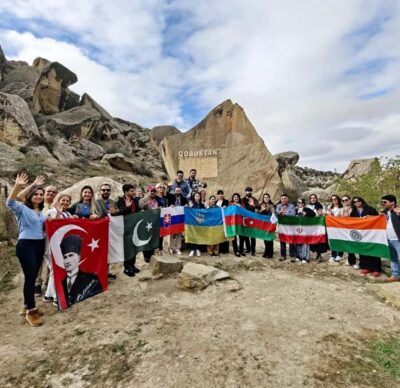
Gobustan Mud Volcanoes Temple & Entry tickets included
Read our review →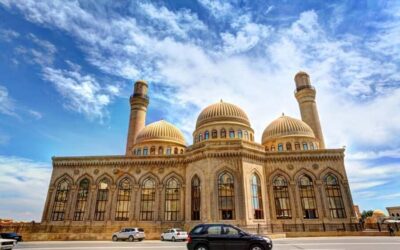
Gobustan-Absheron Tour with Hotel PICK UP and DROP OFF
Read our review →
Gobustan/Absheron guided tour with lunch and tickets
Read our review →Browse the lists this tour appears in