
Reviewed · GOBUSTAN & MUD VOLCANO TOURS
Qobustan rock arts, Mud Volcanoes, Fire temple Ateshgah, Yanardag
Azerbaijan’s fire country story comes alive on this private nine-hour trip from Baku. You move from ancient rock carvings and Mars-like mud volcanoes to a Hindu-built fire temple and a hillside where natural gas still burns. It is a lot of ground, but the four stops fit together well.
I like the small private group format, which lets your party of up to seven travel in an air-conditioned vehicle instead of following a large bus. I also like the range of the day: Qobustan explains ancient life, while Ateshgah and Yanar Dag explain why fire became central to Azerbaijan’s identity.
The main drawback is time. With four major stops packed into about nine hours, you get a useful introduction rather than a slow, deep visit. Mud volcano conditions can also depend on the weather, and museum admission is not included in the $250 group price.
Key points at a glance
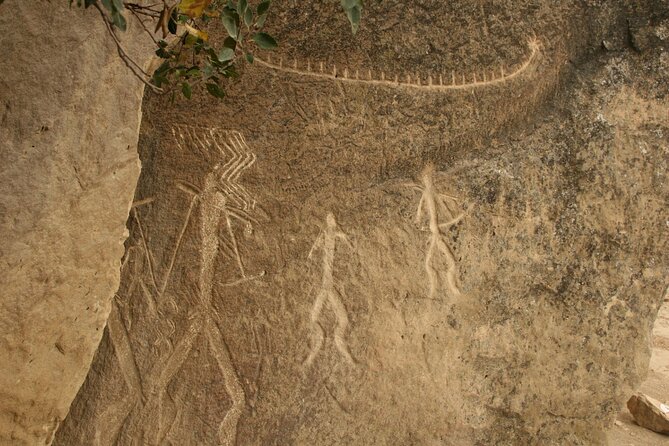
- More than 6,000 rock carvings: Qobustan’s petroglyphs show animals, boats, people, and scenes linked to life thousands of years ago.
- A private price for up to seven people: At $250 per group, the cost becomes much better value when shared by several people.
- Azerbaijan has hundreds of mud volcanoes: The country contains about 350 of the world’s 800 known mud volcanoes.
- Two different kinds of sacred fire: Ateshgah is a historic temple built around natural gas flames, while Yanar Dag is a natural burning hillside.
- A UNESCO-listed cultural stop: Qobustan combines an indoor museum with an open-air rock-art area.
- A full day outside Baku: Pickup, private transport, WiFi, and a multilingual guide are included, but lunch and museum tickets are extra.
Why this Baku day trip works
This experience gives you a sharp picture of Azerbaijan in one day. You are not visiting four unrelated sights. Each stop adds a piece to the country’s story: early human settlement, underground gas, Zoroastrian worship, Hindu pilgrimage, and the modern fascination with natural fire.
That variety is the tour’s greatest strength. If you have only a short stay in Baku, you can see several of the country’s best-known sights without arranging separate transport. The route also takes you away from the city and into the dry eastern part of the Absheron region and the Qobustan area.
The private setup matters. Your group can be as large as seven, and the vehicle is air-conditioned. That is useful on a nine-hour outing, especially when the day includes several road sections and outdoor stops. WiFi is also provided on board, though the key value is having transportation and a guide handled together.
The guide is local and multilingual. That means you can expect explanation in one of the available languages rather than simply being dropped at each site. The historical background is important here, since the sights are more rewarding when you understand the difference between a natural gas fire, a religious shrine, and a modern tourist attraction.
The tour currently has a 5.0 rating from 30 published ratings, with 100 percent recommending it. That is a small sample, but it fits the experience’s strongest selling point: the guide-led format makes a packed day easier to follow.
More Gobustan and mud volcano runs:
- Baku: Gobustan, Mud Volcano, Fire Mount, Temple Lunch Entry
★ 4.9 · 3,246 reviews - BEST Gobustan, Volcanoes & Absheron Fire Tour (Group or Private)
★ 5.0 · 1,254 reviews - Gobustan and Absheron tour (All inclusive)
★ 5.0 · 1,014 reviews
Ateshgah Fire Temple and the old fire cult
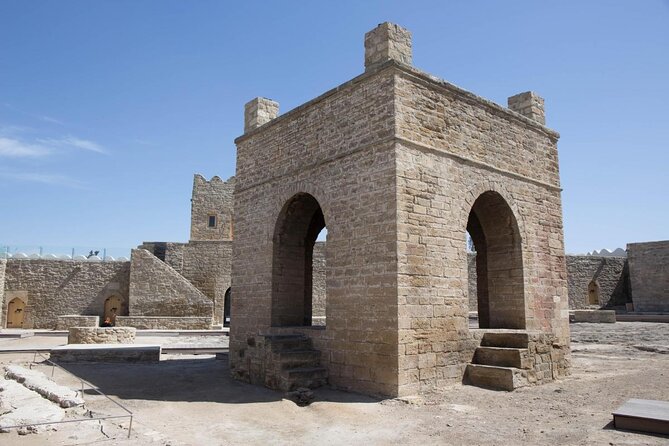
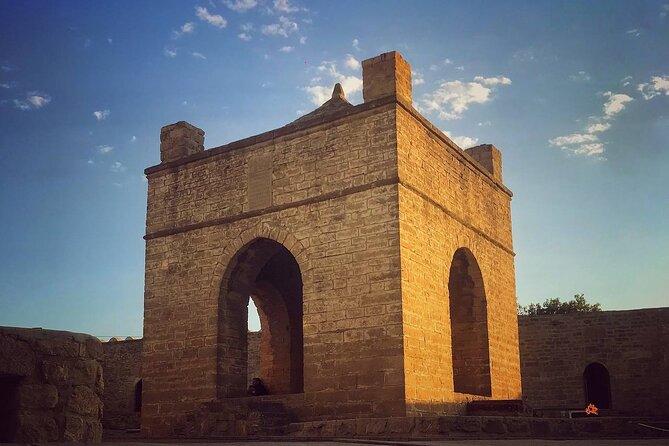
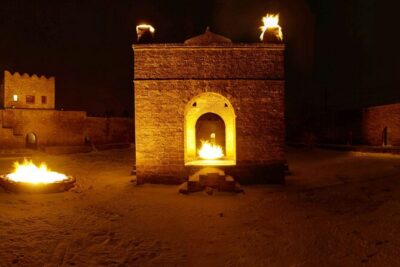
Ateshgah is the best place to begin the fire theme. The site is known as the Temple of Eternal Fire, though the building you see today is not an untouched ancient structure. Its present form dates from the 17th and 18th centuries, when a Baku-based Hindu community connected with Sikhs built the temple.
The older story reaches back much further. Natural gas once rose through cracks in the ground, and when it met oxygen it could ignite. Zoroastrians, the ancient fire worshippers of the region, treated these flames as sacred. The fire was not simply a practical oddity. It was seen as a sign of divine power.
That mixture of natural science and religious meaning makes Ateshgah interesting. You can look at the temple as a historic place of worship, but you can also see how the area’s geology shaped local belief. Azerbaijan’s nickname, the land of fire, makes much more sense after this stop.
You have about 30 minutes here. That is enough for a compact visit, especially with a guide explaining the site as you look around. It is not enough for a long, unhurried study of every detail, so listen closely during the introduction and use your time to examine the temple’s layout.
Admission is listed as free for this stop, but the tour information also says museum tickets are not included and that museum admission totals $15 per person. Ask your guide which entrance fees apply on the day so your budget is clear.
Yanar Dag, the burning hillside
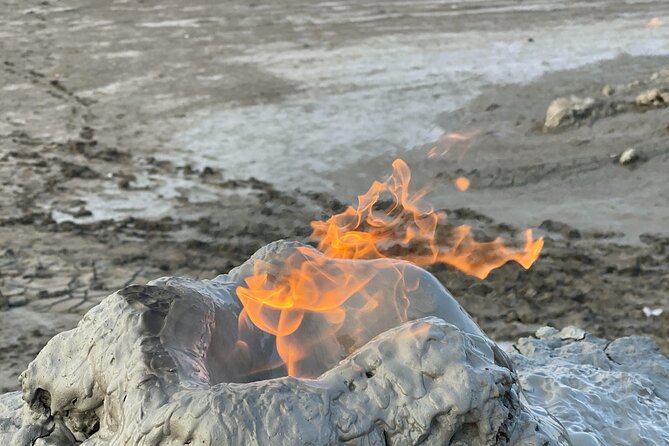
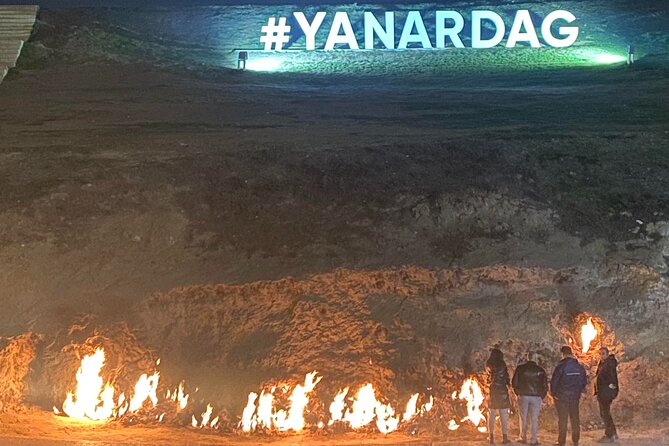
Yanar Dag offers a different kind of fire experience. Ateshgah is a built religious complex with a long human story. Yanar Dag is a natural gas fire on a mountainside, and its flame is the main attraction.
The name means Burning Mountain. For centuries, fires fed by gas escaping from below helped shape the region’s reputation. Ancient followers of Zoroastrianism saw such flames as sacred signs and built places of worship around them.
Your visit here is brief, about 15 minutes. That may sound short, but Yanar Dag is a focused stop. You see the flame, hear the explanation, take photographs, and move on. The short visit also keeps the day from becoming repetitive, since you have already explored the larger fire story at Ateshgah.
I would treat Yanar Dag as a visual punctuation mark rather than a full museum visit. The fire is memorable because it appears in an open setting, without the temple architecture at Ateshgah. Still, anyone expecting a huge mountain ablaze may find the actual viewing area more modest than the name suggests. The experience is about the unusual cause and the cultural meaning, not sheer size.
Mud volcanoes and Azerbaijan’s unusual geology
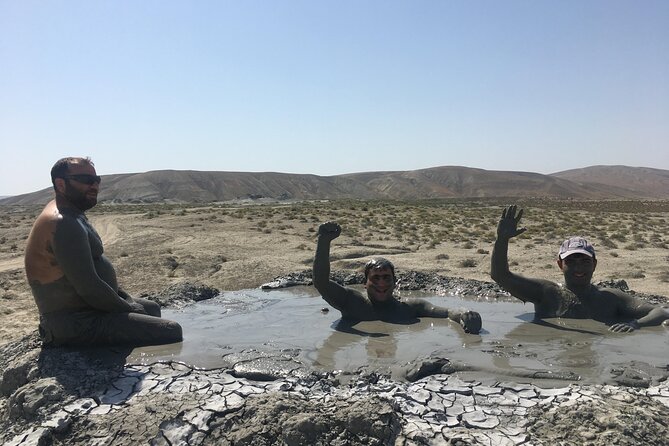
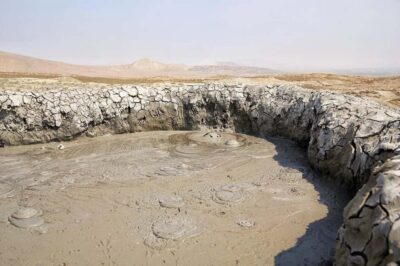
The mud volcano stop gives the day its strangest scenery. Azerbaijan has more mud volcanoes than any other country, with about 350 of the world’s roughly 800 volcanoes located within the republic. Their activity began in this territory around 25 million years ago, according to the supplied information.
These are not lava volcanoes. They push out mud, liquid, and gases connected with underground geological activity. The volcanoes are linked to oil and gas fields, including areas such as Lokbatan, Garadgh, Neft Dashlari, and Mishovdagh.
You have about one hour at the mud volcanoes. That gives you time to see the formations and hear how they work. The setting is also a useful contrast with the fire sites. At Ateshgah and Yanar Dag, gas appears as flame. Here, underground forces appear as mud and bubbling activity.
The tour description notes that NASA geologists studying Mars have taken interest in Azerbaijan’s mud volcanoes. The comparison is easy to understand: the gray, bare formations can look otherworldly. This is one of the stops where the guide’s explanation adds real value, since the sight itself can be puzzling if you do not know what you are seeing.
There is a practical point to remember. This is an outdoor geological stop, and the whole experience requires good weather. If poor conditions cause cancellation, you can be offered another date or a full refund. Wear shoes and clothing you do not mind using in a dusty setting, though the supplied details do not specify the exact ground conditions on the day.
The volcanoes are not only curiosities. Their mud, lava, and liquid are used as raw materials in chemical and construction industries and in pharmacology. That connection gives the stop more weight than a quick photo opportunity.
More fire temple and burning mountain trips:
- Baku: Gobustan, Volcanoes, Fire Temple and Yanardag Day Trip
★ 4.7 · 433 reviews - Gobustan & Mud, Fire Temple, Burning Mountain (Group & Private)
★ 4.5 · 418 reviews - Gobustan-Mud Volcan-Fire Temple and Mountain Tour/Entrance inc
★ 5.0 · 267 reviews - Gobustan, Mud volcanoes, Fire temple, Fire mountain PRIVATE TOUR
★ 5.0 · 47 reviews
Qobustan’s petroglyphs and the UNESCO connection
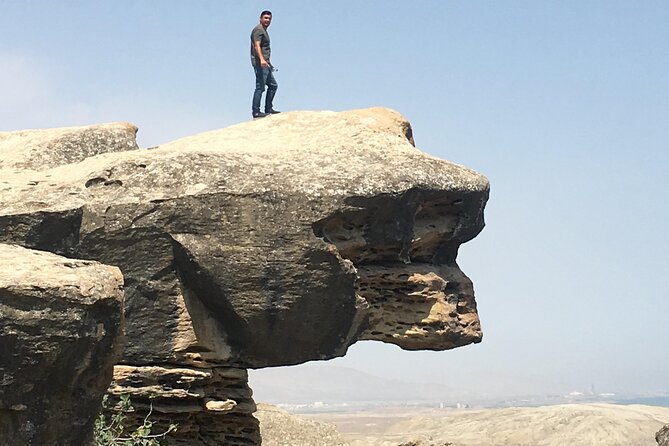
Qobustan National Historical-Artistic Preserve is the day’s most important cultural stop. Located about 60 kilometers from Baku, it functions as an open-air museum, with a museum component that helps explain the rock art and archaeological finds.
The preserve is listed by UNESCO for the quality and density of its engravings. More than 6,000 drawings appear on about 1,000 rocks, alongside more than 100,000 artifacts. Those numbers explain why a guided visit is useful. You are not looking at one famous carving. You are entering a large record of human activity spread across a broad site.
The petroglyphs show how ancient people represented the world around them. The exact meaning of every image is not always simple, but the carvings give you a direct connection to people who lived in this territory long before modern Azerbaijan existed.
You have roughly one hour at Qobustan. I would consider that enough for a first visit, but not enough to see everything in detail. The museum helps you get oriented, then the outdoor section gives the images their proper setting. The rocks are not isolated in a gallery. They remain part of the dry terrain where the carvings were made.
This stop is likely to appeal most to you if you enjoy archaeology, early human history, or UNESCO sites. If you prefer dramatic scenery over cultural explanation, the mud volcanoes or Yanar Dag may make a stronger immediate impression. Qobustan rewards attention rather than speed.
The museum ticket is not included. The stated total cost for museum tickets is $15 per person. That is a small extra beside the group price, but you should include it when comparing the tour with other day trips.
The timing: four stops in about nine hours
The listed stop times add up to about two hours and 45 minutes: 30 minutes at Ateshgah, 15 minutes at Yanar Dag, one hour at the mud volcanoes, and one hour at Qobustan. The rest of the roughly nine-hour day goes to driving, pickup, transitions, and time around the sites.
That balance is normal for a trip covering several places outside Baku. You should not book it expecting long, independent exploration at each stop. Instead, think of it as a carefully arranged overview of the region.
The order listed begins with Ateshgah, continues to Yanar Dag, then moves to the mud volcanoes and Qobustan. Since exact driving times are not provided, your day may vary with traffic, weather, and road conditions. Pickup is offered, and the meeting information gives operating hours of 9:00 a.m. to 6:00 p.m.
Starting early is sensible if your schedule allows it. You will have more room for traffic delays and more time to listen to the guide without feeling rushed. The tour is available Monday through Sunday during the stated operating period.
What the $250 price really buys you
The price is $250 per group, with up to seven people included. That means the value depends heavily on group size:
- Two people pay an effective $125 each.
- Four people pay $62.50 each.
- Seven people pay about $35.70 each.
At full capacity, this is a strong deal for a private day outside Baku. You receive an air-conditioned vehicle, private transport, a professional multilingual guide, WiFi on board, and pickup. A couple traveling alone pays much more per person, but also gets the comfort and control of a private outing.
Lunch is not included. Museum admission is also extra, with the stated total of $15 per person. You should allow for those costs before comparing the tour with a group excursion or a self-arranged taxi day.
The real value is convenience. Qobustan and the mud volcanoes are not city-center sights, and combining them with Ateshgah and Yanar Dag requires planning. For a short visit to Azerbaijan, paying for one organized day can be worthwhile because it leaves you free to focus on the places rather than transport connections.
Who should book this experience
I would recommend this tour to a group of friends, a family, or any party of up to seven that wants a private day with a guide. It suits first-time visitors who want context, especially if you are curious about ancient rock art, Zoroastrianism, geology, or Azerbaijan’s fire traditions.
It is also a good match for a short Baku visit. You cover several major sights in one day and return with a clearer sense of how the country’s geography shaped its culture.
You may want another option if you dislike road time, prefer to spend half a day at one archaeological site, or want a relaxed meal built into the schedule. The four-stop plan is efficient, but it is not leisurely.
The tour is suitable for most participants, and service animals are allowed. It is also near public transportation, though private pickup is offered. Confirmation is received at booking, and only your group takes part in the activity.
Booking advice and cancellation terms
Because the experience is booked an average of 11 days ahead, reserve early if your dates in Baku are fixed. The tour requires good weather, particularly for the outdoor sites, so keep some flexibility if possible.
You can cancel for a full refund up to 24 hours before the start time. Changes or cancellations made less than 24 hours before departure are not accepted for a refund, and all cut-off times follow local time in Azerbaijan.
The provider is Panorama Travel. The current score is 5.0 from 30 ratings, and the experience is recommended by 100 percent of those ratings. The strongest praise focuses on the guide’s kindness and clear explanations, which is exactly the quality that matters most on a history-heavy day.
Should you book the Qobustan and fire sites tour?
Book it if you want to see Azerbaijan’s main out-of-town sights in one efficient private trip. The combination of UNESCO rock art, mud volcanoes, Ateshgah, and Yanar Dag is hard to reproduce as neatly without arranging several pieces yourself.
The best value comes with four to seven people. Solo visitors and couples should compare the $250 group price with shared tours, but remember that a shared option may not offer the same privacy or flexible atmosphere.
Go in with realistic expectations: this is a broad introduction, not an intensive archaeological study. If that suits your schedule, the tour gives you a memorable look at the forces, beliefs, and early people behind Azerbaijan’s land of fire identity.
FAQ
How long does the tour last?
The experience lasts approximately nine hours, including transportation between the four sites and the scheduled visits.
How many people can join the private tour?
The price covers one private group of up to seven people. Only your group participates in the activity.
What is included in the tour price?
An air-conditioned vehicle, private transportation, a professional multilingual guide, WiFi on board, and pickup are included.
Is lunch included?
No. Lunch is not included in the tour price.
Are museum tickets included?
No. Museum tickets are extra. The supplied information gives the total museum ticket cost as $15 per person.
How much does the tour cost?
The price is $250 per group of up to seven people.
What happens if bad weather cancels the tour?
This experience requires good weather. If it is canceled because of poor weather, you can be offered another date or a full refund.
When can I cancel for a full refund?
You can cancel at least 24 hours before the experience start time for a full refund. Cancellations or changes made less than 24 hours before the start time are not refunded or accepted.
Just added around Baku
- Guba and Shahdag City Tour★ 5.0 · 3 reviews
- Lunch included Qobustan, Mud Vulcano, Ateshgah Temple & Yanardag Fire Mountain★ 4.5 · 3 reviews
- Baku’s Ancient Heart★ 5.0 · 3 reviews
- Baku: Secret Tour with Surprise Activity★ 5.0 · 3 reviews
- Baku: Old City Guided Walking Tour★ 4.6 · 3 reviews
- Majestic Journey to Qobustan and Absheron★ 4.5 · 3 reviews
- Lahij – village of masters★ 4.5 · 3 reviews
- Baku night tour★ 5.0 · 3 reviews
Gobustan & Mud Volcano Tours, compared.
Gobustan, Mud Volcano, Fire Mount, Temple Lunch Entry
Read our review →
BEST Gobustan, Volcanoes & Absheron Fire Tour (Group or Private)
Read our review →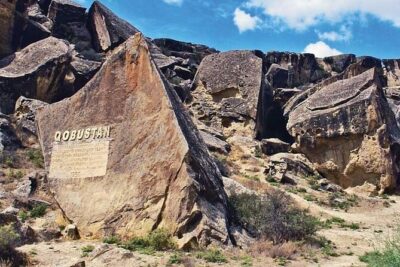
Gobustan, Volcanoes, Fire Temple and Yanardag Day Trip
Read our review →
Gobustan-Mud Volcan-Fire Temple and Mountain Tour/Entrance inc
Read our review →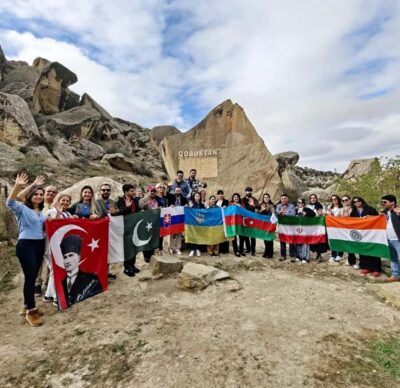
Gobustan Mud Volcanoes Temple & Entry tickets included
Read our review →
Gobustan-Absheron Tour with Hotel PICK UP and DROP OFF
Read our review →Browse the lists this tour appears in