
Reviewed · GOBUSTAN & MUD VOLCANO TOURS
Gobustan, Mud volcanoes, Fire temple, Fire mountain GROUP TOUR
A hillside of natural fire, prehistoric carvings, and bubbling mud volcanoes make this one of Baku’s most unusual day trips. You’ll see four very different sides of Azerbaijan, from ancient rock art at Gobustan to the sacred flames of Ateshgah and Yanar Dag.
I like the efficient route and the chance to visit several hard-to-reach sights in one day. I also like the small-group format, capped at 20 people, since it should give you a better chance to hear the guide than a large coach tour. The main caution is cost: the $59 tour price does not cover about $23 in entrance fees or your lunch.
Key points to know before booking
- Gobustan combines an interactive museum with open-air rock art, making the first stop more than a quick photo break.
- The mud volcanoes are active, and you can climb close to the craters with the guide.
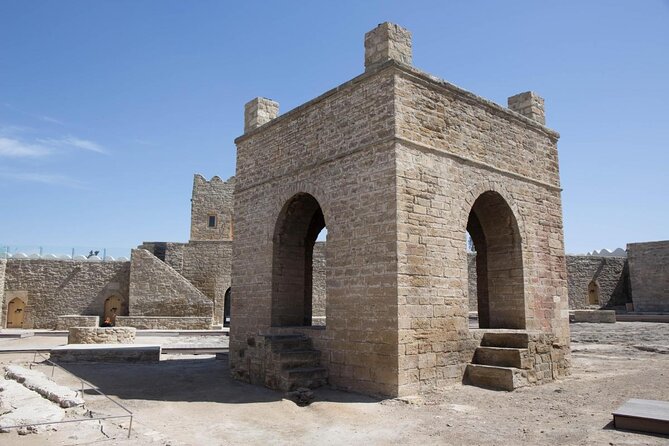
- Ateshgah connects Persian and Indian religious traditions, including Zoroastrian and Hindu worship.
- Yanar Dag is a natural gas fire on a hillside, not a man-made flame or theatrical display.
- The day lasts about nine hours, with pickup from your location in Baku and drop-off at the end.
- Budget extra for entry tickets and lunch, since both are excluded from the advertised price.
Why this day trip works from Baku
Baku is surrounded by attractions that are difficult to combine using ordinary public transport. Gobustan lies outside the city, the mud volcanoes are in a separate rural area, and the Ateshgah and Yanar Dag stops are on the Absheron Peninsula.
This tour handles the driving in an air-conditioned vehicle and links the sights into one long day. I see that as the main value. You are not paying only for a guide at each monument. You are also paying for transport, route planning, and the ability to see places that would otherwise require several separate trips.
The schedule begins at about 9:30 in the morning and lasts roughly nine hours. That makes it a substantial day, but the route has enough variety to keep it from feeling like one long museum visit. You move from archaeology to geology, then to religion and natural fire.
The group can reach a maximum of 20 people. That is not a private tour, but it is still more manageable than a full-size bus. Since much of the value depends on explanations at Gobustan and Ateshgah, the size of your group matters.
More Gobustan and mud volcano runs:
- Baku: Gobustan, Mud Volcano, Fire Mount, Temple Lunch Entry
★ 4.9 · 3,246 reviews - BEST Gobustan, Volcanoes & Absheron Fire Tour (Group or Private)
★ 5.0 · 1,254 reviews - Gobustan and Absheron tour (All inclusive)
★ 5.0 · 1,014 reviews
Gobustan begins with ancient life carved into stone
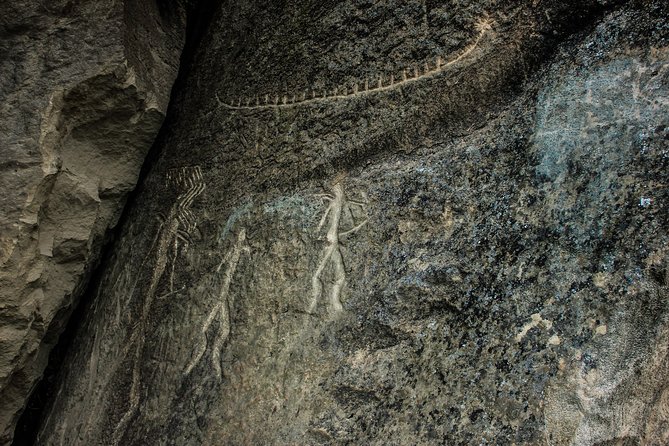
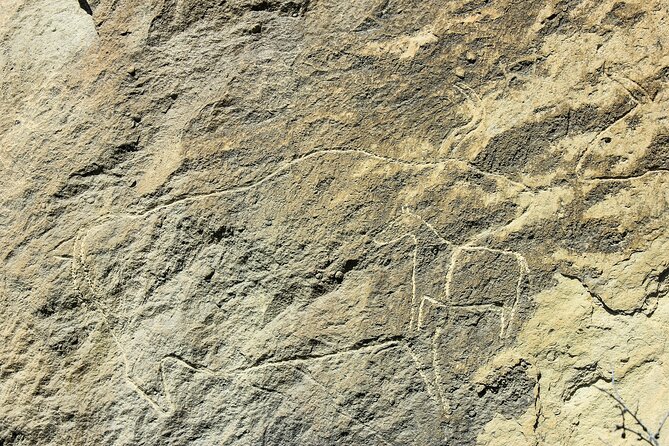
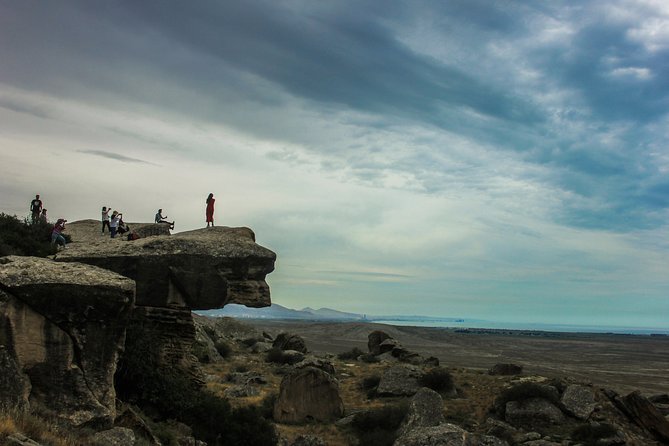
Gobustan is the most historically important part of the day. The area is known for prehistoric rock engravings, and it is recognized as a UNESCO World Heritage Site. The carvings provide a direct link to people who lived in this part of Azerbaijan thousands of years ago.
The first part is an indoor museum with touch screens, 3D panoramas, archaeological displays, and information about the area’s natural setting. Exhibits cover the population, cultural development, and archaeological work carried out in Gobustan.
You can also see objects dating from roughly the fourth to second millennium BC. The museum is useful because the rock carvings themselves can be hard to interpret without context. A few marks on stone become more meaningful when you understand how people lived, traveled, and used the area.
The museum also presents life in Gobustan between about 5,000 and 20,000 years ago. That wide time span helps place the carvings in a much larger story rather than treating them as isolated drawings.
After the indoor visit, the guide takes you to the open-air rock area. This is where the experience becomes more immediate. You are no longer looking at displays behind glass. You are standing among the rocks where the engravings were made.
Expect about two hours for the Gobustan section, including the museum and rock area. The admission ticket is not included, so keep part of the separate ticket budget for this stop.
What the Gobustan rock art can tell you
The value of Gobustan is not only visual. The carvings record people, animals, hunting scenes, and daily life across a long period, giving you clues about how communities used this part of the country.
I like that the tour includes both the museum and the open-air site. If you only visited the rocks, you might miss the archaeological explanation. If you only visited the museum, you would miss the sense of place that gives the carvings their force.
The practical drawback is that this is an exposed outdoor site. The supplied details do not specify shade, walking distance, or ground conditions, so wear sensible shoes and prepare for a full two-hour visit that includes time outside. Good weather is required for the tour, and poor conditions can lead to a changed date or cancellation.
The mud volcanoes offer Azerbaijan’s strangest close-up
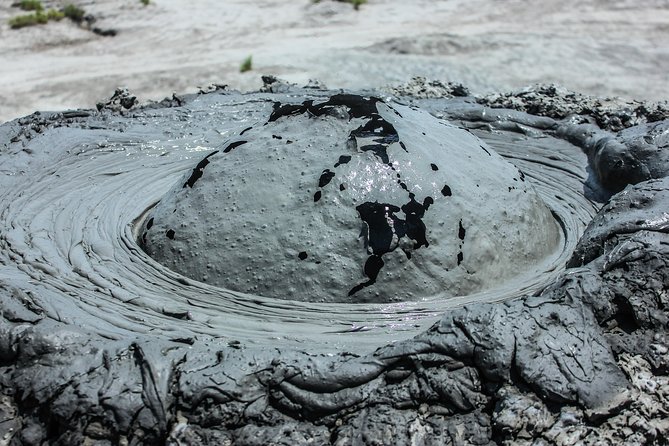
Azerbaijan has one of the world’s largest concentrations of mud volcanoes. Around 350 of the roughly 800 mud volcanoes worldwide are said to be located in the country.
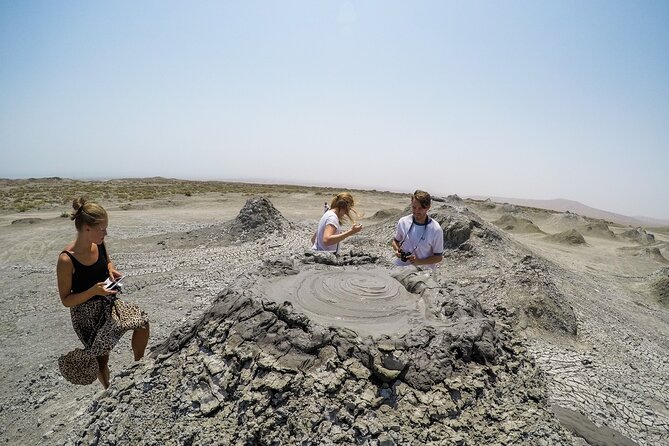
These are not ordinary volcanoes with rivers of hot lava. They push up mud, gases, and other material from below the ground. The result is a stark setting of cones, gray-brown mud, and bubbling craters.
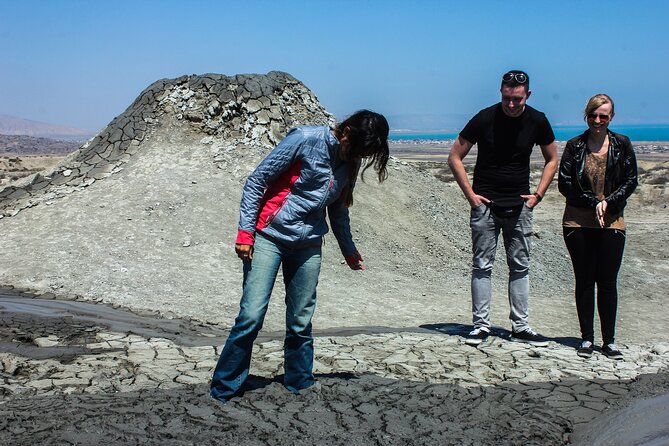
The guide takes you to active mud volcanoes where you can climb and look close to the craters. That makes this more than a distant viewpoint. You get to see the movement and texture of the mud at close range.
The tour allows about an hour for this stop. Admission is not included. The hour is enough for a focused visit, but it is not a long geology lesson or an extended walk through the area.
I would treat the mud volcanoes as a visual and geological stop rather than a polished attraction. Conditions may feel basic, and the ground can be uneven. The supplied information does not promise facilities or a formal visitor center, so keep your expectations centered on the natural phenomenon itself.
The tour description also explains that volcanic clay and mud have been used in treatment connected with skin, rheumatic, and nervous-system conditions. It also notes uses in construction, chemicals, and pharmacology. Those claims provide useful context, but this visit is for viewing the volcanoes, not for bathing in or applying the mud.
More fire temple and burning mountain trips:
- Baku: Gobustan, Volcanoes, Fire Temple and Yanardag Day Trip
★ 4.7 · 433 reviews - Gobustan & Mud, Fire Temple, Burning Mountain (Group & Private)
★ 4.5 · 418 reviews - Gobustan-Mud Volcan-Fire Temple and Mountain Tour/Entrance inc
★ 5.0 · 267 reviews - Gobustan, Mud volcanoes, Fire temple, Fire mountain PRIVATE TOUR
★ 5.0 · 47 reviews
A lunch break splits the long day
Before the second half of the route, you receive about an hour for lunch in Baku city center. Lunch is not included in the price, so you pay for your own meal.
This pause is useful. Gobustan and the mud volcanoes make an active first half, and a central-city break gives you a chance to sit down before the fire-temple and Absheron stops.
The trade-off is that lunch takes time from sightseeing. If your priority is to spend every possible minute at the monuments, the break may feel long. If you prefer a more humane pace, it helps prevent the nine-hour schedule from becoming tiring.
No restaurant is specified, so do not assume a particular menu or dining venue. The safest way to plan is to keep money available and use the hour as a practical reset.
Ateshgah explains the spiritual side of fire
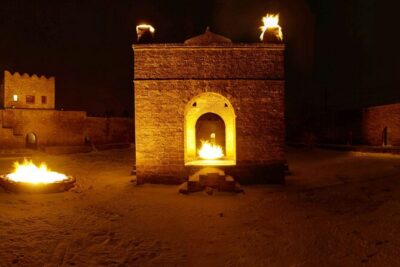
Ateshgah, often called the Fire Temple of Baku, is a different kind of stop from Gobustan. The site was used as a place of worship by Hindu and Zoroastrian communities, with Persian and Indian inscriptions helping explain its religious connections.
The first mention of the temple dates to the seventh century AD. Within the complex, you can see cells where fire worshippers stayed, along with historical objects such as cookware, stone inscriptions, and clothing elements found during archaeological work.
The visit lasts about an hour. That is enough time to look around the cells and hear the guide explain the role of fire in the site’s religious traditions.
I find Ateshgah especially valuable because it complicates the usual picture of Azerbaijan. The country is often presented through its oil wealth, modern capital, and Islamic cultural setting. This temple points to older and wider links with Persian and Indian religious practice.
The ticket is separate from the tour fee. Since this is a historical site with several layers of meaning, your experience will depend heavily on how well the guide explains the inscriptions, worship traditions, and archaeological objects. The small-group setup should help, but the quality of the guide still matters.
Yanar Dag ends the route with a real hillside flame
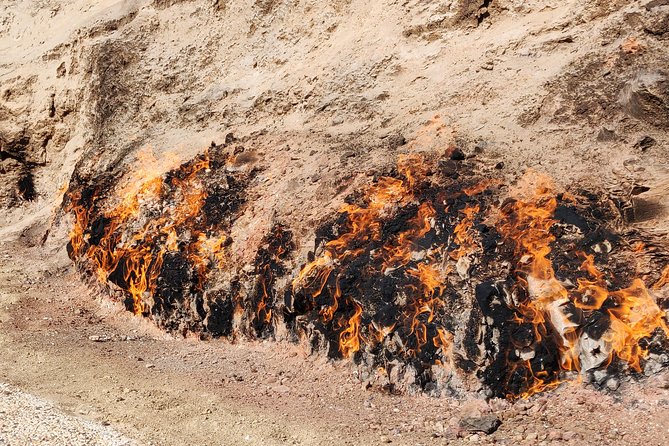
The final stop is Yanar Dag, which means Burning Mountain. It is a natural gas flame burning on a hillside on the Absheron Peninsula near Baku.
The fire has burned since ancient times, according to the supplied information. At Yanar Dag, you are not looking at a reconstructed temple flame or a staged demonstration. You are seeing gas emerging from the ground and burning along the slope.
The visit lasts about 40 minutes. That is a short stop, but the sight itself is simple and concentrated. You walk up, watch the flames, take in the setting, and listen to the explanation.
The site also has religious importance. Pilgrims from Iran and India still come to visit the sacred burning mountain. This links Yanar Dag with the earlier Ateshgah stop, though the two places are different: Ateshgah is a built place of worship, while Yanar Dag is a natural gas fire.
Forty minutes should be enough for the main viewing area. I would not expect a long hike or a large complex. Yanar Dag works best as the memorable final image of the day, especially after you have learned how fire shaped religious life in the region.
What the $59 price really includes
The advertised cost is $59 per person. That price includes an accredited guide and an air-conditioned vehicle, but it excludes entrance tickets listed at about $23 and lunch.
Your real day-trip budget is therefore higher than $59. Add the entry fees and a meal, and you should plan for roughly $82 plus lunch, subject to the exact ticket charges in effect when you book.
That can still be fair value if you want all four locations in one day. Hiring separate transport to Gobustan, the mud volcanoes, Ateshgah, and Yanar Dag would require more planning and may cost more, especially if you are traveling alone or as a couple.
The price is less attractive if you only care about one or two sights. In that case, a shorter focused excursion could suit you better. This tour earns its value through breadth, not through long stays at any single attraction.
The rating supplied for the experience is 4.6 from 19 reviews, with 95 percent recommending it. That is a strong overall signal, but the sample is not large. One isolated account described an inexperienced guide who offered little information and appeared to sleep during part of the drive. The operator disputed that booking and said it could not match the customer’s name or guide details, so treat this as an unresolved warning rather than a confirmed pattern.
The practical lesson is simple: the attractions are the main draw, but your guide affects how much you learn. At pickup, confirm the day’s route and ask questions early. If the explanations are thin, speak up and ask for more context at Gobustan and Ateshgah.
Timing, pickup, and group size
Pickup begins at about 9:30 in the morning from the stated starting point on Aşurlu in Baku. The end point is listed at Fountain Square, although the tour information also says you will be dropped off at your location in Baku.
Because those details are not perfectly identical, confirm the exact pickup and drop-off arrangement when you book. The experience provides mobile ticketing and booking confirmation at the time of purchase.
The tour is near public transportation, and most people can participate. No special accessibility details are provided, so ask the operator if you need information about walking surfaces, steps, or vehicle access.
A nine-hour outing is not a quick city add-on. You should be comfortable with a full day that includes driving, museum time, outdoor rock sites, volcanic ground, and several historical stops. The one-hour lunch break helps, but the schedule remains busy.
The weather rule matters here. Since Gobustan and the mud volcanoes include outdoor visits, poor weather can affect the route. If the operator cancels for that reason, you are offered another date or a full refund.
Free cancellation is available up to 24 hours before the start time. Changes or cancellations inside that window are not accepted for a refund, so check your plans before the cutoff.
Who will get the most from this tour
I would recommend this trip to you if you want a broad introduction to the area around Baku. It suits first-time visitors who prefer one organized day instead of arranging several rides and admission tickets themselves.
It is also a good match if you enjoy unusual natural sights. The mud volcanoes and Yanar Dag are more distinctive than standard city monuments, while Gobustan adds serious archaeological interest.
Families and mixed-interest groups may also like the variety. One person can focus on prehistoric art, another on geology, and another on religious history. The stops are short enough to keep the day moving.
You may want a different plan if you prefer slow travel. An hour at Ateshgah and 40 minutes at Yanar Dag leave limited time for lingering. Independent visitors who want long museum visits, detailed photography, or a quiet meal may find the group schedule restrictive.
Should you book the Gobustan and fire sites tour?
Book it if you want to cover Gobustan, the mud volcanoes, Ateshgah, and Yanar Dag in one organized day. The route offers an unusually wide look at Azerbaijan, and the air-conditioned transport is a real help because the sights are spread beyond central Baku.
Before paying, remember that the $59 price is only the base cost. Set aside about $23 for entry tickets, plus lunch, and confirm the pickup details. If you value efficient sightseeing and variety, this is a sensible choice. If you want a slow, deeply guided visit at one site, choose a more focused tour instead.
FAQ
How long does the tour last?
The tour lasts approximately nine hours, beginning at about 9:30 AM.
What places does the tour visit?
The route includes Gobustan Rock Art Museum and the open-air rock area, the mud volcanoes, Ateshgah Fire Temple, and Yanar Dag.
Is Gobustan a UNESCO World Heritage Site?
Yes. Gobustan is presented as a UNESCO World Heritage Site known for prehistoric rock engravings.
Are entrance tickets included?
No. Ticket fees are listed separately at about $23.
Is lunch included?
No. You receive about an hour for lunch in Baku city center, but you pay for your own meal.
What is included in the tour price?
An accredited tour guide and an air-conditioned vehicle are included.
How large is the group?
The group can have a maximum of 20 people.
Where does the tour start?
The stated starting point is Nizami Badalan mektebin yolu, Aşurlu 1009, Azerbaijan, at about 9:30 AM.
Where does the tour end?
The listed end point is Fountain Square in Baku. The tour information also says drop-off is available at your location in Baku, so confirm the exact arrangement when booking.
Can I cancel for a full refund?
Yes. You can cancel at least 24 hours before the start time for a full refund. Cancellations or changes made less than 24 hours before the start time are not accepted for a refund.
Just added around Baku
- Guba and Shahdag City Tour★ 5.0 · 3 reviews
- Lunch included Qobustan, Mud Vulcano, Ateshgah Temple & Yanardag Fire Mountain★ 4.5 · 3 reviews
- Baku’s Ancient Heart★ 5.0 · 3 reviews
- Baku: Secret Tour with Surprise Activity★ 5.0 · 3 reviews
- Baku: Old City Guided Walking Tour★ 4.6 · 3 reviews
- Majestic Journey to Qobustan and Absheron★ 4.5 · 3 reviews
- Baku night tour★ 5.0 · 3 reviews
- Lahij – village of masters★ 4.5 · 3 reviews
Gobustan & Mud Volcano Tours, compared.
Gobustan, Mud Volcano, Fire Mount, Temple Lunch Entry
Read our review →
BEST Gobustan, Volcanoes & Absheron Fire Tour (Group or Private)
Read our review →
Gobustan, Volcanoes, Fire Temple and Yanardag Day Trip
Read our review →
Gobustan-Mud Volcan-Fire Temple and Mountain Tour/Entrance inc
Read our review →
Gobustan Mud Volcanoes Temple & Entry tickets included
Read our review →
Gobustan-Absheron Tour with Hotel PICK UP and DROP OFF
Read our review →Browse the lists this tour appears in