
Reviewed · GOBUSTAN & MUD VOLCANO TOURS
Gobustan Magic of Mud Volcanoes and Ancient Petroglyphs
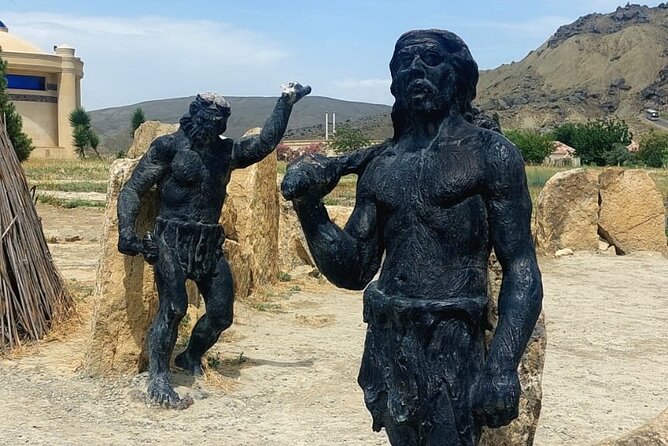
Gobustan gives you two very different views of Azerbaijan in one morning: 10,000-year-old rock art carved into dry hills, followed by small mud volcanoes that bubble and spit below the sky. The petroglyphs show hunting, fishing, ceremonies, dances, and daily life. A Roman soldier even left his mark here in the first century.
I like the private format, since guide Jabrail can shape the outing around your group rather than rush everyone through fixed stops. I also like the mix of archaeology, religion, and oil history, especially the visit to Bibi-Heybat Mosque and the site of the world’s first drilled oil well. The main drawback is that this is a five-hour outing with little time for a relaxed lunch, and the mud volcano stop may feel basic if you expect a full visitor center or paved attraction.
Key points before you book
- Gobustan’s petroglyphs cover thousands of years, with scenes of hunting, fishing, rituals, dances, and tribal life.
- The 10,000-year-old Gavaldash gives you a direct link to the sounds and culture of prehistoric Gobustan.
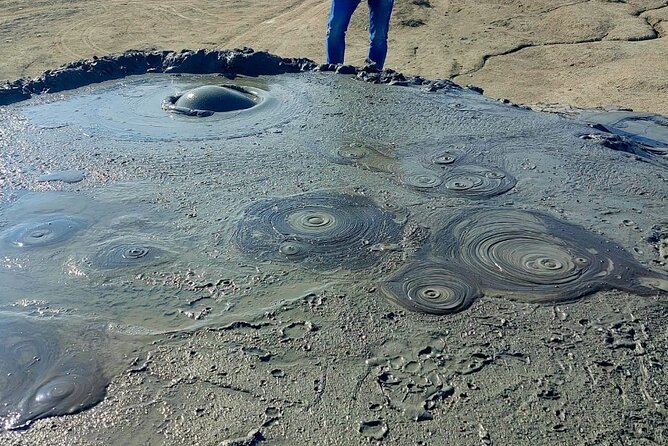
- Mud volcanoes are a raw, outdoor stop, with small cones, bubbling clay, and occasional smoke.
- Jabrail leads a private tour, creating room for questions and a pace suited to your group.
- The outing links four subjects, archaeology, geology, Islam, and oil, rather than focusing on one sight alone.
- Transport, bottled water, air conditioning, the Gobustan museum ticket, and the off-road vehicle payment are included, while lunch and general fees and taxes are not.
Why Gobustan makes a strong half-day from Baku
Baku can keep you busy with grand buildings, museums, and the Caspian waterfront. Gobustan offers a sharper change of scene. Within a few hours, you leave the city behind and reach low, rocky hills marked by prehistoric carvings and traces of much later visitors.
The appeal is not just the age of the carvings. Gobustan helps you picture people before written records became common in the region. You can see figures connected with hunting, fishing, group dances, rituals, and tribal life. One scene is linked to bride kidnapping, a reminder that the rock art records social customs as well as food and work.
This makes the stop more rewarding when you take time to ask questions. A quick photo beside a carving will not tell you much. Jabrail’s role is important here because the meaning of the images is easier to grasp when someone places them in the wider story of Azerbaijan.
The tour also gives you a useful contrast. Gobustan represents a very old human presence, while the oil well near Bibi-Heybat points to the industrial age that changed Baku and the country. Bibi-Heybat Mosque adds a religious and architectural layer. You are not simply checking off four unrelated sights.
More Gobustan and mud volcano runs:
- Baku: Gobustan, Mud Volcano, Fire Mount, Temple Lunch Entry
★ 4.9 · 3,246 reviews - BEST Gobustan, Volcanoes & Absheron Fire Tour (Group or Private)
★ 5.0 · 1,254 reviews - Gobustan and Absheron tour (All inclusive)
★ 5.0 · 1,014 reviews
Leaving Baku at 9:00 am
The tour begins at 9:00 am from Nizami Garden in Sabayil, Baku, and returns to the same meeting point. Pickup is offered, but you should confirm the exact arrangement when booking, since the stated meeting point remains Nizami Garden.
A private, air-conditioned vehicle is included. That matters on a trip that combines city streets, open countryside, and an off-road ride toward the mud volcanoes. You also receive bottled water, a small but useful touch on a half-day outing where the stops are outdoors.
The activity is listed at about five hours. That is long enough to reach the main sights without turning the day into a full excursion, but the schedule is not built around long meals or extended free time. If you want a slow lunch, extra photography, or several additional stops, you may find the pace tight.
The tour is near public transportation, and confirmation is provided at booking. Since this is a private activity, only your group participates. That setup suits couples, families, and small groups who prefer to ask questions freely or adjust how long they spend at each point.
Reading the stones at Gobustan Rock Art Reserve
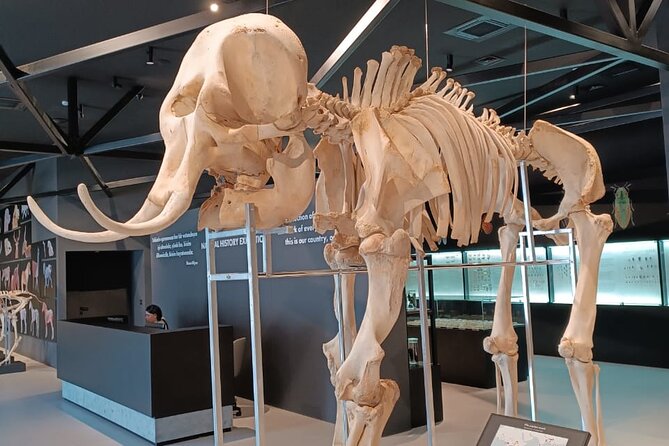
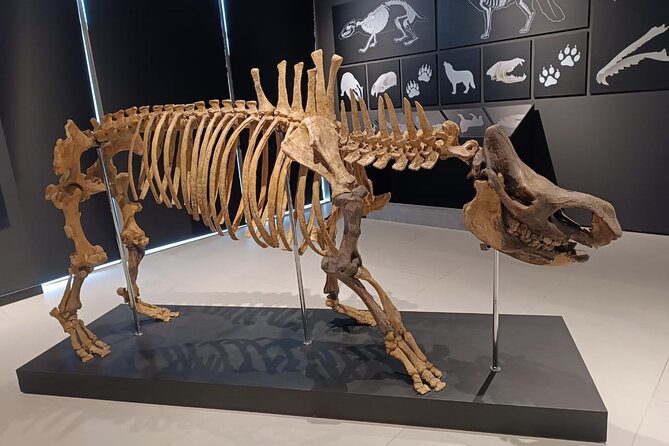
The Gobustan stop lasts about two hours and includes the museum ticket. I would treat this as the main event of the morning. The museum helps you understand the site before you see the carvings, while the outdoor area gives the subject its proper setting.
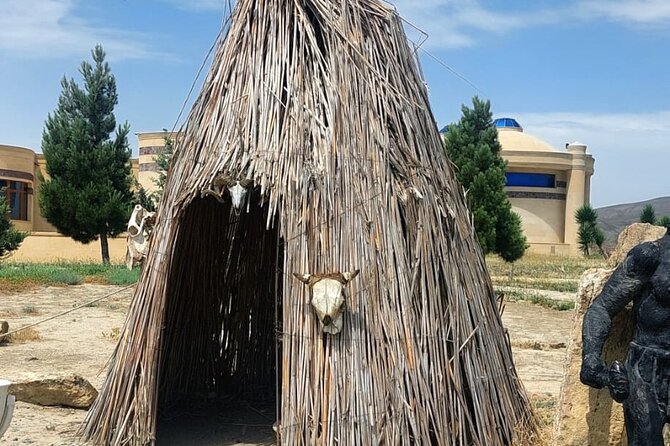
The petroglyphs were made over thousands of years. Their subjects include hunting, fishing, ceremonies, dances involving much of a tribe, and other parts of daily life. These are not polished monuments. They are marks on stone, often simple in form, and their power comes from the fact that they were made by people trying to record or express something in their own world.
Your guide can help turn those marks into scenes rather than isolated lines. You might see human figures, animals, boats, hunting activity, or groups taking part in ritual movement. Not every image will be easy to identify at a glance, so do not expect the site to read like a modern picture book. The pleasure comes from looking closely and hearing how the images fit together.
The museum ticket is included, which improves the value of the $65.55 price. You are not paying only for a drive to a scenic viewpoint. You get an interpretive starting point, then time at the archaeological site itself.
The Gavaldash and Gobustan’s long human story
One of the most unusual details here is the stone called Gavaldash, described as more than 10,000 years old. Its name is tied to the idea of a stone that produces sound when struck. The tour presents it as part of Gobustan’s ancient culture, not simply as another rock in the reserve.
This detail adds a human sense to the visit. The petroglyphs show what people saw and did. Gavaldash points toward what they heard and how sound may have formed part of communal life. Ask Jabrail to explain how the stone fits into the story of the site.
Gobustan also contains evidence of later history. At the foot of Boyuk-Dash, a centurion from the XII Lightning Legion left a Roman inscription in the first century AD. It is described as the easternmost Roman inscription of its kind. That small mark creates a striking contrast with the much older carvings nearby.
You may also encounter short Arabic sayings, including one translated as came, prayed, left, along with images of men wearing turbans. These later marks show that Gobustan remained a place of passage long after the prehistoric artists were gone. Look for the layers: prehistoric scenes, Roman writing, Arabic words, and modern interpretation all share the same setting.
A few more Baku half-days to weigh up
- Baku: Guba, Shahdag, Laza & Lunch w/ Free City & Night Tour
★ 4.8 · 1,455 reviews - Shamakhi And Gabala Tour (All inclusive)
★ 5.0 · 815 reviews - From Baku: Gabala and Shamakhi Tour (Free Baku City Tour)
★ 4.8 · 695 reviews - Baku: Candy Cane, Guba, Khinaliq village with Homemade Lunch
★ 4.9 · 519 reviews
Watching the mud volcanoes bubble and shift
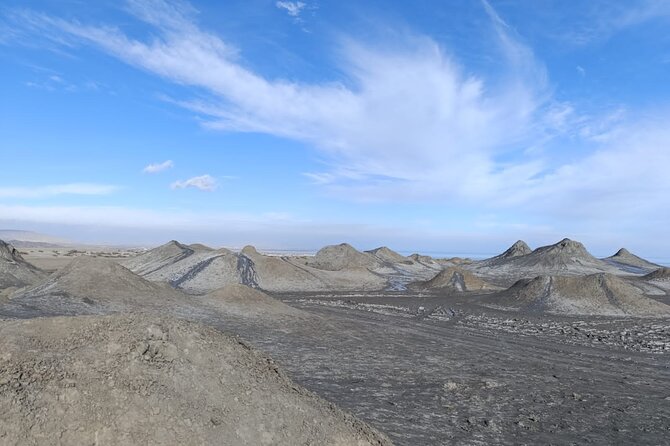
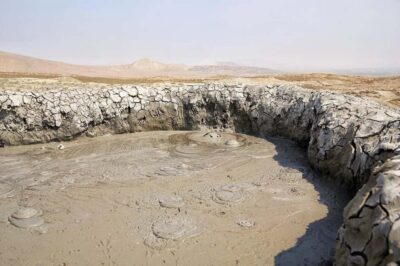
The mud volcano stop takes about one hour. It is not a traditional volcano visit with glowing lava or towering peaks. These cones push up cold or cool mud, gases, and clay. The result can be small, rough, and surprisingly active.
You may notice little volcanic cones along the route before reaching the stop. At times, smoke or bubbling clay can be seen from a distance. The shapes are part of what makes the area unusual, but the attraction is also the sound and movement of the mud. A quiet mound can suddenly look alive when bubbles break across its surface.
The off-road car payment is included, which is useful because the route to the cones is not simply a standard paved-road sightseeing stop. You should still expect a basic outdoor setting rather than a developed park with extensive facilities.
This is where expectations matter most. If you like odd natural features, geology, and places that feel less polished, you will likely enjoy the stop. If you want dramatic volcanic peaks, guided experiments, or a long nature walk, this portion may feel short and modest.
Wear practical shoes and avoid assuming that every surface will be smooth. The supplied details do not promise specific facilities at the volcanoes, so plan for an outdoor stop with limited comfort. Bottled water is included, but lunch is not.
Bibi-Heybat Mosque and the religious side of Baku
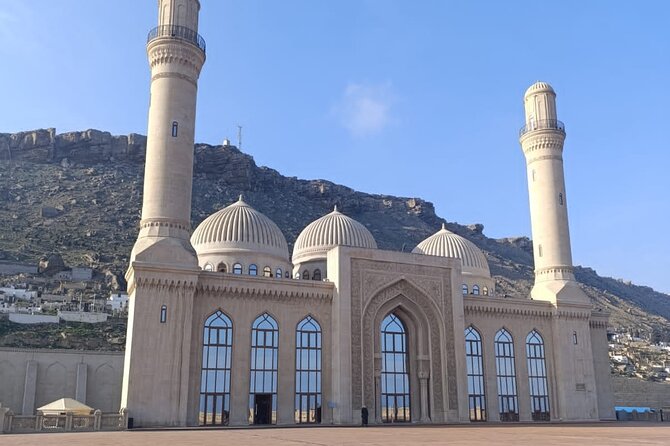
After Gobustan and the volcanoes, the tour returns toward Baku for a 20-minute stop at Bibi-Heybat Mosque. Admission is free. The visit is brief, but it adds something the earlier stops cannot: a look at Azerbaijan’s Islamic architecture and religious tradition.
Bibi-Heybat is described as an ancient mosque and a pearl of Islamic architecture. Even with only 20 minutes, you can pause for the building’s form, decoration, and setting, while Jabrail explains its place in local culture.
Do not treat this as a long architectural tour. Twenty minutes is enough for a focused stop and a few photographs, but not for a detailed study of every feature. If you want more time for quiet reflection or extensive interior viewing, ask about the timing before the tour begins.
As with any religious site, dress and conduct should be respectful. The supplied information does not set out a formal dress code, so the safest approach is modest clothing and a calm manner. The mosque works well in the sequence because it shifts the morning from prehistoric and industrial subjects to living faith.
Azerbaijan’s first oil well near Bibi-Heybat
The final stop lasts about 20 minutes and looks at the oil well drilled in 1846 in the Bibi-Heybat area. The tour presents this as the world’s first oil well, located in one of Baku’s oldest oil fields.
You will see oil pumps that recall the scale of Azerbaijan’s oil past. They may not have the visual drama of Gobustan’s carvings or the odd movement of the volcanoes, but they explain why Baku became so important in the modern era.
This stop is valuable because oil is not a side note in Azerbaijan’s story. The oil boom affected the city’s growth and helped influence the course of regional and world events. Seeing the pumps after the ancient sites gives you a clear before-and-after image: people making marks in stone thousands of years ago, then machinery reshaping the economy.
The short timing keeps the tour moving, but it also limits the amount of technical detail you can absorb on site. If oil history is your main interest, use the drive to ask Jabrail about the 1846 well, Bibi-Heybat’s oil field, and the connection between the city and the oil boom.
What Jabrail adds to the day
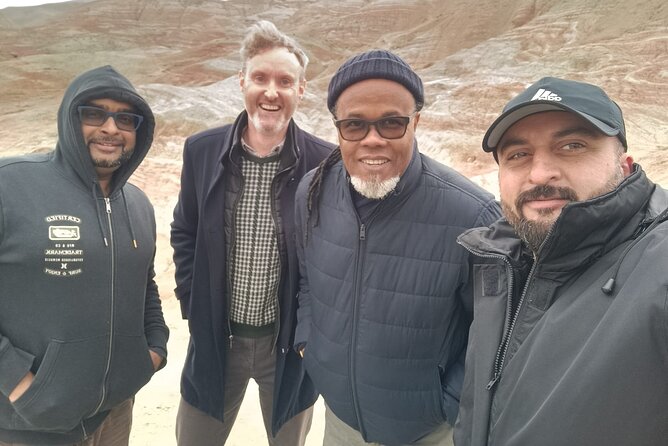
The tour description puts strong emphasis on the guide’s storytelling, and the named guide associated with the experience is Jabrail, also written as Jabrial in one place. He presents himself as a guide focused on Azerbaijan’s history, culture, and traditions, with a friendly style and the ability to adjust an outing to your age and interests.
The most useful part of that promise is the private format. At Gobustan, you can ask about the Roman inscription, Gavaldash, tribal dances, or the Arabic sayings without worrying about holding up a large group. At Bibi-Heybat, you can ask about the mosque’s place in Islamic architecture. At the oil well, you can shift toward modern history.
The personal side also matters. The strongest feedback attached to Jabrail’s service praises his warmth, care, professionalism, and ability to create an easy atmosphere. One account specifically describes him as going beyond the basic plan to make the day memorable and to add useful context. Another points to smooth communication and careful organization.
That does not mean every minute will feel dramatic. The tour covers a lot in five hours, and some stops are short. But a guide who can connect the pieces makes the schedule feel more purposeful than a simple transport service.
Is $65.55 a fair price?
At $65.55 per person, the value depends on how many people are in your private group and how much you value a guide. The price includes an air-conditioned vehicle, bottled water, the Gobustan museum ticket, and the off-road vehicle payment for the mud volcanoes. Those inclusions remove some common add-on costs.
Lunch is not included, and general fees and taxes are also listed separately. Since the activity lasts about five hours and returns to Baku, you can plan your own meal afterward rather than building the whole day around an expensive restaurant stop.
I see the strongest value in the range of subjects. A basic Gobustan transfer would get you to the petroglyphs, but this experience adds the museum, mud volcanoes, Bibi-Heybat Mosque, and the first oil well. You also receive a private guide who can explain why these sites matter.
The price is less compelling if you mainly want a long, quiet visit to one place. The tour is designed for variety. You trade depth at each individual stop for a compact story of Azerbaijan from prehistoric life to modern industry.
Who will enjoy this private Gobustan tour?
I would recommend it to first-time visitors based in Baku who want to see beyond the city without giving up an entire day. It works especially well for people interested in archaeology, geology, religion, and oil history, since all four subjects appear in one outing.
Families may appreciate the private format and the mix of visual stops. The mud volcanoes add something unusual for children, while the petroglyphs give older visitors more to study. The activity states that most people can participate, though you should be comfortable with outdoor ground at Gobustan and the off-road volcano stop.
Couples and small groups will benefit from the flexible conversation with Jabrail. Solo visitors should note that the listed price is per person and the activity is private, so the value may depend on the final group arrangement.
I would think twice if you need a full meal break, want extensive time inside Bibi-Heybat Mosque, or expect a polished attraction at the volcanoes. This is a practical, information-filled half-day, not a slow countryside retreat.
Booking details worth knowing
The start time is 9:00 am, with the meeting point at Nizami Garden in Sabayil. The activity ends back at that meeting point. Mobile tickets are offered, and booking confirmation is provided at the time of purchase.
Free cancellation is available if you cancel at least 24 hours before the local start time. Cancellations made within 24 hours are not refunded, and changes inside that window are not accepted.
Because pickup is offered but the listed starting point is Nizami Garden, confirm where the vehicle will meet you. That small check can prevent a rushed start, especially if you are staying elsewhere in Baku.
Should you book it?
Book this tour if you want a private, well-paced introduction to Gobustan that connects ancient carvings with mud volcanoes, Islamic architecture, and the oil industry. The guide Jabrail is a major part of the value, particularly if you enjoy asking questions and hearing the human story behind the sites.
Skip it if you prefer to linger at one attraction, need lunch included, or want a highly developed volcano facility. For most visitors with one free morning in Baku, though, the combination is hard to match: prehistoric art, a musical stone, a Roman inscription, bubbling clay, a mosque, and the machinery of an oil boom, all before returning to the city.
FAQ
How long does the Gobustan and mud volcano tour last?
The experience lasts approximately five hours, including the stops at Gobustan, the mud volcanoes, Bibi-Heybat Mosque, and the first oil well.
Where does the tour begin and end?
It begins at 9:00 am at Nizami Garden in Sabayil, Baku, and ends back at the same meeting point.
Is transportation included?
Yes. An air-conditioned vehicle is included, along with the off-road vehicle payment for the mud volcanoes. Pickup is offered, but you should confirm the exact pickup details when booking.
Is the Gobustan museum ticket included?
Yes. The Gobustan museum ticket is included in the tour price.
Is lunch included?
No. Lunch is not included. General fees and taxes are also listed as not included.
Can I cancel for a full refund?
Yes, if you cancel at least 24 hours before the experience start time. Cancellations made less than 24 hours before the start time are not refunded.
Just added around Baku
- Lunch included Qobustan, Mud Vulcano, Ateshgah Temple & Yanardag Fire Mountain★ 4.5 · 3 reviews
- Guba and Shahdag City Tour★ 5.0 · 3 reviews
- Baku’s Ancient Heart★ 5.0 · 3 reviews
- Baku: Secret Tour with Surprise Activity★ 5.0 · 3 reviews
- Baku: Old City Guided Walking Tour★ 4.6 · 3 reviews
- Majestic Journey to Qobustan and Absheron★ 4.5 · 3 reviews
- Lahij – village of masters★ 4.5 · 3 reviews
- Baku night tour★ 5.0 · 3 reviews
Gobustan & Mud Volcano Tours, compared.
Gobustan, Mud Volcano, Fire Mount, Temple Lunch Entry
Read our review →
BEST Gobustan, Volcanoes & Absheron Fire Tour (Group or Private)
Read our review →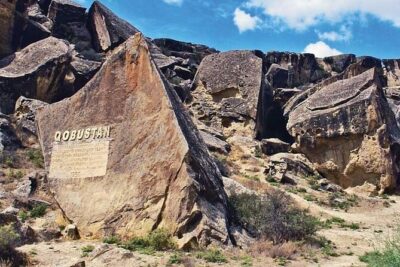
Gobustan, Volcanoes, Fire Temple and Yanardag Day Trip
Read our review →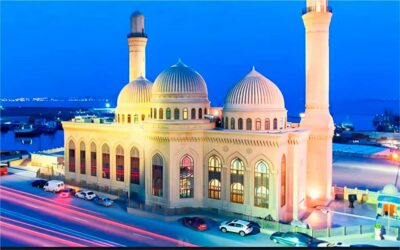
Gobustan-Mud Volcan-Fire Temple and Mountain Tour/Entrance inc
Read our review →
Gobustan Mud Volcanoes Temple & Entry tickets included
Read our review →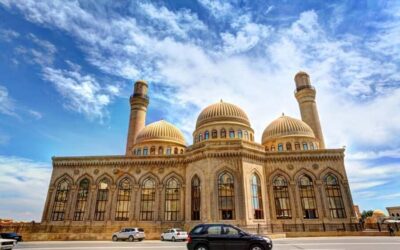
Gobustan-Absheron Tour with Hotel PICK UP and DROP OFF
Read our review →Browse the lists this tour appears in