
Reviewed · GOBUSTAN & MUD VOLCANO TOURS
From Baku: Gobustan Day Tour
Gobustan’s rock art gives you a rare look at daily life from thousands of years ago, while its bubbling mud volcanoes add a strange geological twist. I like the mix of human history and raw geology, and I like that a private car lets you see both without spending a full day on the road. The main drawback is that entrance fees and food are extra, and bad weather can delay the volcano stop.
I also like the guides’ strong record for explaining Azerbaijan’s past in clear, friendly terms. Habil is praised for his history and culture knowledge, while Shbil is noted for explaining each place well. At only four hours, this is a useful short outing, but it gives you less time than a longer countryside tour.
Key points at a glance
- 6,000-plus petroglyphs: See hunting, dancing, boats, farming, battle scenes, and family life carved or drawn on the rocks.
- Art spanning 20,000 years: Compare early Mesolithic images with later scenes dating to the first century AD.
- Roman evidence near Baku: Look for the Latin inscription at the foot of Mount Boyuk-dash.
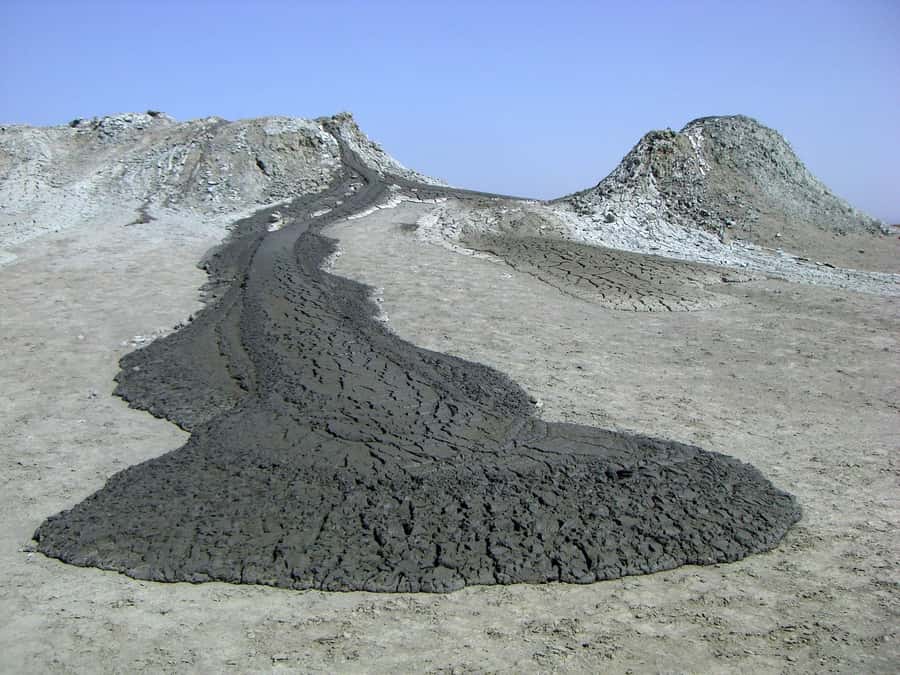
- 350 mud volcanoes in Azerbaijan: The country has roughly 350 of the world’s 800 mud volcanoes, with many in the Dashgil Group.
- Private four-hour outing: Travel in a comfortable sedan with hotel pickup, drop-off, an English-speaking guide, and water.
- Useful guide names: Habil is praised for his cultural knowledge, while Shbil is singled out for clear explanations.
Why Gobustan makes a strong short trip from Baku
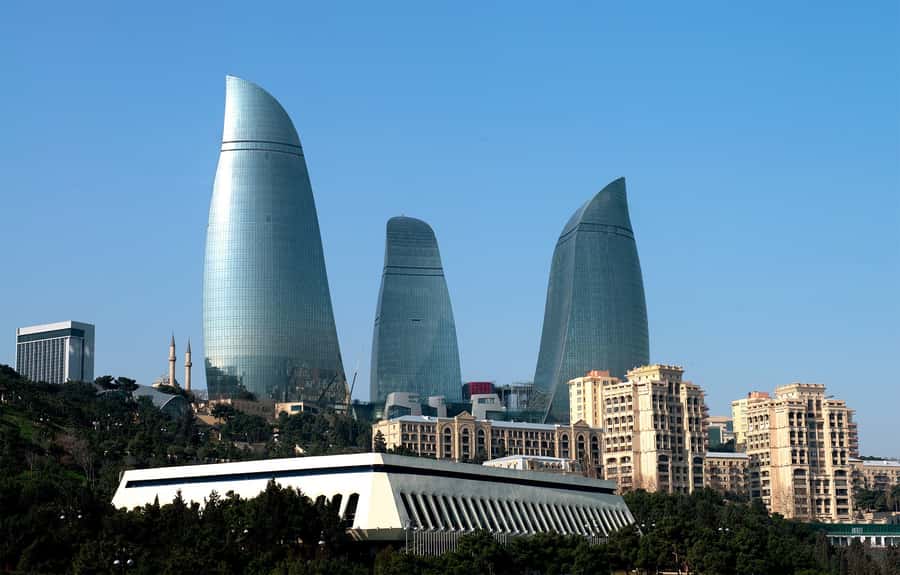
Baku is modern, polished, and full of grand architecture. Gobustan gives you a very different view of Azerbaijan. About 50 to 60 kilometers from the capital, the park is cut by rocky narrows and ravines, which helps explain its name and its appeal.
The key attraction is not one grand monument. It is the scale of the site and the way the carvings record ordinary life. You can see people hunting mountain goats, carrying spears, dancing in groups, rowing boats, working together, harvesting, and sitting near hearths. These images turn a dry archaeological site into a record of human habits.
I find that especially useful if you are trying to understand Azerbaijan beyond its cities. Gobustan does not present the past as a list of dates. It shows what people did, what they valued, and how their lives changed over a very long period.
This trip also works well for someone with limited time. The stated duration is four hours, so you can fit it into a morning or afternoon around your Baku plans. You will not spend an entire day away from the capital, though the short schedule means the pace may feel purposeful rather than leisurely.
More Gobustan and mud volcano runs:
- Baku: Gobustan, Mud Volcano, Fire Mount, Temple Lunch Entry
★ 4.9 · 3,246 reviews - BEST Gobustan, Volcanoes & Absheron Fire Tour (Group or Private)
★ 5.0 · 1,254 reviews - Gobustan and Absheron tour (All inclusive)
★ 5.0 · 1,014 reviews
The ride from Baku and private-car comfort
Pickup is available from hotels and apartments in Baku. You are asked to wait in the lobby 10 minutes before your scheduled time, and the driver carries a sign with your last name. The driver waits no longer than five minutes after pickup time, so punctuality matters.
Transport is by comfortable sedan, not a large coach. That makes the outing more personal and keeps the group private. It also helps if you prefer to ask questions as you go, rather than trying to catch a guide’s attention among a busload of people.
A clean, air-conditioned car was especially important to past guests, and the tour includes bottled water. You should bring comfortable shoes, since the day includes walking around rocky ground and museum areas. Large bags and luggage are not allowed, so leave your main suitcases at your accommodation.
The four-hour length is an advantage and a limitation. It is short enough for an easy half-day, but there is little room for major delays. The mud volcano portion can be postponed in poor weather, and the tour operates rain or shine.
Reading the oldest images at Gobustan
Gobustan National Park was first identified as an archaeological site in the 1930s, and excavation continues. The area contains more than 6,000 rock paintings and petroglyphs, along with ancient dwellings and more than 100,000 artifacts.
The most interesting feature is the time span. The oldest pictures date back around 20,000 years, while the newest images are from the first century AD. You are not looking at one brief chapter of prehistoric life. You are seeing generations add their own scenes to the same rocky setting.
The early images focus on mountain-goat hunts and ritual dancing with spears. Later pictures show battle scenes, shared labor, harvesting, and women by the hearth. Those changes help you think about how work, conflict, ceremony, and home life developed over time.
The boat pictures may be the biggest surprise. Oarsmen appear in several scenes, suggesting that the early people here were sailors. That detail complicates the usual image of prehistoric life as only hunting on dry land. Gobustan’s people were connected to water as well as rock and grassland.
You will want your guide to explain which drawings belong to which period. A good explanation makes the art far easier to read, since the carvings can look similar at first glance. Habil is a strong choice if you want more background on Azerbaijani history and culture. Shbil is also praised for clear explanations and a pleasant manner.
The Roman inscription at Mount Boyuk-dash
Near the foot of Mount Boyuk-dash, you can look for a Latin inscription linked to the presence of Roman legions near Baku. It is an unusual detail in a site best known for prehistoric art.
The inscription gives Gobustan another layer. The park is not only about the Mesolithic period and the first communities who made the drawings. It also records later contact with the Roman world. I like this stop because it links a remote Azerbaijani rock site with a much wider story of movement, military power, and trade.
Do not expect a huge Roman ruin. The value is in the inscription itself and what it tells you about the people who reached this area. Your guide’s explanation will help place it in context.
A few more Baku half-days to weigh up
- Baku: Guba, Shahdag, Laza & Lunch w/ Free City & Night Tour
★ 4.8 · 1,455 reviews - Shamakhi And Gabala Tour (All inclusive)
★ 5.0 · 815 reviews - From Baku: Gabala and Shamakhi Tour (Free Baku City Tour)
★ 4.8 · 695 reviews - Baku: Candy Cane, Guba, Khinaliq village with Homemade Lunch
★ 4.9 · 519 reviews
The 3D Bio Museum and its 12 rooms
The 3D Bio Museum gives you an indoor introduction before or after the rock site. Its permanent exhibition fills 12 rooms and explains the importance of Gobustan’s carvings, along with similar archaeological sites from around the world.
There is also a 3D cinema. This is useful if you want more than a quick walk past the rocks. The museum can help you understand how the drawings fit together, especially if you are unfamiliar with prehistoric art or archaeological fieldwork.
I would not treat the museum as a substitute for the open-air site. The real power of Gobustan comes from seeing the carvings on the rock faces, in the ravines where they were made. The museum works best as preparation and context, while the outdoor visit gives you the sense of place.
The 3D presentation also makes the trip easier for visitors who want a clear introduction rather than a purely technical archaeological stop. It is particularly helpful if you are visiting with someone who may not usually spend much time looking at rock art.
Seeing the mud volcanoes at Dashgil
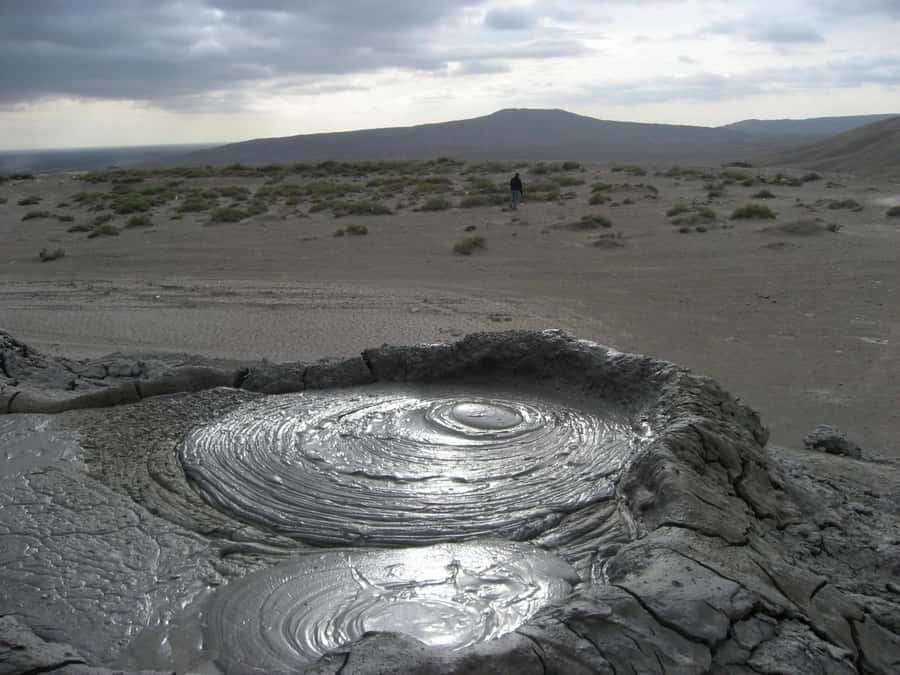
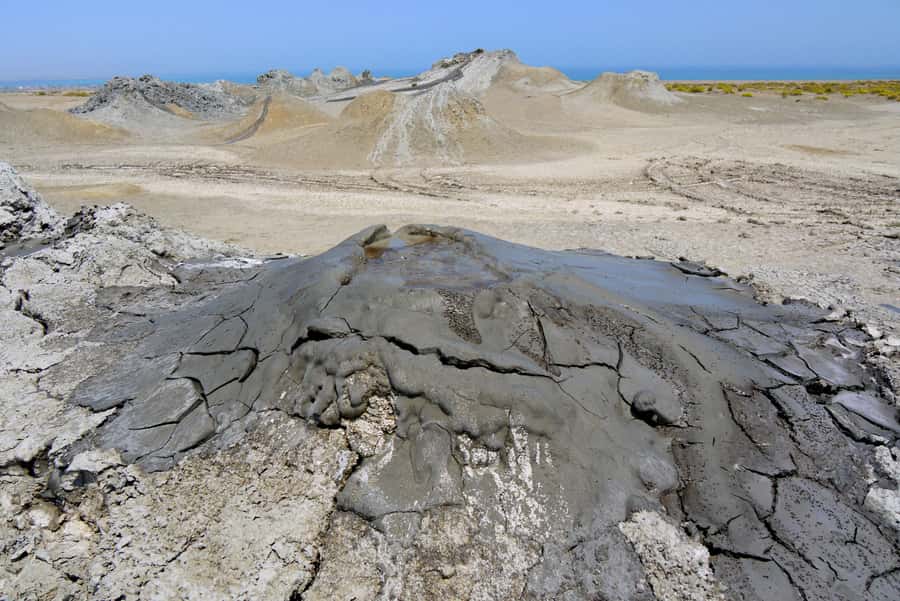
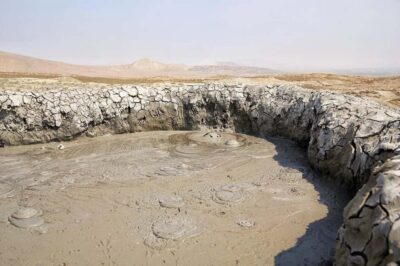
After the cultural part of Gobustan, the outing turns geological. Azerbaijan has about 350 of the world’s roughly 800 mud volcanoes, giving the country an unusually high concentration of these formations.
The Dashgil Group, east of the Gobustan museum, contains many active examples. You can expect low, bare formations with mud bubbling or moving at the surface. They are not the same as hot lava volcanoes, and the appeal comes from their unusual shapes and active mud rather than towering peaks.
This is a good contrast to the petroglyphs. The rock art asks you to slow down and look backward through human history. The mud volcanoes are immediate and odd, with natural activity taking place in front of you.
Weather can affect this part of the outing. The mud volcano visit may be delayed during bad conditions, so you should not plan the rest of your day around a precise return time. Wear shoes you do not mind using on rough ground, and follow the guide’s instructions around active formations.
One past guide, Karim, even arranged a mud-volcano bath for a guest. That sounds like a memorable personal addition, but it should not be treated as a standard part of the tour. The listed experience is a visit to the volcanoes, not a guaranteed bathing activity.
What the four-hour schedule means for you
This is a compact trip. You get hotel pickup, transport, Gobustan National Park, the 3D Bio Museum, the rock art, the Roman inscription, and the mud volcano area before returning to Baku.
The private format gives you some flexibility in how you use your time. You can ask for more explanation at the petroglyphs or spend less time in the museum if the outdoor site matters most to you. Still, the exact balance depends on the pickup time, traffic, weather, and the pace of your group.
Past guests have described the trip as relatively short while still covering many sights. That is the right way to think about it. You will see the main attractions, but you should not expect a slow archaeological field day with long stretches for independent wandering.
The private sedan is also a better fit for couples, families, or small groups who value direct pickup and a quieter ride. The tour is not designed for wheelchairs, and it is not suitable for people with back or heart problems or for pregnant women. Those limits matter because the outing includes travel and walking on uneven outdoor ground.
Is $58 a fair price?
At $58 per person, the tour offers reasonable value if you want a private half-day from Baku. You are paying for hotel pickup and drop-off, a private vehicle, an English-speaking professional guide, and water. You also avoid arranging separate transport to a site outside the city.
The price does not include entrance fees, food, or personal expenses. Check the admission costs before you go so the final budget does not surprise you. Since food is not included and the outing lasts about four hours, most people can likely manage without a full meal during the tour, but that depends on your schedule.
The value is strongest for small private groups. If you are traveling alone, the per-person cost may feel less attractive than joining a shared outing. If two or more people can share the private booking, the comfort, direct pickup, and guide access make the price easier to justify.
The free-cancellation policy allows cancellation up to 24 hours in advance for a full refund. You can also reserve now and pay later, which helps if your Baku schedule is still changing.
The guide can shape the whole experience
The guides are a major part of this trip. Habil is praised for his strong knowledge of Azerbaijan’s history and culture, his helpful nature, and his warm hosting style. Another guest singled out Shbil for being friendly and explaining the sites well.
That matters at Gobustan because the carvings need interpretation. Without a guide, you can see figures and boats, but you may miss the difference between hunting scenes from roughly 20,000 years ago and later images from the first century AD. You may also overlook the meaning of the Roman inscription.
The private format gives you a better chance to ask direct questions. You can ask about the ancient dwellings, the artifact count, the sailors shown in the carvings, or the changes in daily life across the different periods.
Guide assignments can vary, so you should not assume a particular person is guaranteed unless the booking confirms it. Still, Habil and Shbil are useful names to know when you are discussing guide preferences.
Who should book this Gobustan outing?
I would choose this tour if you want to see two of Azerbaijan’s most unusual sights in one efficient trip: prehistoric rock art and active mud volcanoes. It suits first-time visitors to Baku who want an introduction to the country’s ancient past without giving up a full day.
It is also a good match for:
- Couples and small groups who prefer a private car
- History fans interested in early art, archaeology, and Roman traces
- Visitors who want hotel pickup instead of arranging their own transport
- People with only a few days in Baku
- Anyone who enjoys unusual natural formations as much as museums
I would think twice if you need wheelchair access, have serious back or heart issues, or are pregnant. I would also choose a longer outing if you prefer slow walks, extended time at each site, or a full meal break.
Bring comfortable shoes, keep your luggage at the hotel, and allow some flexibility around the mud volcano stop. Those simple choices will make the trip easier.
Should you book it?
Book this Gobustan tour if you want a well-organized private half-day with a strong cultural focus and an unusual geological finish. The petroglyphs are the main reason to go, but the museum, Roman inscription, and Dashgil mud volcanoes give the outing welcome variety.
At $58 per person, it is a sensible choice for a small group that values comfort and a dedicated English-speaking guide. It is less compelling if you are watching every entrance cost, traveling alone on a tight budget, or hoping for a relaxed full-day countryside trip.
For most visitors with limited time in Baku, I would put Gobustan near the top of the list. Just remember that the mud volcano stop depends on weather, the entrance fees are extra, and four hours means you are getting the highlights rather than every corner of the site.
FAQ
How long does the Gobustan tour last?
The tour lasts four hours, including travel from Baku, the Gobustan visits, and the return to the city.
Is hotel pickup included?
Yes. Pickup and drop-off are available from hotels and apartments located in Baku.
What language does the guide speak?
The live tour guide speaks English.
Is this a private tour?
Yes. The experience is arranged for a private group and uses a comfortable sedan.
Are entrance fees included in the price?
No. Entrance fees, food, and personal expenses are not included.
What should I bring?
Bring comfortable shoes. Large bags and luggage are not allowed.
Can the tour run in bad weather?
The tour operates rain or shine, but the mud volcano visit may be delayed during bad weather.
Just added around Baku
- Guba and Shahdag City Tour★ 5.0 · 3 reviews
- Lunch included Qobustan, Mud Vulcano, Ateshgah Temple & Yanardag Fire Mountain★ 4.5 · 3 reviews
- Baku’s Ancient Heart★ 5.0 · 3 reviews
- Baku: Secret Tour with Surprise Activity★ 5.0 · 3 reviews
- Baku: Old City Guided Walking Tour★ 4.6 · 3 reviews
- Majestic Journey to Qobustan and Absheron★ 4.5 · 3 reviews
- Lahij – village of masters★ 4.5 · 3 reviews
- Baku night tour★ 5.0 · 3 reviews
Gobustan & Mud Volcano Tours, compared.
Gobustan, Mud Volcano, Fire Mount, Temple Lunch Entry
Read our review →
BEST Gobustan, Volcanoes & Absheron Fire Tour (Group or Private)
Read our review →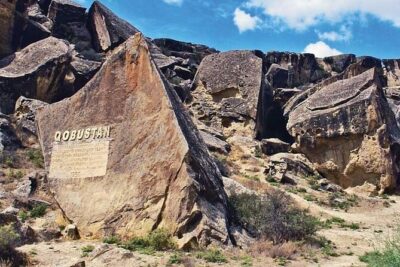
Gobustan, Volcanoes, Fire Temple and Yanardag Day Trip
Read our review →
Gobustan-Mud Volcan-Fire Temple and Mountain Tour/Entrance inc
Read our review →
Gobustan Mud Volcanoes Temple & Entry tickets included
Read our review →
Gobustan-Absheron Tour with Hotel PICK UP and DROP OFF
Read our review →Browse the lists this tour appears in