
Reviewed · GOBUSTAN & MUD VOLCANO TOURS
Baku: Gobustan, Mud Volcanoes, Ateshgah, and Yanardag Tour
A hillside fire that has burned for centuries, bubbling mud craters, and stone drawings made thousands of years ago make this private Baku day trip far more unusual than a standard city tour. It links Azerbaijan’s ancient past with the fire-centered beliefs that still shape the country’s identity.
I like the way the day combines Gobustan’s petroglyphs with the Ateshgah Fire Temple, so you get both archaeology and religion. I also like having private transport and hotel pickup, since the sights are spread across the Absheron Peninsula. The main drawback is cost: at $99, you still need to add $24 in listed admission fees, plus lunch and personal expenses.
Key points to know before booking
- Gobustan joins a museum visit with outdoor rock art, giving you useful context before you walk among the ancient drawings and caves.
- Azerbaijan has about 350 of the world’s 800 mud volcanoes, making the crater visit one of the day’s most distinctive stops.
- Ateshgah explains fire worship, with links to both Hindu and Zoroastrian practice.
- Yanardag is a natural gas flame, burning on a hillside rather than inside a temple or monument.
- Private transport and hotel pickup make the long route easier than arranging several separate trips.
- The tour is active and outdoorsy, with uneven ground, climbing near mud volcanoes, sun exposure, and no wheelchair suitability.
Why this nine-hour route works from Baku
Baku’s center can keep you busy for days, but the capital only tells part of Azerbaijan’s story. This tour takes you beyond the city to places where stone carvings, underground gas, natural mud, and religious practice all meet.
The route also has a sensible rhythm. Gobustan supplies the oldest material first, the mud volcanoes add an odd natural spectacle, and the fire sites bring the day back to Azerbaijan’s better-known association with flames. After the first section, you stop for lunch in the city center before continuing to Ateshgah and Yanardag.
That structure matters. You are not trying to absorb four major subjects in one museum room. Instead, each stop has a different feel, although the day is still long and includes substantial time in a vehicle.
The group is private, and an English-speaking accredited guide accompanies you. The supplied price is $99 per person, with pickup and drop-off at a Baku hotel or another location in the city. This is a better fit for you if you value flexibility and one vehicle, rather than joining a larger group at a lower advertised price.
More Gobustan and mud volcano runs:
- Baku: Gobustan, Mud Volcano, Fire Mount, Temple Lunch Entry
★ 4.9 · 3,246 reviews - BEST Gobustan, Volcanoes & Absheron Fire Tour (Group or Private)
★ 5.0 · 1,254 reviews - Gobustan and Absheron tour (All inclusive)
★ 5.0 · 1,014 reviews
Gobustan Museum: start with the story
The Gobustan Museum is a smart first stop because it gives you a framework for the rocks. Instead of meeting the petroglyphs without context, you can first see displays about the area’s natural setting, population, cultural development, and archaeological work.
Touch screens and 3D panoramas show how people lived between roughly 5,000 and 20,000 years ago. Historical objects in the museum date from about the fourth to the second millennium BC, adding physical evidence to the digital displays.
I especially like this part for anyone who finds prehistoric art hard to read at first. A carved animal, figure, or symbol can look simple when you see it alone. The museum helps you consider why it was made, what it may tell us about daily life, and how researchers piece together a picture from limited evidence.
The museum is described as interactive, so it should work well for families and for anyone who prefers visual explanation to a long spoken lecture. Still, do not expect a large museum complex. The main value is preparation for the outdoor visit that follows.
Gobustan rocks and more than 6,000 drawings
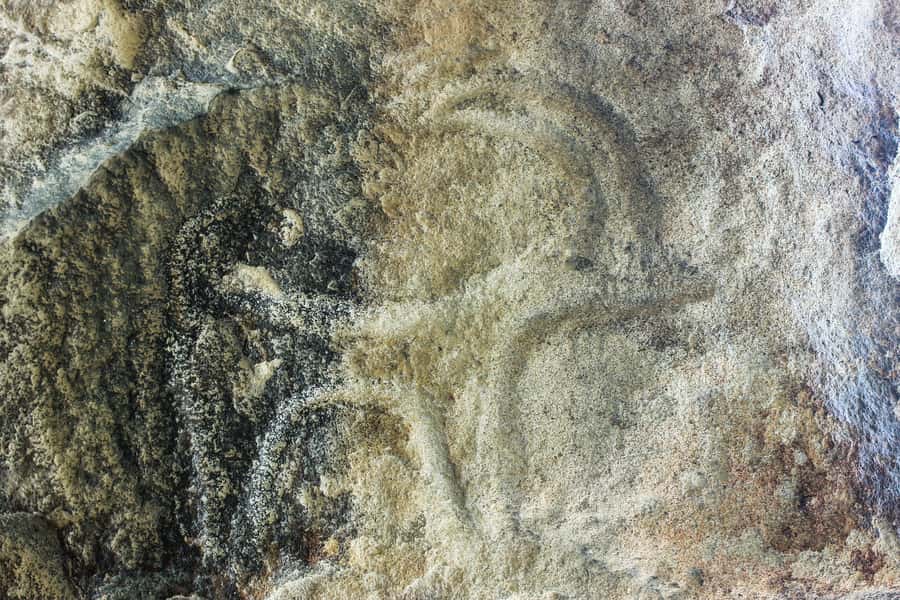
After the museum, you head to the Gobustan rocks for a guided walk among petroglyphs and caves. More than 6,000 rock drawings have been recorded here, with examples from different periods.
Scientists discovered the carvings in the 1930s. Their importance is not only their age. The images offer clues about early people’s customs, beliefs, work, and view of the world. Your guide can help you notice details that are easy to miss when you are looking at a broad wall of stone.
The setting is outdoors and uneven. Comfortable shoes are important, and you should bring water, sunscreen, and a camera. The tour information does not promise a gentle paved route, so I would treat this as a walking stop rather than a quick roadside photo break.
The listed guided time for Qobustan is two hours, which is generous enough to include both the museum and the rock site. Ask your guide to explain how the museum displays connect with the drawings outside. That link is where the stop becomes more than a collection of old marks on rock.
You should also keep expectations realistic. Petroglyphs are not always dramatic at a glance. Light, angle, and the guide’s explanation can make a major difference. If you enjoy archaeology, this will likely be the intellectual center of the day. If you mainly want scenery, the mud volcanoes and fire sites may leave a stronger impression.
Mud volcanoes: Azerbaijan’s strangest stop
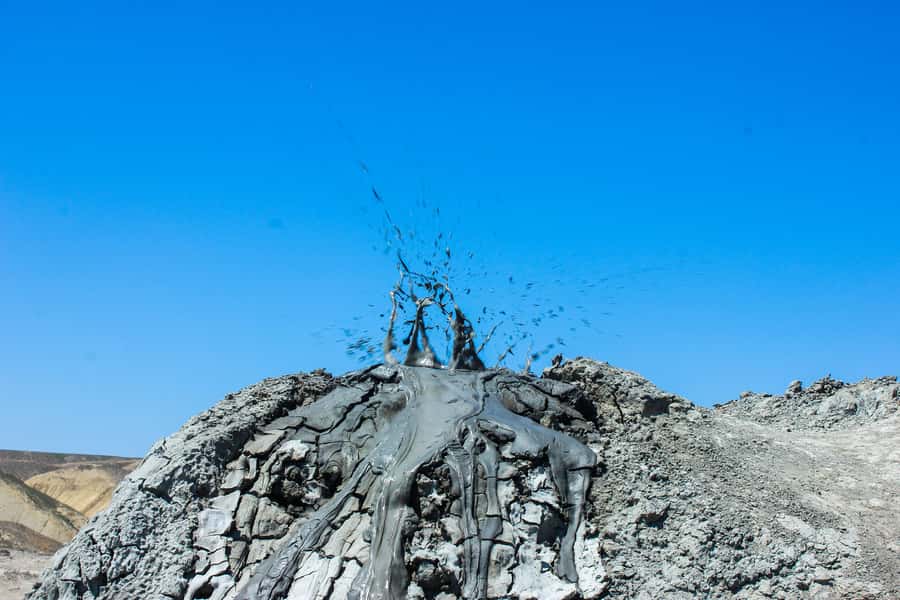
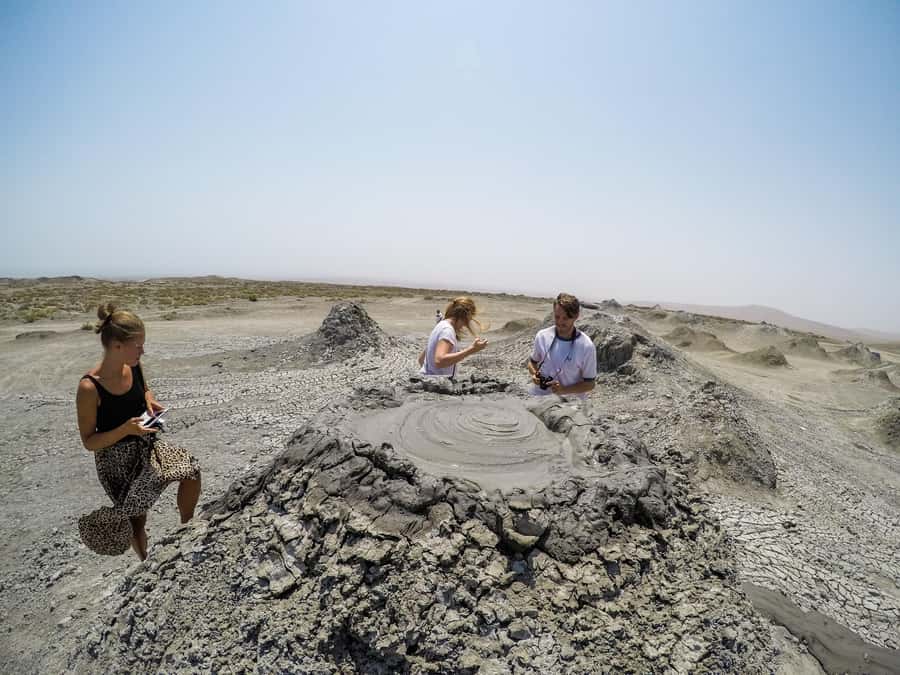
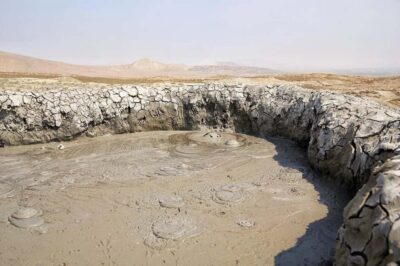
The mud volcanoes are the tour’s most unusual change of pace. These are not the red-hot lava volcanoes many people picture. They produce mud and gas, creating low craters that can bubble or erupt.
The volcanoes appeared in what is now Azerbaijan about 25 million years ago. The country has around 350 of the world’s estimated 800 mud volcanoes, so this is a particularly appropriate place to see them.
You get about 40 minutes at the mud volcanoes, with time to climb active formations and look closely at the craters. The experience is basic and geological rather than polished. That is part of its appeal. You are seeing raw ground activity, not a purpose-built attraction with elaborate facilities.
The material has practical uses as well. Volcanic clay and mud are used in chemical and construction industries, and in pharmacology. The information also describes mud and clay as being used in treatments connected with the nervous system, skin problems, and rheumatism.
Treat those medicinal claims as part of the local explanation, not as medical advice. The tour does not say that you will receive a treatment, bathe in the mud, or take any substance. You are there to observe the craters and learn how the material is used.
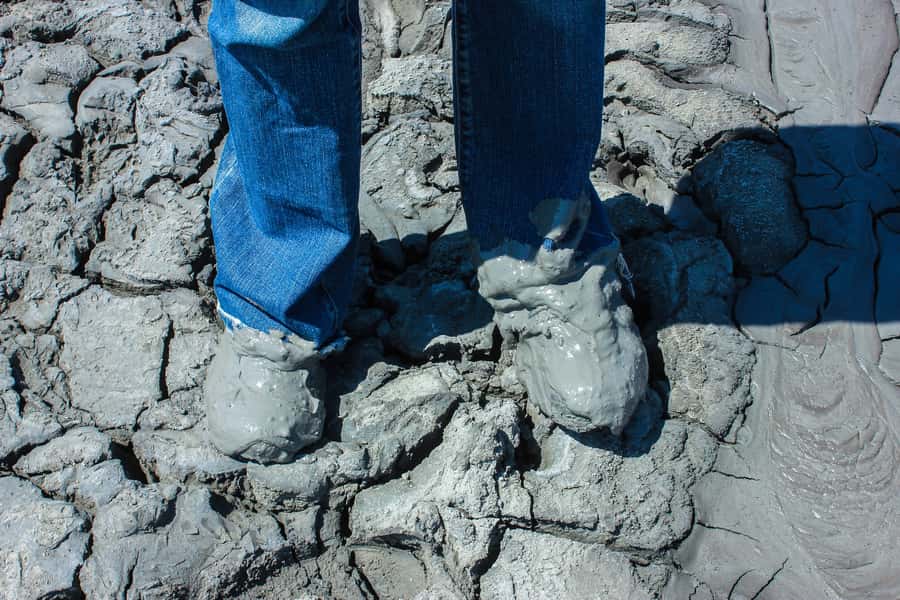
Wear shoes you do not mind taking onto rough ground, and keep your camera and clothing clear of mud. The supplied information specifically says you can climb the active volcanoes, so this stop is not suitable for anyone who needs step-free access. Wheelchair users cannot take this tour.
More fire temple and burning mountain trips:
- Baku: Gobustan, Volcanoes, Fire Temple and Yanardag Day Trip
★ 4.7 · 433 reviews - Gobustan & Mud, Fire Temple, Burning Mountain (Group & Private)
★ 4.5 · 418 reviews - Gobustan-Mud Volcan-Fire Temple and Mountain Tour/Entrance inc
★ 5.0 · 267 reviews - Gobustan, Mud volcanoes, Fire temple, Fire mountain PRIVATE TOUR
★ 5.0 · 47 reviews
Lunch break in central Baku
After Gobustan and the mud volcanoes, the schedule includes a break for lunch in Baku’s city center. Lunch is not included in the $99 price, so you pay for your own meal.
The break is useful because the first section is outdoors and physically more demanding. Bring water for the day, but plan to buy or order food during this stop rather than expecting a provided meal.
The timing also divides the tour into two clear halves. The morning focuses on early human life and unusual geology. The afternoon shifts to temples, fire, and the Absheron Peninsula’s religious past.
Ateshgah Fire Temple and the old fire faiths
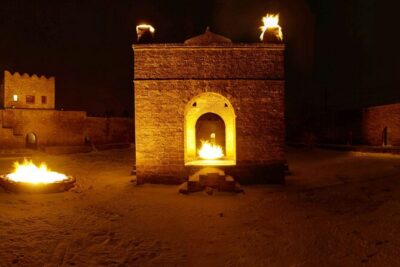
Ateshgah is the day’s main historical link to fire worship. The site was used as both a Hindu and Zoroastrian place of worship, and its first recorded mention dates to the seventh century AD.
You spend about an hour here with the guide. The complex includes cells once used by fire worshippers and historical objects found during archaeological excavations. Those small rooms help you picture the site as a place of residence and ritual, not just a single shrine.
The temple is especially valuable after Gobustan because it shows a much later layer of belief. At Gobustan, you are trying to understand prehistoric people through carved images. At Ateshgah, you can examine a more recognizable religious complex and learn how fire shaped worship in this region.
A guide matters here. The connection between Hindu practice, Zoroastrianism, pilgrimage, and Azerbaijan’s natural gas is not obvious if you simply walk through the courtyard. English is the only language specified for the live guiding, so confirm that works for everyone in your private group.
The supplied history says Ateshgah’s first mention dates to the seventh century, but the description does not provide a full construction timeline. I would focus on the site’s role and exhibits rather than expecting one simple founding date to explain everything.
Yanardag, the Burning Mountain
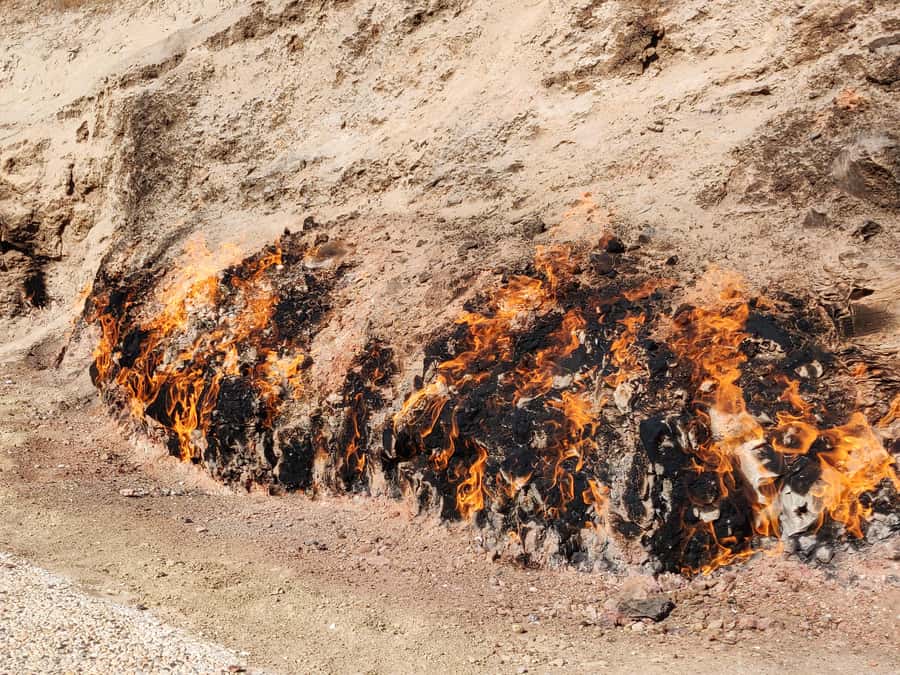
Yanardag is the final major stop, with about 40 minutes for a guided visit. Its name means Burning Mountain, and the attraction is a natural gas flame burning continuously on a hillside near Baku.
This is a different experience from Ateshgah. The temple represents human worship around fire, while Yanardag is the natural phenomenon that helped make fire sacred in the region. Seeing both on the same afternoon gives the tour a clear theme without forcing the connection.
The flame has burned since ancient times, according to the tour information. Pilgrims from Iran and India still come to the site, which gives Yanardag a continuing religious meaning rather than making it only a geological curiosity.
Do not expect a vast mountain or a long hike. The stop is short, focused on the exposed flame and its setting on the Absheron Peninsula. The natural gas fire is the point, and your guide can explain why it has mattered to local belief and pilgrimage.
Yanardag also works well as the last stop because it leaves you with a simple image: fire rising from an ordinary hillside. After a day of drawings, mud, and temple cells, it is a memorable final note before returning to Baku.
What the guide and private format add
The tour includes an accredited English-speaking guide and private transportation. That changes the feel of the day in practical ways.
First, pickup and drop-off are included at your Baku hotel or another city location. You do not need to piece together separate transport for Gobustan, the mud volcanoes, Ateshgah, and Yanardag.
Second, a private group gives you room to ask questions and adjust your attention. At Gobustan, you might want more explanation of the drawings. At Ateshgah, you might care more about Zoroastrian practice than the archaeological objects. The guide can respond to your interests more easily than on a large shared outing.
Mushfiq is one guide associated with this experience. Katherine from Australia specifically praised his passion for Azerbaijan’s history and said he even escorted her group to Baku’s Old Town after the tour, pointing out good dinner places. That extra help is not listed as a guaranteed part of every booking, so do not assume it is included. Still, it suggests the kind of personal assistance you can request if Mushfiq is your guide.
Michaela from Austria also described the English as very good and the day as running as planned. Those are important points for a route with several distant stops. Clear explanations and reliable timing matter more here than flashy commentary.
The real cost at $99 per person
The headline price is $99 per person, but the listed admissions add up to $24:
- Gobustan entry: $6
- Mud volcano entry: $9
- Ateshgah and Yanardag entry: $9
That brings the known total to $123 per person before lunch and personal expenses. The tour includes private transport, hotel pickup and drop-off in Baku, the guide, and visits to all four main sites, so the value depends heavily on how much you would otherwise spend arranging transport and guiding separately.
For a solo visitor, $123 plus lunch is a significant outlay. For a couple or small private group, the convenience becomes easier to justify, particularly if you want one full day outside Baku without negotiating several taxi rides.
I would not book this expecting an all-inclusive price. Budget for the entry tickets from the start, and keep cash or a payment method available for lunch and other personal costs. The activity offers free cancellation up to 24 hours before departure and allows you to reserve now and pay later, which helps if your Baku schedule is still changing.
Who should book this Baku day trip?
I would recommend it to you if you want a broad introduction to Azerbaijan beyond the capital. The tour covers archaeology, geology, religion, and natural gas in one day, and the private setup keeps the long route manageable.
It is especially suited to:
- First-time visitors with one free day outside Baku
- People interested in ancient art and archaeology
- Anyone curious about Zoroastrianism and fire worship
- Families who will benefit from the Gobustan museum’s touch screens and 3D displays
- Small groups that prefer private transport and an English-speaking guide
- Active visitors comfortable with uneven ground and short climbs
I would hesitate if you dislike outdoor heat, rough footing, or a full nine-hour schedule. The tour is not suitable for wheelchair users, and the mud volcano stop requires more than simply stepping off a vehicle.
Should you book it?
Book this tour if you want the clearest single-day route through Gobustan, the mud volcanoes, Ateshgah, and Yanardag. Its best feature is the contrast: prehistoric carvings in the morning, bubbling earth next, then human devotion and natural flame in the afternoon.
Skip it if your priority is a relaxed city day or if the extra $24 in entry fees makes the price uncomfortable. For everyone else, the private transport, hotel pickup, guide support, and wide range of sights make $99 a reasonable starting price, as long as you budget for lunch and admissions.
FAQ
How long is the tour?
The tour lasts nine hours, including pickup in Baku, the visits, and the return to the city.
Where does the tour begin and end?
Pickup is provided in Baku from your hotel or another location in the city. The tour returns to Baku, with drop-off at Fountain Square stated at the end of the route.
Is transportation included?
Yes. Private transportation, hotel or city pickup, and drop-off in Baku are included.
Is the tour private?
Yes. The group type is a private group.
What language does the guide speak?
The live tour guide speaks English.
Are entrance tickets included?
No. The listed fees are $6 for Gobustan, $9 for the mud volcanoes, and $9 for Ateshgah and Yanardag.
Is lunch included?
No. Lunch is not included. The schedule provides a break for lunch in Baku city center.
What should I bring?
Bring comfortable shoes, a camera, sunscreen, and water.
Can wheelchair users join the tour?
No. The tour is not suitable for wheelchair users.
Just added around Baku
- Lunch included Qobustan, Mud Vulcano, Ateshgah Temple & Yanardag Fire Mountain★ 4.5 · 3 reviews
- Guba and Shahdag City Tour★ 5.0 · 3 reviews
- Baku’s Ancient Heart★ 5.0 · 3 reviews
- Baku: Secret Tour with Surprise Activity★ 5.0 · 3 reviews
- Baku: Old City Guided Walking Tour★ 4.6 · 3 reviews
- Majestic Journey to Qobustan and Absheron★ 4.5 · 3 reviews
- Baku night tour★ 5.0 · 3 reviews
- Lahij – village of masters★ 4.5 · 3 reviews
Gobustan & Mud Volcano Tours, compared.
Gobustan, Mud Volcano, Fire Mount, Temple Lunch Entry
Read our review →
BEST Gobustan, Volcanoes & Absheron Fire Tour (Group or Private)
Read our review →
Gobustan, Volcanoes, Fire Temple and Yanardag Day Trip
Read our review →
Gobustan-Mud Volcan-Fire Temple and Mountain Tour/Entrance inc
Read our review →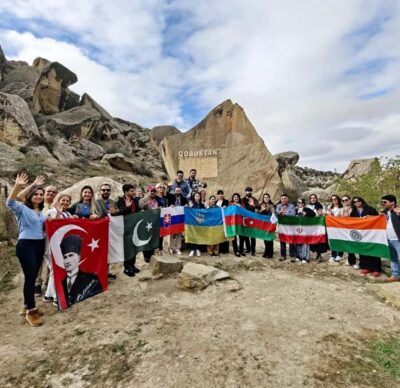
Gobustan Mud Volcanoes Temple & Entry tickets included
Read our review →
Gobustan-Absheron Tour with Hotel PICK UP and DROP OFF
Read our review →Browse the lists this tour appears in