
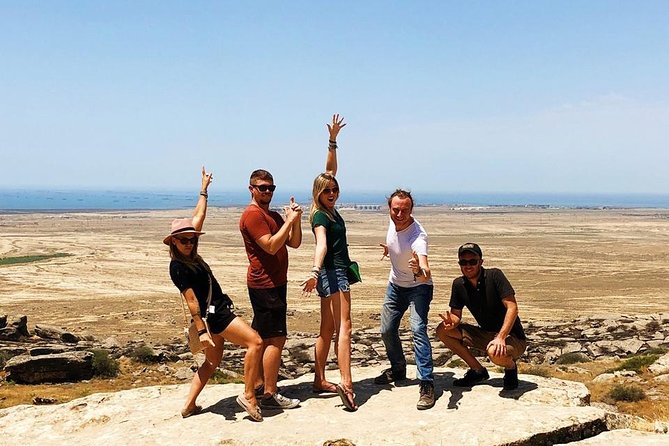
Reviewed · GOBUSTAN & MUD VOLCANO TOURS
Azerbaijan Tour Package for 3 days(Baku & Absheron & Gobustan & Gabala Tours)
Azerbaijan packs ancient stone lanes, modern towers, natural gas fires, bubbling mud volcanoes, and Caucasus mountain views into a surprisingly small touring area. This private three-day trip gives you a fast look at all of it, from Baku’s Old City to Gabala’s cable cars.
I like the private format, since you tour only with your own group and can travel in an air-conditioned car. I also like the range: Baku’s city sights, Gobustan’s carvings, Absheron’s fire sites, and Gabala’s mountain scenery are all covered. The tradeoff is pace. Three days is enough for highlights, but not enough for long museum visits or much unplanned time.
Key points to know before booking
- Baku is covered in one full city day, including the Old City, Caspian waterfront, Flame Towers, and Heydar Aliyev Center.
- Gobustan requires a vehicle change for the rough road to the mud volcanoes, so allow for a little extra time and movement.
- The fire theme is real but varied, from the natural flame at Yanar Dag to the historic Ateshgah temple, whose eternal fire is now supplied by gas.
- Gabala makes Day 3 a long outing, with mausoleums, a historic mosque, Lake Nohur, and Tufandag cable cars.
- The $275 price covers transport and guiding, but meals, accommodation, museum admission, and cable car tickets are extra.
- The private setup suits tight schedules, couples, families, and small groups that prefer not to follow a large coach.
What this three-day route is really designed to do
This is a highlights tour rather than a slow cultural stay. You spend the first day inside Baku, the second day moving southwest to Gobustan and then across the Absheron Peninsula, and the third day heading inland toward Gabala.
That route gives you useful contrast. Baku shows oil wealth and ambitious modern architecture. Gobustan adds prehistoric rock carvings and unusual geology. Absheron explains Azerbaijan’s long connection with fire and gas. Gabala brings cooler mountain scenery and a more relaxed rural setting.
The tour starts at 9:00 a.m. each day, with pickup and drop-off included during the tour days. You ride in a comfortable air-conditioned car with an English-speaking driver. The operator’s named team includes guide Zacharias and driver Hidayet, both praised for being cooperative and easy to reach.
The private arrangement matters here. Day 2 and Day 3 cover a lot of ground, and a private car is more practical than trying to connect these places independently. You also avoid being tied to the interests of a large group. Still, you should expect full days on the road, especially for Gabala.
More Gobustan and mud volcano runs:
- Baku: Gobustan, Mud Volcano, Fire Mount, Temple Lunch Entry
★ 4.9 · 3,246 reviews - BEST Gobustan, Volcanoes & Absheron Fire Tour (Group or Private)
★ 5.0 · 1,254 reviews - Gobustan and Absheron tour (All inclusive)
★ 5.0 · 1,014 reviews
Day 1: Nizami Street and Baku’s modern face
Your Baku day begins on Nizami Street, the city’s main shopping and strolling strip. Locals also call it Torgovaya, a Russian name meaning trade, dating from the Russian imperial period.
The street is lined with brand shops, restaurants, and places to stop for photographs. It is not the most traditional part of Baku, but it is useful for seeing how the city spends its leisure time. Plan on about an hour here. Since there is no admission fee, you can focus on the street life and architecture without worrying about another ticket.
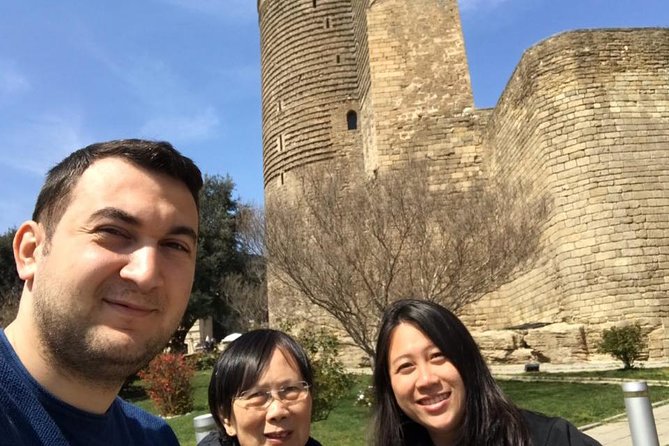
Next comes Icheri Sheher, Baku’s Old City. This walled historic quarter is the heart of the first day and deserves the full two hours allocated to it. You will find narrow lanes, stone buildings, caravanserais, mosques, bathhouses, old residences, and the remains of medieval Baku.
The key sights are the Maiden Tower and Shirvanshah Palace. The Old City itself is free to enter, but these major museums charge separate admission. That distinction is important when you plan your budget. If you want to go inside both, tell your guide early so the walking time can be used well.
The area also includes a medieval market square, the Icheri Sheher Archaeological Museum, the Seyid Yahya Bakuvi mausoleum, and Baku Khans’ House. You will not study every site in two hours, but you can get a clear feel for the old quarter and its role in the city.
Baku Boulevard and the Caspian Sea
After the Old City, you head to Baku Boulevard, a long waterfront park beside the Caspian Sea. The promenade dates to 1909 and stretches for several kilometers along the southern shore.
This is a good counterpoint to the Old City. Instead of old stone and tight lanes, you get open space, water views, and a broad urban promenade. The stop is only about 30 minutes, so it works best as a walk and photo break rather than a full waterfront afternoon.
The Azerbaijan National Carpet Museum is next. Its building is designed to resemble a rolled carpet, and the collection presents Azerbaijani rug-making traditions. Admission is not included, so decide whether you want to pay for the interior visit or simply enjoy the unusual exterior.
A short stop at Little Venice follows. The canals were inspired by Venice and form part of the waterfront attractions. Fifteen minutes is enough for a look and a few photographs, though anyone expecting a full-scale Venetian experience should keep expectations modest.
Flame Towers, Highland Park, and the Heydar Aliyev Center
The Flame Towers are Baku’s most recognizable modern buildings. Completed in 2012, the three blue-glass towers rise in curved forms meant to suggest flames. Fire is a central symbol in Azerbaijan, linked to energy, eternity, and ancient fire worship.
The stop lasts around 15 minutes. You will mainly view and photograph the towers rather than tour the buildings. Their location becomes more useful at Highland Park, where you get a broad view over Baku and its bay.
Highland Park is the city’s highest point and a worthwhile stop after the waterfront. The half-hour visit gives you time to look back over the urban center, the Caspian shore, and the distinctive skyline. Bring a camera, but do not expect a long park visit. This is a viewpoint stop.
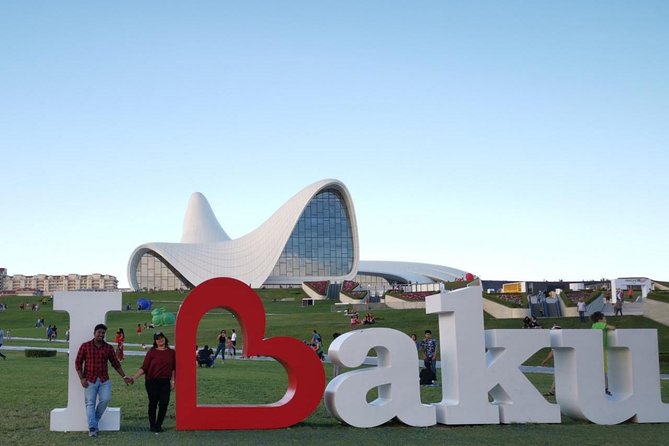
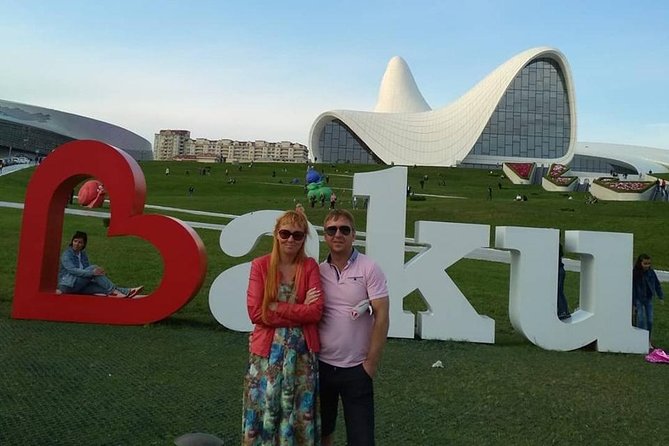
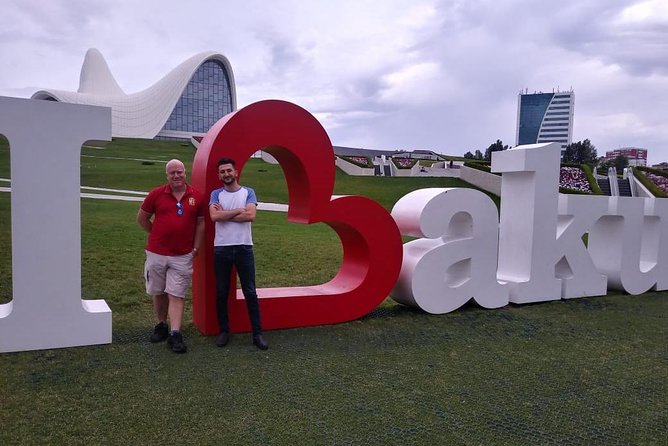
The final major sight is the Heydar Aliyev Cultural Center, designed by Zaha Hadid after her appointment in 2007. Its flowing white form is one of Baku’s boldest pieces of modern architecture. Inside are a conference hall, gallery hall, and museum, but entry is not included.
Only about 20 minutes is scheduled here, which makes the stop mainly architectural. If you want to see the exhibitions, ask about admission and available time. The center is worth including even if you do not go inside, because its exterior gives you a clear sense of how strongly modern design shapes Baku.
More of the Absheron peninsula:
- Baku: Gobustan Absheron Tour Entry Tickets included
★ 4.9 · 329 reviews - Baku: Gobustan-Absheron Tour with Hotel PICK UP and DROP OFF
★ 4.8 · 170 reviews - Baku: Gobustan/Absheron guided tour with lunch and tickets
★ 4.8 · 158 reviews - Gobustan and Absheron peninsula ( Group or Private ) TOUR ( All inclusive )
★ 5.0 · 130 reviews
Day 2: Mud volcanoes and Gobustan rock art
Day 2 moves away from the city toward Gobustan, roughly 40 miles southwest of central Baku. The first stop is the mud volcano area, and this is where the tour becomes more unusual.
Azerbaijan has nearly one-third of the world’s mud volcanoes. These formations bubble and release underground gas connected with hydrocarbon and petrochemical deposits. Some gas leaks burn with small flames, creating a strange, bare setting.
The road to the volcanoes is in poor condition. You change vehicles in the Gobustan area because only certain cars, including specially suited Russian vehicles, can make the trip. This is a practical detail, not a flaw in the tour, but you should know that the ride may be less polished than the main vehicle transfer.
You spend about 30 minutes at the mud volcanoes. Wear shoes that you do not mind getting dusty or muddy, and do not expect railings, paved paths, or a museum-style visit. The appeal is the raw geology and the chance to see something you will not find on an ordinary city tour.
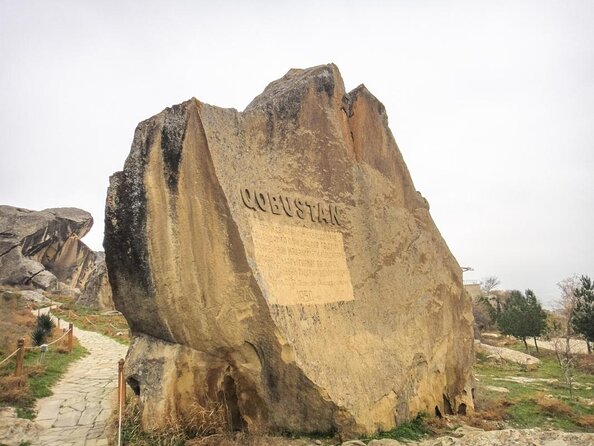
After returning to the main car, you visit the Gobustan museum and then the open-air rock art area. The reserve was established in 1966 to protect ancient carvings, mud volcanoes, and gas stones.
More than 6,000 carvings show primitive people, animals, and scenes from earlier life. The rock art makes Gobustan more than a scenic stop. It gives you a direct connection to people who lived in this region long before modern Baku existed.
The rock art visit lasts around 90 minutes, and museum admission is not included. Wear practical shoes, since this is an outdoor site. The stop is most rewarding when you take time to look closely at the carvings rather than rushing from one marked area to another.
Bibi-Heybat Mosque and the Absheron fire sites
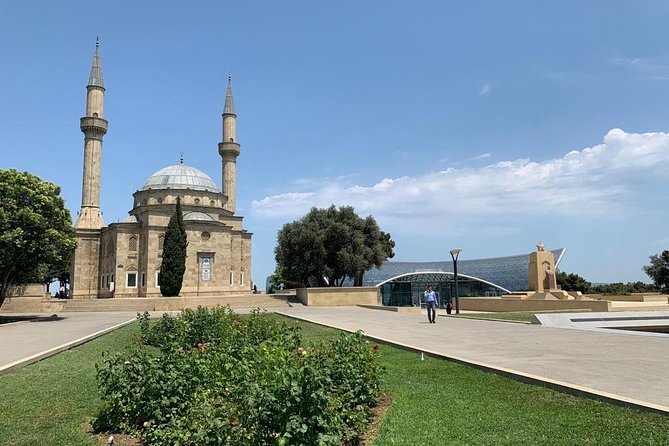
On the return route, the car pauses at Bibi-Heybat Mosque for about 15 minutes. This is a short photo and orientation stop, not a full mosque visit. Dress and behave respectfully at this religious site.
The route then turns toward Yanar Dag, or Burning Mountain. Here, natural gas burns steadily on a hillside on the Absheron Peninsula. Unlike the mud volcanoes, which bubble and can sometimes erupt, Yanar Dag produces a more constant flame from gas escaping below the ground.
The fire is said to have been noticed after a shepherd accidentally lit it in the 1950s. The stop takes about 20 minutes, and admission is extra. It is brief, but the flame is one of the clearest ways to see why fire has shaped Azerbaijan’s identity and place names.
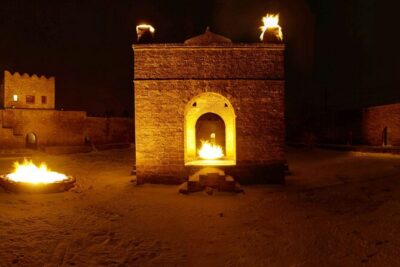
Ateshgah, the Fire Temple of Baku, gives that theme a religious and historical setting. The castle-like complex has a five-sided courtyard surrounded by small cells, with a four-pillared altar in the center.
Persian inscriptions show that the site was used by Hindu, Sikh, and Zoroastrian worshippers. The temple was built in the 17th and 18th centuries and later abandoned, probably as the Indian population in the area declined.
The original natural flame went out in 1969 after decades of petroleum and gas exploitation. The fire you see today is supplied by piped gas from the nearby city. That detail does not make the site worthless. It helps you understand the difference between a historic fire temple and a natural flame that still burns underground.
Ateshgah receives about 50 minutes, the longest stop of the final part of Day 2. Admission is not included. If fire worship, Silk Road connections, or religious architecture interest you, this is one of the most meaningful stops on the route.
Day 3: Mausoleums, mosques, and Gabala’s mountain views
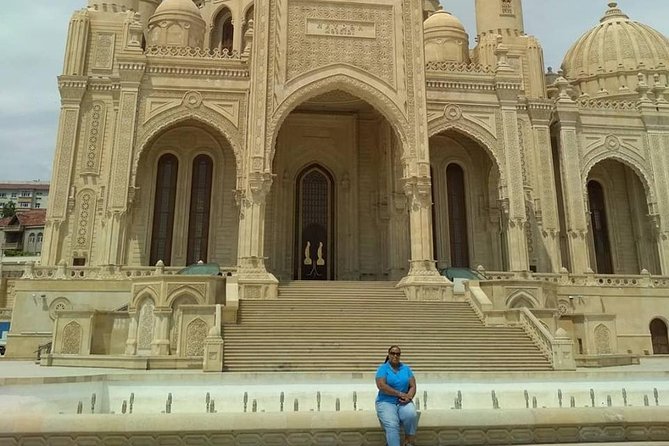
The third day heads toward Gabala, with an early stop at the Diri Baba Mausoleum in Maraza village. This 15th-century mausoleum mosque sits across from an old cemetery, with rocky ground and trees behind it.
Its architecture belongs to the Shirvan school, and its setting is part of the appeal. The building appears closely tied to the rock and greenery around it, making this a more atmospheric stop than its short 20-minute duration suggests.
The visit is free. You will not need to budget for admission, but the stop is brief, so treat it as an introduction rather than a full historical study.
Next is the Juma Mosque of Shamakhi, also called the Friday Mosque. Its foundation dates to the eighth century, with the construction date traditionally given as 743 or 744.
The mosque has been connected with the early spread of Islam in Azerbaijan. You spend about 20 minutes here, enough to see the building and hear some context, but not enough for an extended visit. As with Bibi-Heybat, respectful behavior is essential.
Lake Nohur and the Tufandag cable cars
Near Gabala, Lake Nohur offers a change of pace. The lake sits with views toward the Caucasus Mountains, and the setting is known for fresh air, quiet surroundings, and bird sounds.
Swimming is prohibited because the lake is used as a reservoir and supplies drinking water to Gabala and nearby areas. You can fish, or take a boat or catamaran ride, though those activities are not included in the tour price.
The scheduled stop is about 20 minutes. That is enough for photographs and a short pause, but not enough for a slow lakeside afternoon. If you prefer scenery to monuments, this will likely be one of your favorite parts of Day 3.
The final stop is Tufandag Mountain Resort. Its network of four cable cars operates for winter skiing and summer views of the mountains behind Gabala. The complex itself is free to enter, but the cable car costs extra: 14 AZN for two stops or 24 AZN for the full route.
You have about two hours here, giving you the best chance on the tour to slow down. The cable car is optional, so you can decide based on weather, budget, and interest. If mountain views are a priority, this is where the added ticket may offer the most value.
Keep in mind that the tour ends with a return journey after a day that already includes several road stops. Gabala is a strong choice if you want to see outside Baku, but it is not a quick city excursion.
Is $275 per person good value?
At $275 per person, this tour is not a budget city walk. It becomes more reasonable when you consider the private air-conditioned car, English-speaking driver, hotel pickup and drop-off, and the amount of ground covered across three days.
You are paying for convenience as much as sightseeing. Reaching Gobustan, Absheron, and Gabala independently would require arranging several transfers and working around separate schedules. Here, one operator handles the route, including the vehicle change for the mud volcanoes.
The price does not include accommodation, food, drinks, museum admission, or additional expenses. You should set aside extra money for the Maiden Tower, Shirvanshah Palace, Carpet Museum, Heydar Aliyev Cultural Center, Gobustan, Yanar Dag, Ateshgah, and the Tufandag cable car if you choose to ride it.
For a private group, the value improves. A couple or family can split the cost of a dedicated vehicle and avoid a large group’s fixed pace. If you are watching every expense, a shorter Baku-only tour may be cheaper, but it will not cover the same range of places.
Who should book this Azerbaijan tour?
I would choose this trip if you have only three days and want a broad first look at Azerbaijan. It suits you if you care about landmarks, unusual natural sites, architecture, and mountain views more than long meals or extended museum time.
The private setup is useful for families and small groups. It also helps if you want hotel transfers and an English-speaking team without piecing together transport yourself. The named guide Zacharias and driver Hidayet give you useful points of contact, while the operator is described as reachable and cooperative.
I would hesitate if you want a slow, deeply focused visit to Baku. Day 1 includes many short stops, and Days 2 and 3 involve substantial driving. The tour is also less attractive if you dislike rough roads, optional entry fees, or paying extra for major attractions.
The booking terms are forgiving if your plans change. You can cancel at least 24 hours before the start for a full refund. Poor weather can also lead to a new date or full refund, since the experience requires suitable conditions.
Should you book it?
Book this tour if you want the widest possible sample of Azerbaijan in three days, with private transport and hotel transfers doing the logistical work. The mix of Old City lanes, Caspian views, mud volcanoes, prehistoric carvings, sacred fire sites, and Caucasus scenery is unusually varied.
Skip it if your priority is a relaxed Baku stay or a detailed museum program. For everyone else, $275 buys a practical route through the country’s headline sights, provided you budget for admission fees, cable cars, meals, and the fact that Gabala makes the final day long.
FAQ
Where does the tour start?
The tour starts in Baku at 9:00 a.m. Hotel pickup and drop-off are offered during the tour days.
Is this a private tour?
Yes. Only you and your group participate in the activity.
Is an English-speaking driver included?
Yes. The package includes an English-speaking driver. The tour team named in the provided information includes guide Zacharias and driver Hidayet.
Is accommodation included?
No. Accommodation is not included in the $275 price.
Are meals and drinks included?
No. Food and drinks are excluded, along with other additional expenses during the tour.
Are museum and attraction entry fees included?
No. Entrance fees to museums and other paid places are extra. This includes sites such as the Carpet Museum, Gobustan, Yanar Dag, and Ateshgah.
Is the Tufandag cable car included?
No. The Tufandag complex is free to enter, but the cable car costs 14 AZN for two stops or 24 AZN for the full route.
Why is there a vehicle change at the mud volcanoes?
The road to the mud volcanoes is in poor condition. The tour changes to a vehicle suited to that road, including specially capable Russian cars.
Can I cancel for a full refund?
Yes. You can cancel at least 24 hours before the experience starts for a full refund. Cancellations or changes made within 24 hours are not refunded or accepted, and poor weather may result in another date or a full refund.
More 3-Day Experiences in Baku
- 3 Days Baku Tour: Visit must-see places in our group tours
★ 4.5 · 12 reviews - 3 day tour in Azerbaijan – visit most of sightseeings
★ 5.0 · 10 reviews - 3-Day Hiking & Trekking Tour Remote Villages in Guba Azerbaijan
★ 5.0 · 4 reviews
More Gabala and Shamakhi Days
- Shamakhi And Gabala Tour (All inclusive)
★ 5.0 · 815 reviews - From Baku: Gabala and Shamakhi Tour (Free Baku City Tour)
★ 4.8 · 695 reviews - Gabala + Shamakhi tour (by Old City Tours)
★ 4.5 · 198 reviews - Baku: Guided Day Trip to Gabala with Hotel Pickup & Drop-off
★ 4.7 · 139 reviews
Just added around Baku
- Guba and Shahdag City Tour★ 5.0 · 3 reviews
- Lunch included Qobustan, Mud Vulcano, Ateshgah Temple & Yanardag Fire Mountain★ 4.5 · 3 reviews
- Baku’s Ancient Heart★ 5.0 · 3 reviews
- Baku: Secret Tour with Surprise Activity★ 5.0 · 3 reviews
- Baku: Old City Guided Walking Tour★ 4.6 · 3 reviews
- Majestic Journey to Qobustan and Absheron★ 4.5 · 3 reviews
- Baku night tour★ 5.0 · 3 reviews
- Lahij – village of masters★ 4.5 · 3 reviews
Gobustan & Mud Volcano Tours, compared.
Gobustan, Mud Volcano, Fire Mount, Temple Lunch Entry
Read our review →
BEST Gobustan, Volcanoes & Absheron Fire Tour (Group or Private)
Read our review →
Gobustan, Volcanoes, Fire Temple and Yanardag Day Trip
Read our review →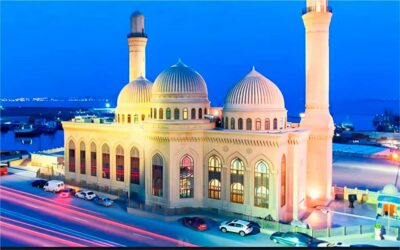
Gobustan-Mud Volcan-Fire Temple and Mountain Tour/Entrance inc
Read our review →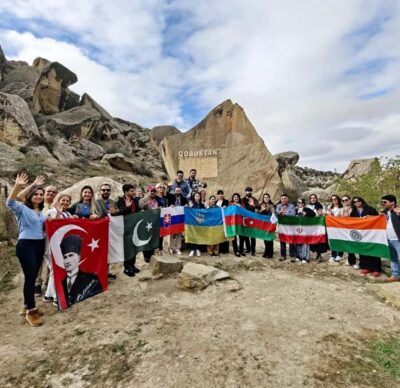
Gobustan Mud Volcanoes Temple & Entry tickets included
Read our review →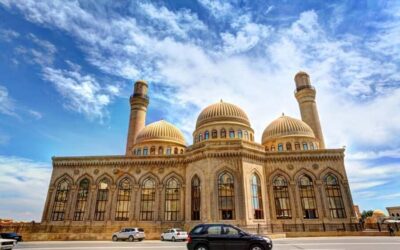
Gobustan-Absheron Tour with Hotel PICK UP and DROP OFF
Read our review →Browse the lists this tour appears in