
Reviewed · GOBUSTAN & MUD VOLCANO TOURS
Gobustan Rocks and the Fire Temple of the Absheron Peninsula
A day around Baku reveals Azerbaijan’s strangest attractions: mud bubbling from the earth, Stone Age carvings cut into bare rock, and flames burning from natural gas. This 5 to 7-hour outing links Gobustan with the Absheron Peninsula, so you see far more than the city center.
I like the broad mix of sights, from the Caspian waterfront and Bibi-Heybat Mosque to the Ateshgah Fire Temple and Yanar Dag. I also like that the company uses several named guides, including Tim, Murad, Aydin, Aziza, and Behram, with repeated praise for clear explanations, comfortable cars, and help with food choices.
The main catch is cost clarity. The advertised price is $20 per person, but entrance charges are extra, including fees for Gobustan, the Fire Temple and Yanar Dag, and the mud volcanoes. Confirm the full total before you set out.
Key points to know before booking
- Mud volcanoes are the wildest stop: Gobustan’s bubbling cones and gray mud feel far removed from Baku’s polished center.
- The day covers two distinct areas: You combine Gobustan’s ancient rock art with the fire sites of Absheron.
- Guiding can shape the experience: Tim, Murad, Aydin, Aziza, and Behram are named guides praised for friendliness and useful explanations.
- Extra fees affect the bargain: The $20 base price does not cover all admissions, and lunch costs an optional $12 per person.
- The schedule is tightly packed: Most stops last 15 to 60 minutes, with transportation between them included.
- You get pickup and air-conditioned transport: That matters on a long day outside Baku, especially around exposed rock and fire sites.
Why this Baku day trip works
This is a strong choice if you want Azerbaijan in concentrated form. In one outing, you move from the Caspian Sea and the country’s oil story to ancient carvings, unusual geology, Islamic architecture, Zoroastrian heritage, and a hillside fire.
I like the contrast. Gobustan is open, rocky, and ancient. Absheron feels tied to the forces beneath the ground, with gas-fed flames and the memory of fire worship. The day does not offer one single theme in a narrow sense, but it gives you a useful first look at why Azerbaijan is often associated with oil, fire, and old trade routes.
The tour is priced at $20 per person, which is attractive for a half-day or longer outing with a guide and air-conditioned vehicle. That price needs a footnote, though. You must add the listed admissions: 10 AZN for Gobustan, 15 AZN for the Fire Temple and Yanar Dag, and 30 AZN for the mud volcanoes. Lunch is optional at $12 per person, and tips are not included.
That still may represent good value if you want transportation and several sites handled in one day. It is less appealing if you expected the advertised price to cover every entrance. Ask for the complete cost in advance, especially since one negative account described extra payments as a surprise.
More Gobustan and mud volcano runs:
- Baku: Gobustan, Mud Volcano, Fire Mount, Temple Lunch Entry
★ 4.9 · 3,246 reviews - BEST Gobustan, Volcanoes & Absheron Fire Tour (Group or Private)
★ 5.0 · 1,254 reviews - Gobustan and Absheron tour (All inclusive)
★ 5.0 · 1,014 reviews
Baku Boulevard and the city’s Caspian edge
The first stop is Baku Boulevard, the long seaside promenade along the Caspian Sea. You get about 15 minutes here, so think of it as a quick orientation rather than a full visit.
The boulevard gives you a fast look at Baku’s public face: landscaped paths, sea views, and the city skyline. Its wider area includes the Ferris wheel, the Carpet Museum, and Little Venice, a canal area with small boats and bridges. You probably will not have time to explore those attractions during this stop, but the brief pause helps place the rest of the day in context.
I would not book this tour mainly for the boulevard. Baku deserves more time on foot, especially if you want the Carpet Museum or a leisurely seaside walk. Here, the value is the transition from the modern capital to the older and more rugged places beyond it.
The world’s first oil well and Azerbaijan’s oil story
The 20-minute stop at the world’s first oil well adds an important piece of context. Baku’s oil boom changed the city and helped shape modern industry, so this is more than a quick photo stop.
You will hear about Azerbaijan’s role in the early oil industry and the way petroleum transformed the region. The site itself may not hold your attention as long as Gobustan’s carvings or the burning hillside, but it connects the natural gas and oil themes running through the day.
This is also where a good guide matters. A short historical explanation can turn an ordinary-looking industrial marker into a useful lesson about Baku’s growth. Guides such as Tim and Murad are praised for clear, engaging information, while Aydin is noted for taking care with guests’ needs. Still, guide quality can vary, and one sharply negative account complained about weak explanations and poor English. If detailed interpretation is important to you, ask about the guide’s language skills when booking.
Bibi-Heybat Mosque above the Caspian Sea
Bibi-Heybat Mosque brings a religious and architectural pause before the rural sites. The mosque was originally built in the 13th century, destroyed during the Soviet period, and rebuilt in the 1990s.
It houses the tomb of Ukeyma Khanum, described as a descendant of the Prophet Muhammad, and remains an important pilgrimage site. Its position overlooking the Caspian adds to the setting, while its design combines traditional Islamic features with more recent construction.
You have about 20 minutes here. That is enough for a respectful look at the exterior and interior areas open to you, but not enough for a slow architectural study. Dress and behave respectfully at this religious site. The stop works best as a brief introduction rather than a full mosque visit.
More fire temple and burning mountain trips:
- Baku: Gobustan, Volcanoes, Fire Temple and Yanardag Day Trip
★ 4.7 · 433 reviews - Gobustan & Mud, Fire Temple, Burning Mountain (Group & Private)
★ 4.5 · 418 reviews - Gobustan-Mud Volcan-Fire Temple and Mountain Tour/Entrance inc
★ 5.0 · 267 reviews - Gobustan, Mud volcanoes, Fire temple, Fire mountain PRIVATE TOUR
★ 5.0 · 47 reviews
Gobustan’s mud volcanoes and rough country roads
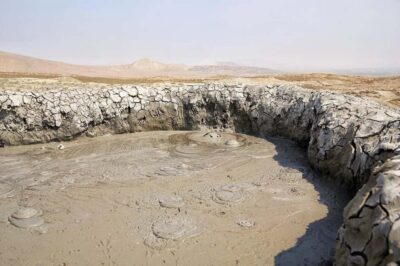
The mud volcanoes are likely to be the day’s most unusual natural sight. About 60 kilometers southwest of Baku, the Gobustan area contains nearly half of the world’s mud volcanoes. These formations push up mud, water, and underground gases, creating low cones and craters that bubble, ooze, and shift over time.
Despite their appearance, the mud is usually cool. You are looking at geological activity, not red-hot lava. The result is quiet and strange rather than explosive: gray cones, wet patches, gas bubbles, and a broad open setting.
You get around 30 minutes at the volcanoes. That is enough to see the formations and take photographs, though the ground can feel exposed and rough. Wear shoes you do not mind using on dusty or muddy surfaces, and bring protection from the sun. The tour includes transportation, and the supplied comments specifically praise the vehicles used for reaching the mud volcanoes.
The extra 30 AZN fee is significant compared with the $20 base price. I would decide based on your interests. If you enjoy geology, odd natural formations, and places that look unlike standard sightseeing stops, this is worth the added cost. If you prefer museums and architecture, you may find the volcanoes less rewarding.
Gobustan’s indoor museum and Stone Age record
The Gobustan Indoor Museum gives you the background needed for the outdoor rock art. Its displays cover the ancient past of the area, with artifacts dating to the Stone Age and exhibits about early human life.
You spend about an hour here. That is useful because the outdoor carvings are easier to understand once you have some context. Look for explanations of how people hunted, moved, and recorded daily activity in a time long before written history.
The museum also offers shelter from the open conditions outside. That matters on a hot day, since Gobustan provides little shade. The admission fee is listed at 10 AZN per person, so include it in your budget.
The outdoor petroglyphs at Qobustan
The outdoor Gobustan site is the historical heart of the outing. It is a UNESCO World Heritage site with thousands of engravings showing hunting, dancing, and ordinary life. Some carvings are described as more than 40,000 years old, giving the rocky hills an extraordinary time span.
You have about an hour to walk among the rock surfaces and view the carvings. This is not a polished urban attraction. The appeal comes from seeing marks left in their original setting, with bare stone and open ground around you.
Take your time looking closely. The figures can be easy to miss if you rush from one panel to the next. A guide can point out shapes and explain what historians think the scenes represent. That is one reason the strongest guide comments matter here. Tim is repeatedly praised for explaining the places clearly, while Murad is described as friendly and well informed. Aziza is praised for fluent English and patience with photographs.
Gobustan is also where you should keep expectations realistic. The carvings are ancient, but they are not all large or immediately obvious. The experience rewards curiosity more than quick sightseeing. Comfortable footwear will help, since you are walking over rocky ground.
Ateshgah Fire Temple and the old fire tradition
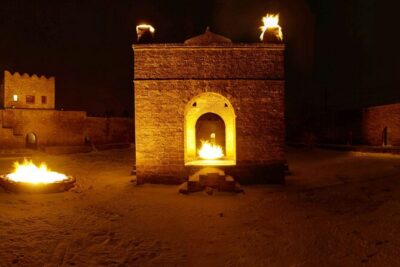
Ateshgah Fire Temple shifts the mood from prehistoric rock art to religious history. The site is linked with Azerbaijan’s Zoroastrian heritage and was built around natural gas that rose from the earth and burned as an eternal flame.
You get about an hour here. The temple’s chambers and fire-centered story make it one of the day’s clearest cultural stops. It helps explain why fire became such a powerful symbol in Azerbaijan, where underground gas and oil have shaped both daily life and national identity.
The site is often presented as ancient, but the buildings you see are part of a later temple complex built around a much older fire tradition. Your guide should help separate the natural phenomenon from the religious use of the site.
The listed 15 AZN fee covers the Fire Temple and Yanar Dag together, according to the supplied pricing details. Confirm how that charge is collected before the tour begins. You should also ask if the flame is visibly burning on the day of your visit, since natural gas conditions and site operations can affect what you see.
Yanar Dag, the Burning Mountain
Yanar Dag is the final major stop, and it delivers the day’s most theatrical moment. Natural gas escaping from underground fuels flames along the hillside, creating the sight known as the Burning Mountain.
You spend about an hour here. The flames are usually the focus, but the setting also gives you a final reminder that the fire theme is not just a legend or museum display. It comes directly from the ground beneath Absheron.
This stop is easy to understand and photograph, but it is not a large site. The appeal comes from the unusual natural event rather than a long walking route or a large collection of buildings. If you have already visited Ateshgah, the two stops work together: one shows how people built a spiritual tradition around fire, and the other shows the source of the spectacle in nature.
The entrance charge is included in the combined 15 AZN Fire Temple and Yanar Dag amount listed for the tour. Since the overall schedule can run from five to seven hours, the actual pace may depend on road conditions, group size, and how long the earlier stops take.
What the vehicle and guide service mean
Pickup is offered, and the tour begins at 9:00 am. Transportation is by air-conditioned vehicle, with a professional guide and comfortable transport included.
That is useful because the route covers several separate sites outside central Baku. You avoid arranging taxis to remote attractions and can spend the road time listening to explanations or resting between stops. The maximum group size is 30 people, so this is not automatically a small-group tour. If you want a private outing, private arrangements are available, and one account describes a custom-designed day that adjusted the schedule to fit limited time.
The named guides give you some sense of the service style, though assignments can change. Tim receives repeated praise for his explanations and friendly manner. Murad is praised for his warmth and knowledge of the sites. Aydin is noted for handling vegetarian food needs, and Aziza is praised for fluent English and helping with photos. Behram is also described as a helpful guide.
The feedback is not perfectly uniform. One account describes heat, smoking drivers, poor music, weak guiding, and unexpected extra charges. That makes a few simple questions worthwhile: Is the vehicle air-conditioned today? Which admissions are included? Who is guiding the group? Is lunch part of the booking or an added $12 option?
Lunch, vegetarian food, and the full cost
Lunch is not included, but an optional meal is offered for $12 per person. Several accounts give specific praise to the Azerbaijani food, including a vegetarian option handled well by Aydin.
If you want to sample local cuisine without choosing a restaurant yourself, the lunch add-on may be practical. If you have dietary needs, state them when booking rather than waiting until the meal stop. The food comments suggest the company can accommodate vegetarian choices, but the supplied information does not list every available diet.
For the budget, plan beyond the headline price:
- $20 per person for the tour
- 10 AZN for Gobustan
- 15 AZN for the Fire Temple and Yanar Dag
- 30 AZN for the mud volcanoes
- Optional lunch at $12 per person
- Tips not included
The fee structure means the tour is best judged as a transportation and guiding package, not as a $20 all-inclusive day. It can still be good value for the number of places covered, but only if you are comfortable with the added admissions.
Who should book this experience
I would choose this tour if you have limited time in Baku and want a broad introduction to the country’s ancient sites, geology, religious heritage, and oil story. It suits first-time visitors who prefer having transport and explanations arranged in one day.
It is especially good for people who enjoy unusual sights. The mud volcanoes and natural fires are not standard city attractions, and Gobustan’s carvings add real historical weight to the route.
Families and mixed-interest groups may also like the variety. One person can enjoy the mosque and temple, another can focus on geology, and everyone gets time outside the city. Most people can participate, and service animals are allowed. Public transportation is nearby, but the tour’s pickup and vehicle make more sense for a route this spread out.
I would hesitate if you dislike long road days, exposed outdoor sites, or extra entrance payments. You may also prefer a private tour if you want to skip stops or spend longer at Gobustan. A private option can be tailored, based on the available experience details, but it may cost more.
The activity has a 4.8 rating with 94 percent recommending it, based on 18 ratings. That is a strong signal, but the mixed account about vehicle conditions and unexpected costs is worth taking seriously. Ask clear questions before paying.
Should you book the Gobustan and Absheron tour?
Book it if you want maximum variety in a single Baku outing. The combination of Stone Age rock art, cool mud volcanoes, a historic mosque, an oil landmark, a fire temple, and Yanar Dag gives you a memorable picture of Azerbaijan’s past and geology.
I would book with the full price confirmed in writing and with the mud volcano admission clearly explained. If the assigned guide is Tim, Murad, Aydin, Aziza, or Behram, you may be in especially good hands based on the available comments, but guide assignment is not guaranteed.
For a modest base price, included pickup, and air-conditioned transport, this is a practical choice. Just treat the $20 as the starting point, not the final bill.
FAQ
How long does the Gobustan and Absheron tour last?
The tour lasts approximately 5 to 7 hours and begins at 9:00 am.
Is hotel pickup included?
Pickup is offered. The supplied information does not specify every pickup location, so confirm your meeting point when booking.
What is included in the tour price?
The price includes an air-conditioned vehicle, a professional tour guide, and comfortable transportation.
Are entrance fees included?
No. The listed extra fees are 10 AZN for Gobustan, 15 AZN for the Fire Temple and Yanar Dag, and 30 AZN for the mud volcanoes.
Is lunch included?
Lunch is not included. An optional lunch is available for $12 per person.
Can I cancel for a full refund?
Yes. You can cancel at least 24 hours before the local start time for a full refund. Cancellations or changes made within 24 hours are not refunded or accepted.
More of the Absheron Peninsula
- Baku: Gobustan Absheron Tour Entry Tickets included
★ 4.9 · 329 reviews - Baku: Gobustan-Absheron Tour with Hotel PICK UP and DROP OFF
★ 4.8 · 170 reviews - Baku: Gobustan/Absheron guided tour with lunch and tickets
★ 4.8 · 158 reviews - Gobustan and Absheron peninsula ( Group or Private ) TOUR ( All inclusive )
★ 5.0 · 130 reviews
Just added around Baku
- Guba and Shahdag City Tour★ 5.0 · 3 reviews
- Lunch included Qobustan, Mud Vulcano, Ateshgah Temple & Yanardag Fire Mountain★ 4.5 · 3 reviews
- Baku’s Ancient Heart★ 5.0 · 3 reviews
- Baku: Secret Tour with Surprise Activity★ 5.0 · 3 reviews
- Baku: Old City Guided Walking Tour★ 4.6 · 3 reviews
- Majestic Journey to Qobustan and Absheron★ 4.5 · 3 reviews
- Lahij – village of masters★ 4.5 · 3 reviews
- Baku night tour★ 5.0 · 3 reviews
Gobustan & Mud Volcano Tours, compared.
Gobustan, Mud Volcano, Fire Mount, Temple Lunch Entry
Read our review →
BEST Gobustan, Volcanoes & Absheron Fire Tour (Group or Private)
Read our review →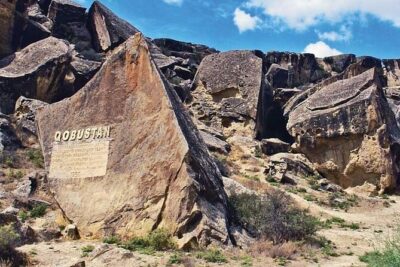
Gobustan, Volcanoes, Fire Temple and Yanardag Day Trip
Read our review →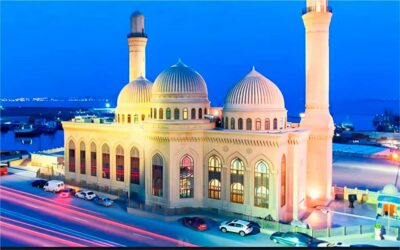
Gobustan-Mud Volcan-Fire Temple and Mountain Tour/Entrance inc
Read our review →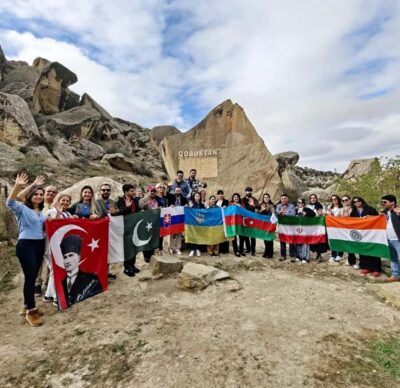
Gobustan Mud Volcanoes Temple & Entry tickets included
Read our review →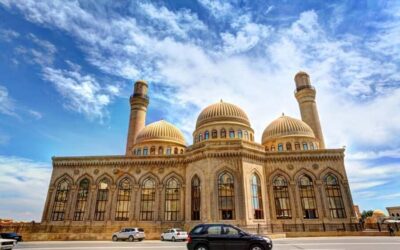
Gobustan-Absheron Tour with Hotel PICK UP and DROP OFF
Read our review →Browse the lists this tour appears in