
Reviewed · GOBUSTAN & MUD VOLCANO TOURS
Guided Gobustan, Mud Volcanoes & Absheron Tour
A bubbling mud volcano, ancient rock carvings, a fire temple, and a hillside flame make this one busy day outside Baku. The route links several places that explain Azerbaijan’s old nickname, the Land of Fire, while also showing how oil and natural gas shaped the country.
I like the mix of strange natural sights and serious archaeology, and I like that this is a private tour, so only your group rides together. The tradeoff is time: eight hours covers a lot, and much of the day is spent driving between stops and taking a break for lunch.
Key points at a glance
- Gobustan combines two visits: an interactive 3D museum and an outdoor site filled with ancient petroglyphs.
- Azerbaijan has about 350 of the world’s 700 mud volcanoes, making this an especially fitting place to see these odd, low eruptions.
- The private format gives your group its own vehicle and guide, rather than placing you with a large mixed party.
- The route connects fire, oil, and worship: the first oil well, Ateshgah Fire Temple, and Yanardagh each tell a different part of Azerbaijan’s story.
- Lunch is separate, with a buffet-style local meal listed at about 12 to 15 AZN.
- The $59 price includes transport costs, bottled water, fuel surcharge, and parking fees, but admission to several major stops is extra.
Why this makes a strong day beyond Baku
This tour works because the sights are different enough to keep the day moving. Gobustan gives you archaeology and open-air rock art. The mud volcanoes add a touch of otherworldly geology. Ateshgah brings religion and trade routes into the picture, while Yanardagh supplies the memorable final flame.
You also get a useful connection between natural gas and Azerbaijani culture. The country’s fire imagery is not just a modern tourism theme. Gas has burned naturally in parts of the Absheron Peninsula for centuries, and fire became tied to religious practice and local identity.
The private setup matters more than it may seem. You meet in Baku’s Old City, then have an air-conditioned vehicle for the full route. You are not working around the pace of a large coach party, and only your own group participates. The supplied details do not name the guide assigned to each departure, but Absheron Travel Agency has used guides and drivers named Said, Ilqar-Viano, Ali, and Ethiram on its Azerbaijan services. If a particular guide matters to you, ask at booking.
At $59 per person, the price is reasonable for a full-day private outing if you are traveling with enough people to share the vehicle. It covers fuel, parking, bottled water, and transport, which removes several small costs that can add up. You still need to budget for entrance fees at Gobustan, Ateshgah, and Yanardagh, plus lunch.
More Gobustan and mud volcano runs:
- Baku: Gobustan, Mud Volcano, Fire Mount, Temple Lunch Entry
★ 4.9 · 3,246 reviews - BEST Gobustan, Volcanoes & Absheron Fire Tour (Group or Private)
★ 5.0 · 1,254 reviews - Gobustan and Absheron tour (All inclusive)
★ 5.0 · 1,014 reviews
Gobustan’s petroglyphs and the 3D museum
Gobustan lies about 64 kilometers from central Baku, so the first part of the day is a drive out of the city. The reserve is part of a UNESCO World Heritage Site, and its main appeal is the chance to see prehistoric rock carvings in the place where they were made.
The visit includes two parts. At the Gobustan 3D Interactive Museum, you can get background before going outside. That is useful because the outdoor carvings can be easy to underestimate if you do not know what you are looking at. The museum helps put the symbols, animals, people, and scenes into a wider setting.
Then comes the Gobustan Outdoor Museum, where you see the petroglyphs directly on the rocks. Allow about an hour for the stop. Wear shoes you can walk in, and keep water close, since this is an exposed site rather than a polished city museum.
Admission is not included here. That is worth checking before departure, since Gobustan is one of the main reasons to choose this tour. The exact ticket price is not provided, so bring room in your budget for the entrance charge.
I would give Gobustan your full attention. It is the stop with the strongest archaeological value, and the open-air setting makes it more memorable than a collection of carvings behind glass. The visit is relatively short, though, so do not expect a long archaeological program or an extended hike.
Azerbaijan’s mud volcanoes in 25 minutes
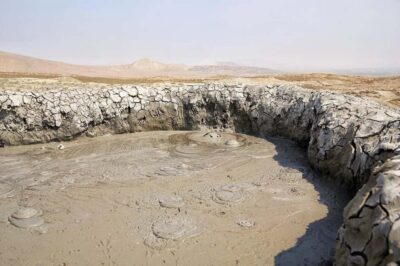
The mud volcano stop is brief, but it may be the most unusual part of the day. Azerbaijan has around 350 of the world’s 700 mud volcanoes, spread across the country. These are not the towering cones you might picture from a classic volcano. They are smaller formations that push mud and gases to the surface, creating a strange, raw scene.
The stop lasts about 25 minutes and admission is included. That short timing tells you how to approach it: this is a photo and observation stop, not a long walk or a full geology lesson. You will want sturdy footwear and clothes you do not mind wearing around dusty ground.
The tour’s vehicle is important here because the itinerary groups this remote-feeling stop with several sites spread around the Baku area. You are not arranging separate transport or trying to connect rural roads by public transit. Parking fees and fuel surcharge are included as well.
The mud volcanoes are also a good reminder that Azerbaijan is not only grand mosques, modern architecture, and Caspian views. The country has unusual earth science right beside its cultural attractions. If you like odd natural places, this stop earns its place. If you prefer long visits with displays and formal interpretation, 25 minutes may feel too short.
The first oil well and Bibiheybət
The next stop looks at a different kind of fire: oil. In 1846, under the supervision of state advisor V. N. Semyonov, engineer Alekseev drilled a 21-meter well at Bibiheybət using a basic percussion drilling method. The well produced oil.
That date is presented as earlier than Edwin L. Drake’s first oil strike in the United States, which came more than a decade later on August 27, 1859. The stop lasts about 20 minutes and admission is included.
This is not a long museum visit. Think of it as a compact historical pause that gives context to Azerbaijan’s modern economic story. The country’s oil industry is not just a recent chapter in Baku’s development. It reaches back to an early period of organized drilling and helps explain why oil is so closely tied to the region.
Because the stop is short, listen for the basic timeline and use it to connect the day’s other sights. The mud volcanoes point to the geology beneath the ground. Bibiheybət shows people learning to extract what was below it. Ateshgah and Yanardagh then bring you back to the older cultural meaning of natural fire.
More of the Absheron peninsula:
- Baku: Gobustan Absheron Tour Entry Tickets included
★ 4.9 · 329 reviews - Baku: Gobustan-Absheron Tour with Hotel PICK UP and DROP OFF
★ 4.8 · 170 reviews - Baku: Gobustan/Absheron guided tour with lunch and tickets
★ 4.8 · 158 reviews - Gobustan and Absheron peninsula ( Group or Private ) TOUR ( All inclusive )
★ 5.0 · 130 reviews
Ateshgah Fire Temple in Surakhany
Ateshgah is a castle-like temple in Surakhany, a suburb of Baku on the Absheron Peninsula. It was used as a place of worship by Hindu, Sikh, and Zoroastrian communities, and its Persian and Indian inscriptions reflect those connections.
Plan about an hour here. Admission is not included, so check the entrance cost when you book or arrive. The site deserves more time than a quick photo stop because its value lies in the meeting of architecture, religion, and natural gas.
You can expect a contained complex rather than a sprawling ruin. Its central fire association gives the visit a clear link to the rest of the route, but Ateshgah is not simply a place to see flames. It also shows how religious communities from different traditions used a location connected with fire and travel routes.
I like this stop because it adds human meaning to the day’s geology. The mud volcanoes show what the earth does on its own. Ateshgah shows how people built beliefs and rituals around unusual natural phenomena. Your guide’s explanation will shape how much you get from the visit, so this is a good place to ask about the Persian and Indian inscriptions.
Yanardagh, the continuously burning hillside
Yanardagh means burning mountain, and it is a natural gas fire that burns continuously on a hillside near Baku. It is on the Absheron Peninsula by the Caspian Sea and fits neatly with Azerbaijan’s Land of Fire identity.
The stop lasts about 30 minutes, and admission is not included. It is likely to be one of the simplest visits of the day: you reach the site, see the flames, take in the setting, and hear how natural gas has shaped local culture and the country’s image.
Yanardagh works well near the end because it gathers several themes in one place. You have already seen early oil extraction and a temple linked to fire worship. Here, the flame is natural and direct. There is no need to imagine what the attraction is about. You can see it.
Still, keep expectations sensible. This is a focused stop, not a full-day natural park. Thirty minutes is enough to see the fire and understand its role, but you may want longer if you enjoy taking photographs or looking closely at the hillside.
The day’s pace, vehicle, and lunch break
The published duration is about eight hours, but the exact flow depends on road conditions, stop length, and the time spent on the lunch break. The itinerary covers sites in and around Baku, Gobustan, and the Absheron Peninsula, so driving takes up a large part of the day.
That is not wasted time. A private air-conditioned vehicle gives you a comfortable base between stops, and the route would be awkward to piece together independently in one day. Bottled water is included, along with fuel and parking fees.
Lunch is not included. A buffet-style restaurant with local food is available, at a listed cost of around 12 to 15 AZN. Dinner is also separate. Since this is a long day, I would treat lunch as part of the plan rather than hoping to eat whenever a gap appears.
The tour starts in Baku’s Old City. Pickup is offered, but the supplied meeting information lists Old City Baku as the start point, with operating hours from 9 a.m. to 6 p.m. from November 15, 2023, through June 17, 2026. Confirm the exact pickup time and location after booking.
Most people can participate, according to the provided information, and the tour is near public transportation at its starting point. No special accessibility details are given, so ask the operator if you have mobility needs or require a particular vehicle arrangement.
What the strong service record means for you
The strongest pattern in the available feedback is organization. The agency is repeatedly praised for being on time, arranging airport transfers and hotels, offering comfortable cars, and helping with practical matters such as food suggestions and currency exchange. Those comments cover several Azerbaijan services, not only this one-day route, so I would not treat every detail as a promise for this specific departure.
Names that appear often include Said, Ilqar-Viano, Ali, and Ethiram. Said receives especially warm mention for creating a friendly atmosphere, explaining places and food, and helping with problems. One account also describes Ilqar-Viano guiding a wider Azerbaijan trip that included Gobustan, Absheron, and the mud volcanoes.
The useful lesson is to expect a service-oriented operator, but confirm who your actual guide will be. The tour is private, and the guide can make a real difference at places such as Gobustan and Ateshgah, where a short explanation adds much more than a quick look.
Who should book this $59 day trip
I would choose this tour if you have limited time in Baku and want the major sights outside the city handled in one day. It suits first-time visitors, couples, families, and small groups who value a private vehicle and do not want to negotiate several separate rides.
It is also a good fit if you want variety. In one outing, you get UNESCO-listed rock art, unusual geology, early oil history, religious architecture, and a natural gas flame. That is a lot of subject matter for eight hours.
I would think twice if you dislike driving between attractions or prefer slow visits. Gobustan gets about an hour, the mud volcanoes only 25 minutes, and several other stops are also tightly timed. Admission fees are extra, and lunch is not part of the $59 price.
Free cancellation is available if you cancel at least 24 hours before the start time. Within 24 hours, the payment is not refunded, and late changes are not accepted. The tour requires good weather, so a weather cancellation brings an alternative date or a full refund.
Should you book it?
Book this tour if you want an efficient private route through Azerbaijan’s most distinctive sights near Baku. The best value comes from the combination of included transport, parking, fuel, and a private group format, not from admission-free access to every site.
Before paying, ask for the final pickup point, the guide’s name, and the admission costs for Gobustan, Ateshgah, and Yanardagh. If you are comfortable with a full day on the road and a brisk schedule, this is a practical way to see far more than Baku’s center. If you want a slow archaeological visit or lots of free time, arrange a shorter, more focused outing instead.
FAQ
How long does the tour last?
The tour lasts approximately eight hours, including transportation between the stops and a break during the day.
Where does the tour start?
The listed starting point is Old City Baku in Baku, Azerbaijan. Pickup is offered, so confirm the exact meeting arrangement after booking.
Is this a private tour?
Yes. Only your group participates in the activity.
What is included in the price?
The price includes an air-conditioned vehicle, bottled water, fuel surcharge, and parking fees.
Is lunch included?
No. A buffet-style restaurant with local food is available for about 12 to 15 AZN. Dinner is also not included.
Are admission tickets included?
Admission is included at the mud volcanoes and the World’s First Oil Well stop. Tickets are not included at Gobustan, Ateshgah Fire Temple, or Yanardagh.
Can most people participate?
The available information says most people can participate. Specific accessibility details are not provided, so contact the operator if you have mobility requirements.
What is the cancellation policy?
You can cancel at least 24 hours before the start time for a full refund. Cancellations or changes made within 24 hours are not accepted for a refund. If poor weather causes the tour to be canceled, you will be offered another date or a full refund.
Just added around Baku
- Lunch included Qobustan, Mud Vulcano, Ateshgah Temple & Yanardag Fire Mountain★ 4.5 · 3 reviews
- Guba and Shahdag City Tour★ 5.0 · 3 reviews
- Baku’s Ancient Heart★ 5.0 · 3 reviews
- Baku: Secret Tour with Surprise Activity★ 5.0 · 3 reviews
- Baku: Old City Guided Walking Tour★ 4.6 · 3 reviews
- Majestic Journey to Qobustan and Absheron★ 4.5 · 3 reviews
- Baku night tour★ 5.0 · 3 reviews
- Lahij – village of masters★ 4.5 · 3 reviews
Gobustan & Mud Volcano Tours, compared.
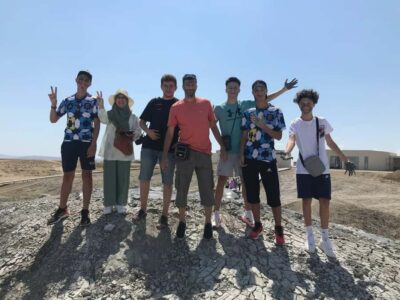
Gobustan, Mud Volcano, Fire Mount, Temple Lunch Entry
Read our review →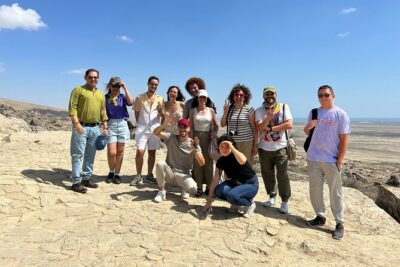
BEST Gobustan, Volcanoes & Absheron Fire Tour (Group or Private)
Read our review →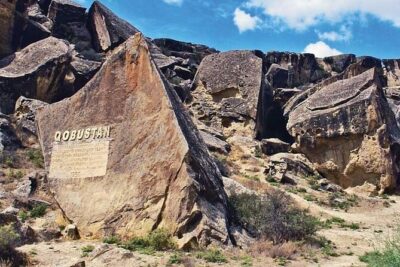
Gobustan, Volcanoes, Fire Temple and Yanardag Day Trip
Read our review →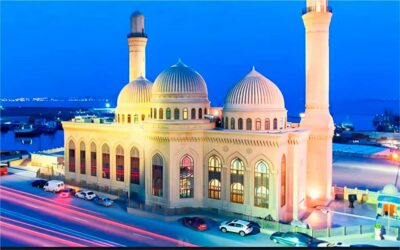
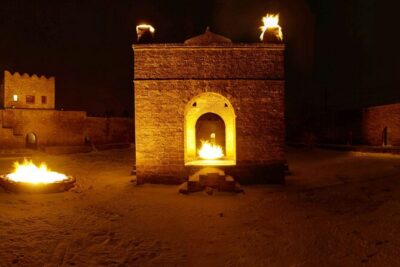
Gobustan-Mud Volcan-Fire Temple and Mountain Tour/Entrance inc
Read our review →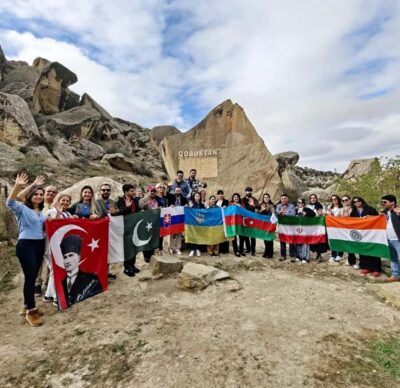
Gobustan Mud Volcanoes Temple & Entry tickets included
Read our review →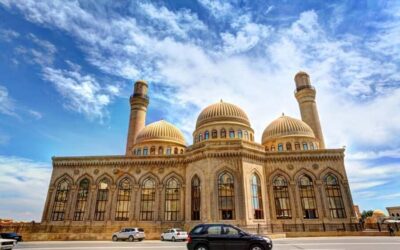
Gobustan-Absheron Tour with Hotel PICK UP and DROP OFF
Read our review →Browse the lists this tour appears in