
Reviewed · GOBUSTAN & MUD VOLCANO TOURS
Gobustan, Mud volcanoes, Fire temple, Fire mountain PRIVATE TOUR
Azerbaijan’s nickname, the Land of Fire, makes sense after a day that takes you from Stone Age carvings to bubbling mud volcanoes, an old fire temple, and a hillside flame that burns from natural gas. This private tour covers a remarkable amount of ground outside Baku, with a guide to connect the sites rather than leaving you to puzzle them out alone.
I especially like two things here. First, the mix is unusually broad: archaeology, religion, oil history, and strange geology all fit into one day. Second, the small private format gives you a better chance to ask questions and adjust the pace. Guides named Kamal, Abid, Valeh, Aga, Ade, and Turel have led versions of this route, with strong praise for their history knowledge and friendly manner.
The trade-off is that this is a packed day with several long drives. Admission fees are extra, and the mud volcano road uses Soviet-era Lada cars, which adds character but may not suit anyone seeking a polished ride. Yanardag is also a fairly short stop, so keep expectations sensible.
Key points before you book
- Five very different sights in one day: Gobustan, mud volcanoes, Bibi-Heybat Mosque, Ateshgah, and Yanardag give you a broad look at Azerbaijan beyond central Baku.
- Private transport and guiding: Only your group participates, with an air-conditioned vehicle, bottled water, and a guide included.
- A memorable mud volcano ride: Local Lada cars carry you over the rougher road to the bubbling cones.
- Real archaeological context: Gobustan’s petroglyphs show how ancient people recorded hunting, work, rituals, and daily life.
- Budget for entrance tickets: Gobustan, Ateshgah, and Yanardag admission fees are not included in the $79 price.
- Best for history-minded visitors: The day works especially well if you want explanation and context, not just photo stops.
Gobustan puts prehistoric life first
The day begins at 9:30 a.m. from the meeting point on Aşurlu in Baku. From the city, you drive roughly 60 kilometers toward the Gobustan area, a trip that takes about an hour in the stated plan.
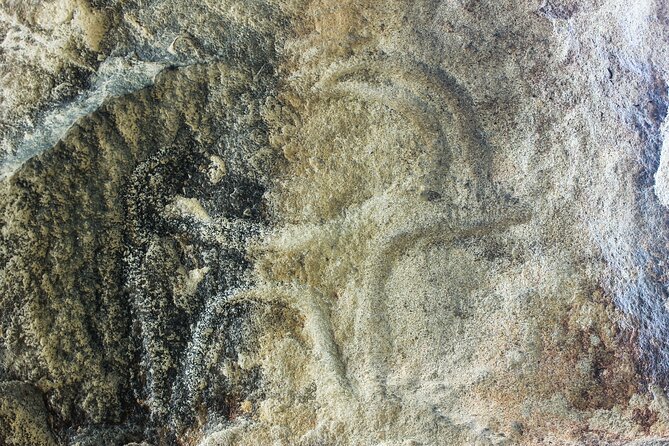
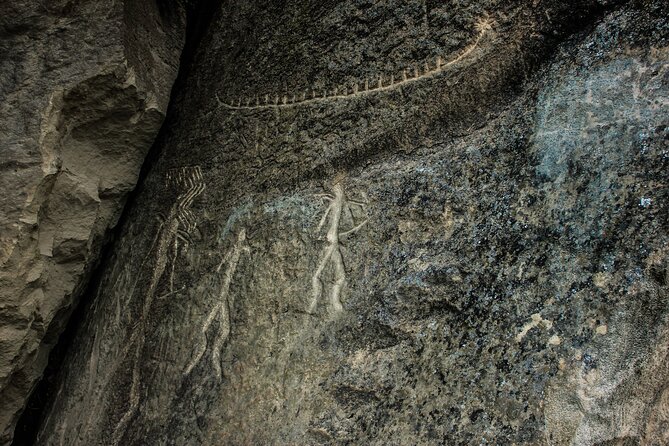
Gobustan is the serious cultural stop of the day. The museum has indoor and outdoor sections, and the visit takes about one hour and 50 minutes according to the schedule. You see rock drawings carved into stone by prehistoric people, with images that reflect work, hunting, customs, and the way ancient communities understood their world.
This is where a good guide matters most. The marks on the rocks can look simple at first glance, but their value comes from learning how they record human activity over thousands of years. Guides such as Kamal, Valeh, and Abid have been singled out for clear explanations of Azerbaijan’s past, and this stop gives them plenty to work with.
I would allow enough time to walk comfortably between the museum areas and the petroglyph locations. Wear shoes suited to uneven outdoor ground, and bring sun protection in warm weather. The tour includes bottled water, but you should still plan for a full morning outside.
The entrance fee is not included. That is an important cost detail because the advertised $79 is not the final all-in price. Still, Gobustan is one of the strongest reasons to choose this outing. It gives the rest of the day a human story before the route turns toward mud, fire, and oil.
More Gobustan and mud volcano runs:
- Baku: Gobustan, Mud Volcano, Fire Mount, Temple Lunch Entry
★ 4.9 · 3,246 reviews - BEST Gobustan, Volcanoes & Absheron Fire Tour (Group or Private)
★ 5.0 · 1,254 reviews - Gobustan and Absheron tour (All inclusive)
★ 5.0 · 1,014 reviews
Mud volcanoes and the Soviet Lada experience
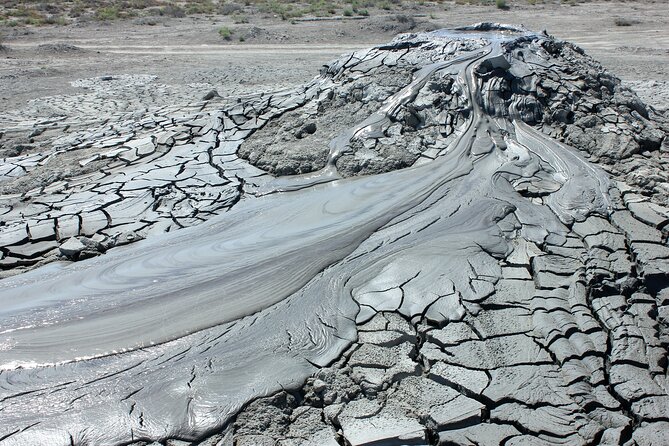
From Gobustan, the route continues toward Azerbaijan’s coastal mud volcano country. The country is known for having around 400 mud volcanoes, and the tour visits an area roughly 25 kilometers from the Gobustan preserve.
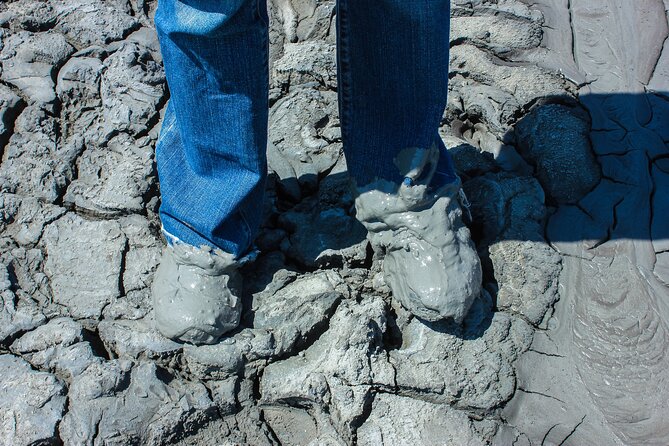
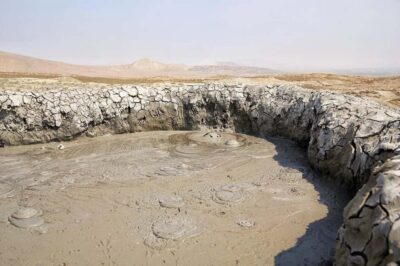
The volcanoes are not towering mountains throwing lava into the sky. Expect low, bare cones and pools of thick gray mud that bubble and belch. The setting can feel stark and otherworldly, which explains the popular comparison with Mars. It is a curious natural sight, not a grand scenic overlook.
The drive to the volcanoes takes about an hour in total, and the stop itself lasts at least 30 minutes. A key part of the experience is the use of Soviet-era Lada cars for the rougher route. That may be one of the most memorable details of the day. It also means you should not expect the same quiet, cushioned ride you get in the main air-conditioned vehicle.
I like this stop because it breaks up the historical visits with something physical and odd. You can watch the mud move, take photos, and get a sense of how unusual Azerbaijan’s geology is. The drawback is that conditions can be basic, and the road may be less comfortable than the polished tour description suggests. Keep your shoes and clothing practical.
The volcano admission is listed as free, but conditions underfoot can still be messy. Listen to your guide around the bubbling areas and avoid treating the cones like an ordinary walking trail.
Bibi-Heybat links faith with the oil boom
After Gobustan and the mud volcanoes, the tour returns toward Baku and stops at Bibi-Heybat Mosque. The planned visit lasts about an hour and 30 minutes, including time for lunch.
Bibi-Heybat gives the day a needed connection to modern Azerbaijani life. The guide explains religion in Azerbaijan and the background of this holy place. The stop also includes an industrial oil well near the mosque, allowing you to see how religious tradition and the country’s oil story exist side by side.
That pairing is useful. Baku’s wealth and modern identity are closely tied to oil, while Bibi-Heybat offers a different view of the country’s spiritual life. Instead of treating Azerbaijan as only an old civilization or only an energy center, the stop shows you both sides in one place.
Dress respectfully for the mosque. The supplied information does not specify clothing rules or entry procedures, so your guide can clarify what is expected on the day. As with any religious site, avoid assuming that the stop is simply a quick photo opportunity.
Lunch can be arranged at a local restaurant or as takeaway. The cost is not stated as included, so ask your guide about the plan and budget for your own meal. A local restaurant may be the better choice if you want to try Azerbaijani dishes, while takeaway can help keep the tightly timed route moving.
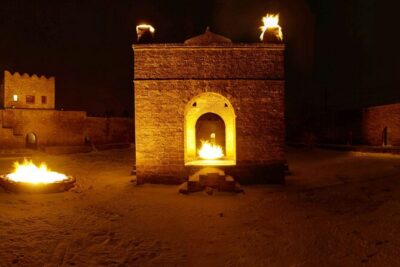
Ateshgah explains the Land of Fire
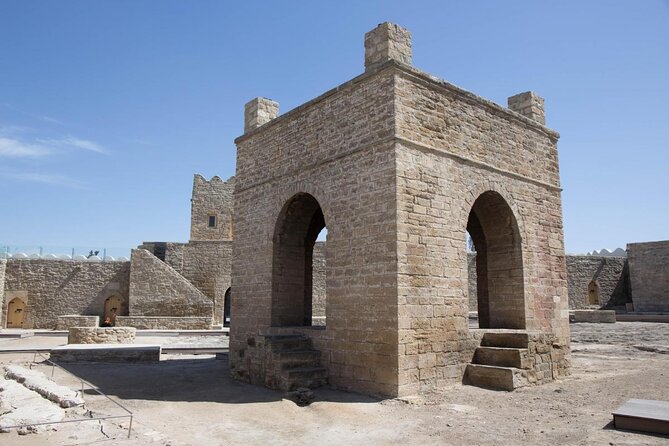
After lunch, the route crosses toward the Absheron Peninsula and the Ateshgah Fire Temple. The temple is described as an ancient Zoroastrian place of worship, and the visit is part of the final two-and-a-half-hour section of the tour, which also includes Yanardag and the return drive.
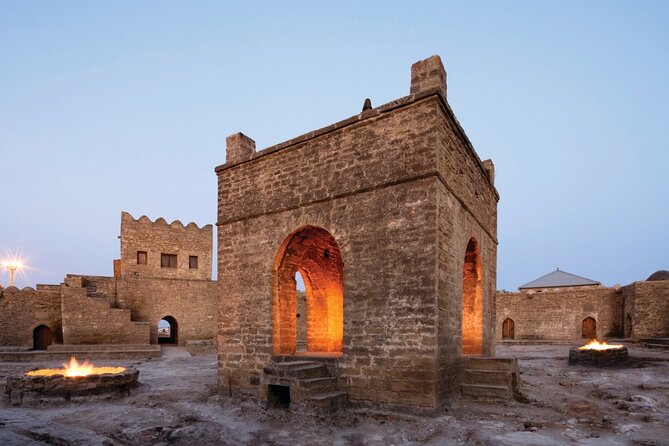
Ateshgah is a pentagonal complex built around a central altar. It was a pilgrimage site for fire worshippers, and the tour explains the Zoroastrian connection as well as the role of the Baku-based Hindu community associated with Sikhs. That mix makes the site more interesting than its simple name suggests.
The temple helps explain why fire has such a strong place in Azerbaijan’s identity. Natural gas fires once appeared in parts of the Absheron area, and people built religious meaning around flames that seemed to burn without an ordinary fuel source. Ateshgah lets you see the architecture and hear the human story behind that belief.
The entrance fee is extra. Give yourself time to look beyond the central altar and notice the shape of the complex and its small chambers. The guide’s explanation is likely to be more valuable than a rushed walk around the courtyard, especially if you want to understand how Zoroastrian and later Hindu connections fit into the site’s past.
This is also one of the stops where the guide can make a major difference. Several guides associated with the operator have been praised for explaining Azerbaijani customs, religion, and archaeology in clear English. The experience is not tied to one named guide in the booking details, so you should not assume that Kamal, Abid, or Valeh will lead your departure.
More fire temple and burning mountain trips:
- Baku: Gobustan, Volcanoes, Fire Temple and Yanardag Day Trip
★ 4.7 · 433 reviews - Gobustan & Mud, Fire Temple, Burning Mountain (Group & Private)
★ 4.5 · 418 reviews - Gobustan-Mud Volcan-Fire Temple and Mountain Tour/Entrance inc
★ 5.0 · 267 reviews - Gobustan, Mud volcanoes, Fire temple, Fire mountain PRIVATE TOUR
★ 5.0 · 47 reviews
Yanardag is short, bright, and easy to overrate
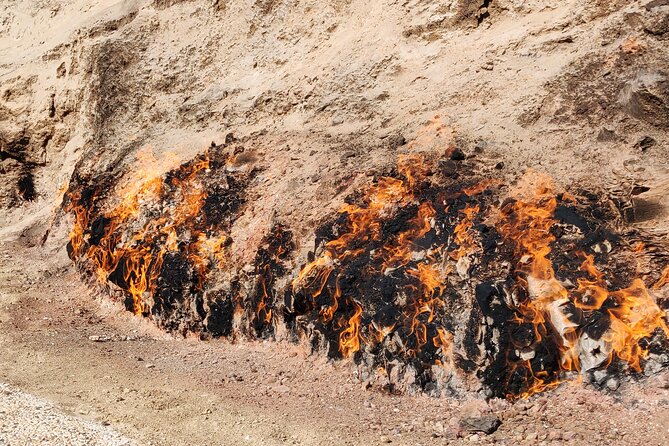
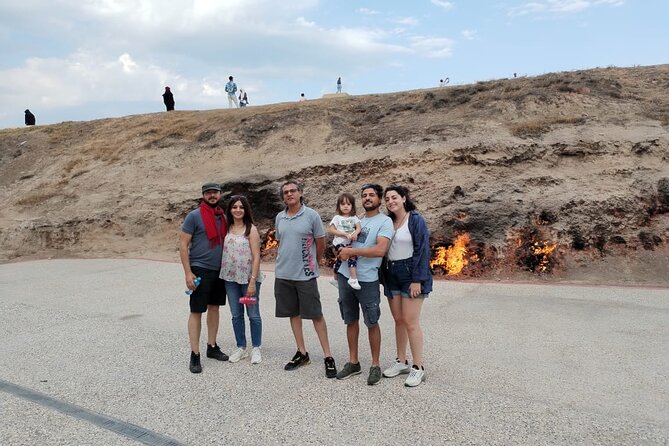
The last major sight is Yanardag, or Fire Mountain, a protected area on the Absheron Peninsula near the Caspian Sea. Here, natural gas burns continuously on a hillside.
The flame is the simple idea at the heart of the stop: gas comes through the ground, and fire burns on the slope. It is unusual, photogenic, and closely tied to Azerbaijan’s fire symbolism. The site also has a museum component, which can add useful context and help explain the natural and cultural importance of the area.
Keep the scale in mind. Yanardag is not an all-day hike or a vast wilderness visit. It is a short stop, and one account of the experience specifically advises keeping expectations modest while pairing it with Ateshgah. That is good advice. The fire is worth seeing, but the temple usually offers more to study.
The tour concludes at Yanardag before returning to the original city-center meeting point. The full outing lasts around seven to eight hours, though traffic and time spent at each stop can affect the final return.
What the $79 price really covers
At $79 per person, this tour offers reasonable value if you want a private vehicle and a guide for a full day outside Baku. You are paying for transport, guiding, bottled water, and the convenience of combining sites that would be difficult to connect efficiently on your own.
The private format matters. Only your group participates, so you are not locked into the needs of a large coach party. You can ask more questions about archaeology, religion, and oil history, and a private guide may be able to adjust the timing within reason. Several accounts of the service point to punctuality, safe driving, flexibility, and friendly guides as major strengths.
The price does not include admission to Gobustan Rock Art, the Gobustan mud volcano area as listed, Ateshgah, or Yanardag. The information also does not state that lunch is included. Add ticket costs and food before comparing this tour with a cheaper group outing.
For a solo visitor, $79 can feel less attractive once the extra fees are added. For two or more people sharing a private experience, the value improves. Group discounts are offered, though the exact discount is not provided, so ask for the current rate before booking.
Comfort, timing, and practical details
The main vehicle is air-conditioned, and bottled water is included. The mud volcano section uses Lada cars, so the day combines standard tour transport with a rougher, more old-fashioned ride.
The meeting point is listed as NizamiBadalan mektebin yolu, Aşurlu 1009, Azerbaijan, with a 9:30 a.m. start. Pickup is offered, but the stated start information also refers to a meeting point, so confirm the exact pickup arrangement before the day. The tour ends back at the meeting point.
Large bags and luggage are not allowed. Bring only what you need for the day: phone, wallet, water, sun protection, and any medication. Since the route includes outdoor ground at Gobustan and the volcanoes, practical shoes are a better choice than city footwear.
The experience requires good weather. If poor weather cancels the outing, you are offered another date or a full refund. You can cancel for a full refund up to 24 hours before the start time. Changes or cancellations inside that window are not accepted.
Most people can participate, and the meeting point is near public transportation. No special accessibility details are supplied, so ask before booking if you need specific vehicle or site access arrangements.
Who will get the most from this day
I would choose this tour if you have one free day in Baku and want to understand the area’s past and natural oddities in one sweep. It suits people who enjoy archaeology, sacred places, unusual geology, and guided explanation.
It is also a good match for a short Baku visit. The route covers the major out-of-town sights without requiring you to arrange separate transport to Gobustan, the peninsula, and the fire sites.
You may want a different plan if you dislike long drives, rough roads, or tightly scheduled sightseeing. The day is full, and each stop has a different character. It is not designed for slow museum study or long walks at one site.
The strongest guide experiences come from people who explain rather than simply point. Guides mentioned in connection with this service include Kamal, Abid, Valeh, Aga, Ade, and Turel. Their reported strengths include archaeology, Azerbaijani history, religion, customs, punctuality, and friendly conversation. Since guide assignment can vary, treat the names as examples rather than a promise.
Should you book the Gobustan and fire tour?
Book it if you want a private, history-focused day that shows Azerbaijan beyond Baku’s center. The combination of Gobustan’s prehistoric carvings, the strange mud volcanoes, Bibi-Heybat’s religious and oil connections, Ateshgah’s fire worship traditions, and Yanardag’s natural flame is hard to match in one outing.
I would book with three conditions in mind: confirm the pickup point, check the extra entrance costs, and expect a busy day rather than a leisurely one. If those details suit you, the $79 starting price buys a useful mix of transport, guiding, and access to some of Azerbaijan’s most distinctive sights.
FAQ
How long does the private tour last?
The experience lasts approximately seven to eight hours, beginning at 9:30 a.m. and ending back at the original meeting point in Baku.
Where does the tour start?
The listed meeting point is NizamiBadalan mektebin yolu, Aşurlu 1009, Azerbaijan. Pickup is offered, so confirm the precise arrangement when booking.
Are entrance fees included?
No. Entrance fees for Gobustan Rock Art, the Gobustan mud volcano area as listed, Ateshgah Fire Temple, and Yanardag Fire Mountain are not included.
Is lunch included?
Lunch is not listed as included. A local restaurant meal or takeaway can be arranged during the Bibi-Heybat Mosque stop.
Is this a group tour?
No. This is a private activity, and only your group participates. Group discounts are available, although the exact discount is not stated.
Can I cancel for a full refund?
Yes. You must cancel at least 24 hours before the experience start time for a full refund. Poor weather or failure to meet the minimum number of participants may also result in an alternative date or a full refund.
Just added around Baku
- Lunch included Qobustan, Mud Vulcano, Ateshgah Temple & Yanardag Fire Mountain★ 4.5 · 3 reviews
- Guba and Shahdag City Tour★ 5.0 · 3 reviews
- Baku’s Ancient Heart★ 5.0 · 3 reviews
- Baku: Secret Tour with Surprise Activity★ 5.0 · 3 reviews
- Baku: Old City Guided Walking Tour★ 4.6 · 3 reviews
- Majestic Journey to Qobustan and Absheron★ 4.5 · 3 reviews
- Lahij – village of masters★ 4.5 · 3 reviews
- Baku night tour★ 5.0 · 3 reviews
Gobustan & Mud Volcano Tours, compared.
Gobustan, Mud Volcano, Fire Mount, Temple Lunch Entry
Read our review →
BEST Gobustan, Volcanoes & Absheron Fire Tour (Group or Private)
Read our review →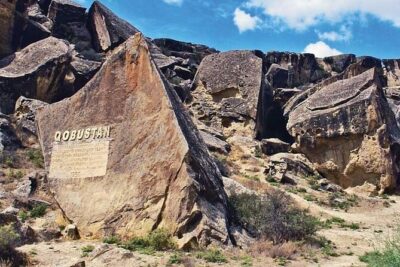
Gobustan, Volcanoes, Fire Temple and Yanardag Day Trip
Read our review →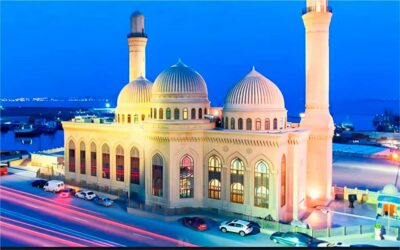
Gobustan-Mud Volcan-Fire Temple and Mountain Tour/Entrance inc
Read our review →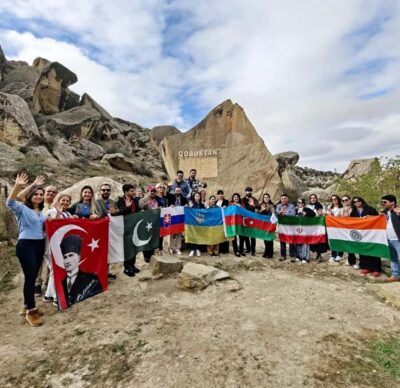
Gobustan Mud Volcanoes Temple & Entry tickets included
Read our review →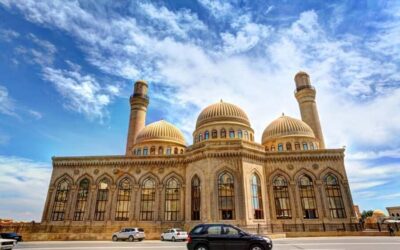
Gobustan-Absheron Tour with Hotel PICK UP and DROP OFF
Read our review →Browse the lists this tour appears in