
Reviewed · GOBUSTAN & MUD VOLCANO TOURS
Gobustan and Absheron trip (Group or Private)
Gobustan’s 40,000-year-old rock carvings and Azerbaijan’s smoking mud volcanoes make this one of the more unusual day trips from Baku. In one long outing, you move from prehistoric hunting scenes to fire-worship sites, a burning hillside, and a grand mosque beside the Caspian coast.
I like the small-group format, which can mean far more useful explanation than a large coach tour. I also like the old Soviet Lada ride to the mud volcanoes, an amusing and genuinely local touch that gets you over rough tracks ordinary cars cannot handle.
The main drawback is pace. Eight hours covers a lot of ground, and one detailed account found the stops rushed, with too little time for photographs. Mud volcano access also depends on weather and conditions, so this is not a perfectly predictable outing.
Key points to know before you book
- Ancient art in an open-air setting: Gobustan contains more than 6,000 engravings, along with traces of caves, settlements, and burials.
- A bumpy ride to the volcanoes: A special taxi, including an old Soviet Lada SUV, is used because of poor road conditions.
- Fire sites explain Azerbaijan’s nickname: Ateshgah Fire Temple and Yanar Dag connect geology, Zoroastrian belief, and later Hindu worship.
- Lunch is not included: Plan to pay separately at the traditional restaurant, with one meal costing 20 manat per person in a reported example.
- The group can be intimate: The advertised maximum is 17 people, but some departures have been much smaller.
- Weather can change the plan: The mud volcano stop may be altered or canceled if conditions are poor.
Why this day trip works from Baku
Baku is easy to enjoy on foot, but the most distinctive sights outside the city are spread across the Gobustan and Absheron areas. Doing them independently means arranging transport for remote dirt roads, the rock reserve, the fire temple, Yanar Dag, and the mosque. This trip handles the long connections in an air-conditioned vehicle and gives you a guide to connect the sights.
The route also has a clear story. Gobustan shows very early human life through carved images and archaeological remains. Absheron then explains the natural gas fires that shaped local religious traditions and gave Azerbaijan its famous Land of Fire identity.
At $30 per person, the tour is priced as a low-cost full-day outing, especially since transportation and guiding are included. But do not read that price as all-inclusive. Lunch, entrance charges, and other expenses are extra, so your final cost will be higher.
The tour is offered in English or Russian. Guides have included Seb, Ley, Nazif, and Leyla on different departures. The quality can depend on the individual guide. Seb was praised for explaining subjects ranging from volcanic activity and Zoroastrianism to daily life in Azerbaijan and Formula One. Nazif was described as well prepared, while Leyla was noted for her friendly and considerate manner.
More Gobustan and mud volcano runs:
- Baku: Gobustan, Mud Volcano, Fire Mount, Temple Lunch Entry
★ 4.9 · 3,246 reviews - BEST Gobustan, Volcanoes & Absheron Fire Tour (Group or Private)
★ 5.0 · 1,254 reviews - Gobustan and Absheron tour (All inclusive)
★ 5.0 · 1,014 reviews
Starting near Gosha Gala Tower
The day begins with pickup, with Gosha Gala Tower in Baku’s Old City listed as the start and finish point. Hotel pickup and drop-off are included in the tour details, but the meeting-point information also names Old City Hub at 9R9P+M8H. If you are staying outside the central area, confirm the exact pickup arrangement before the morning of your trip.
The initial stop is brief, about 15 minutes, and functions mainly as the departure point. Do not expect a guided Old City visit here. The useful part is getting settled before the drive toward the outskirts.
A maximum of 17 people keeps this smaller than a standard coach excursion. That matters on a day with several short stops. You have a better chance of hearing the guide and asking questions, although the actual group can vary. One departure had five people for the first part and only two for the second, which would make the day feel much more personal.
Riding the Lada to Gobustan’s mud volcanoes
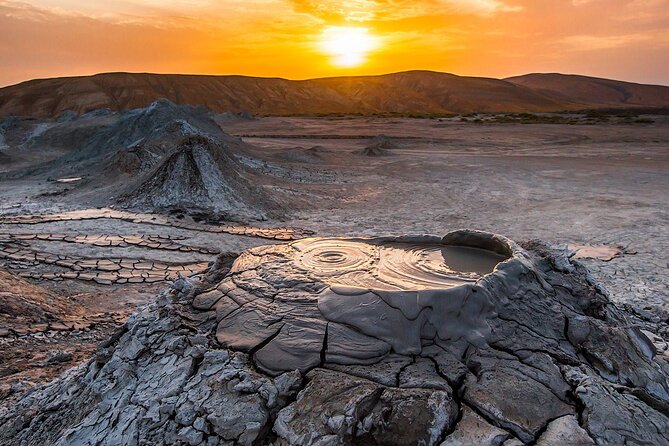
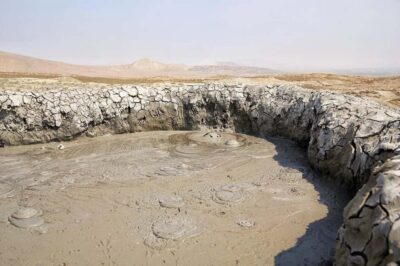
Azerbaijan has about 350 of the world’s roughly 800 known mud volcanoes, with many concentrated around Gobustan. These are not lava volcanoes. Mud, water, and gases rise through the ground, creating low cones, bubbling pools, and gray, raw-looking patches.
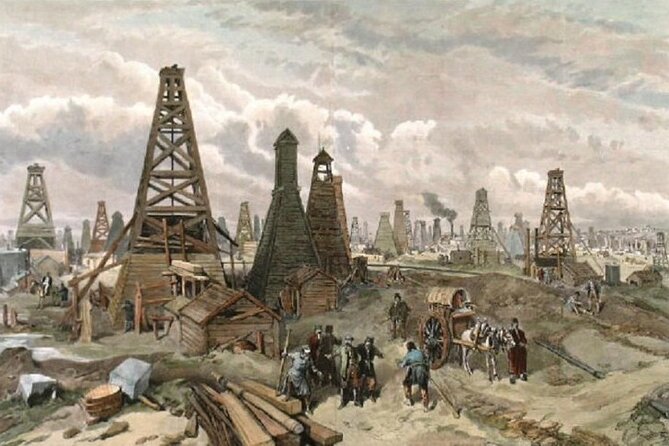
The special part is the approach. Because the roads can be rough, the tour uses a separate vehicle, described as a Soviet-era Lada SUV, to reach the volcanoes. The ride through the oil-field area adds character, though you should expect a bumpy half-hour rather than a polished sightseeing transfer.
The volcano stop lasts about 30 minutes. That is enough to see the formations close up and take photographs, but it is not a long geological walk. Wear shoes that can handle uneven or dirty ground, although the supplied information does not specify a required dress code.
Weather and site conditions are a real concern. One departure found the planned mud volcano site closed, and the group was taken to another volcano by taxi, with an extra payment requested. That is the clearest warning attached to this trip: ask how an alternate visit will be handled before setting out. The description says the special vehicle fee is included, but the experience of a changed plan may involve costs that are not obvious.
Reading 6,000 years of Gobustan carvings
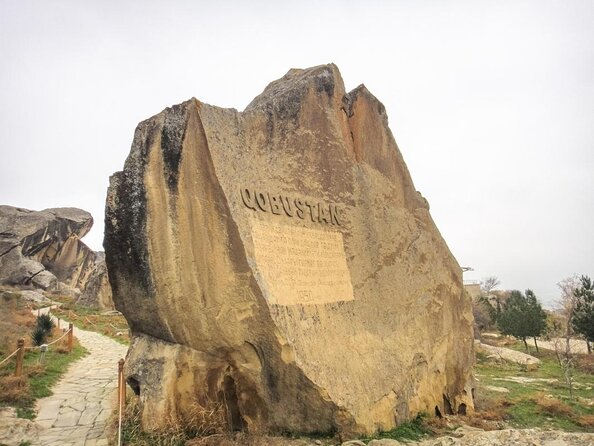
Gobustan Rock Art Cultural Landscape is a UNESCO-listed cultural site, though I would simply think of it as an outdoor record of human life over a very long span of time. More than 6,000 carvings show people, animals, boats, hunting scenes, and ceremonial or social activity.
The carvings date back as far as 40,000 years and continue through later periods. The site also includes caves, settlements, and burial remains. Together, these traces show that people returned to this area repeatedly, particularly during the wetter period after the last Ice Age.
The open-air portion is the emotional center of the Gobustan visit. You are looking at marks made directly into rock rather than viewing objects behind glass. Some images are easy to spot, while others require patience and a guide’s explanation.
The scheduled time is about 30 minutes, followed by roughly 15 minutes at the indoor museum. That is short for a place with this much to explain. If the guide is strong, the stop can be focused and useful. If the commentary is brief, you may feel you have seen the carvings without fully understanding them.
Bring a camera, but also allow yourself a quiet moment to look closely. The best value here comes from understanding what the figures reveal about hunting, animals, movement, and community life, not from simply checking off an ancient site.
More of the Absheron peninsula:
- Baku: Gobustan Absheron Tour Entry Tickets included
★ 4.9 · 329 reviews - Baku: Gobustan-Absheron Tour with Hotel PICK UP and DROP OFF
★ 4.8 · 170 reviews - Baku: Gobustan/Absheron guided tour with lunch and tickets
★ 4.8 · 158 reviews - Gobustan and Absheron peninsula ( Group or Private ) TOUR ( All inclusive )
★ 5.0 · 130 reviews
The interactive Gobustan museum
The museum opened in 2011 after reconstruction and presents more than 100,000 archaeological materials. Its entrance features figures resembling the Azerbaijani yalli round dance, an appropriate welcome to a place where movement and communal life appear in the rock carvings.
Inside, touchscreen displays provide information in several languages. The museum is arranged in themed sections and includes artifacts and tools linked to the Paleolithic, Mesolithic, and Neolithic periods. Animated presentations help turn a large amount of material into something easier to follow.
This indoor stop is useful if the weather is uncomfortable or the outdoor carvings feel hard to read. It gives you dates, objects, and context that the rocks alone cannot provide. Still, the planned 15 minutes is a quick look. You will not have time to study every display.
The two Gobustan stops work best together. The museum gives you the background, and the open-air reserve shows how early people expressed themselves in place. The schedule, however, leaves little room for lingering.
Lunch in the Absheron area
After Gobustan, the group stops at a traditional restaurant in the Absheron region. Lunch is not included, and drinks or alcoholic beverages are also excluded from the tour price.
A reported meal cost 20 manat per person and included a large selection of Azerbaijani dishes. That gives you a useful planning figure, though it is not presented as a fixed price. Ask the guide what the meal includes before ordering if you are watching your budget.
The lunch break is scheduled for one hour. That is a sensible pause in a full day of driving and short sightseeing stops. It also gives you a chance to sample local food instead of relying on a quick snack between monuments.
Because the meal is extra, the $30 starting price is best understood as transport plus guiding, not a complete day budget. Add lunch and entrance fees when comparing this tour with more expensive alternatives.
Ateshgah and the layers of fire worship
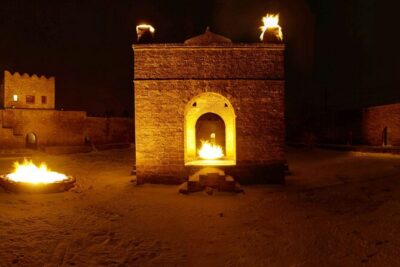
Ateshgah, the Fire Temple of Baku, is a castle-like complex in Surakhani. Its name comes from the Persian word atash, meaning fire. The site was built in its present form during the 17th and 18th centuries around natural flames that once burned from gas escaping through the ground.
The temple’s story is not limited to one faith. It became a place of worship connected with Zoroastrian traditions and was later used by Hindu fire-worshippers, with Persian and Indian inscriptions helping document its past. It remained an important pilgrimage site until the 1880s.
The central courtyard and surrounding cells give the complex a strong visual shape. You can imagine pilgrims arriving at a place where fire appeared to rise naturally from the earth. Today, the site helps explain why fire became such a powerful religious symbol in this region.
The planned visit is about 30 minutes, and admission is extra. That is enough to see the main structure and hear the basic story, but not enough for a slow reading of every inscription. If religion and ancient trade connections interest you, listen closely to the guide.
Yanar Dag, the burning hillside
Yanar Dag is a natural gas fire on a hill about 23 kilometers north of Baku. Gas escapes through cracks in the ground and burns as a wall of flame along the slope. The site was declared a historical, cultural, and natural reserve in 2007.
You spend about 20 minutes here. The fire is not a broad volcanic eruption. It is a focused line of flames, and its impact comes from seeing a natural fire burn continuously on an otherwise dry hillside.
This stop ties directly to Ateshgah. At the temple, fire became part of religious practice. At Yanar Dag, you see the geological source that helped make those beliefs possible. Together, the sites give the Absheron portion of the day its strongest theme.
The short visit will suit you if you want a quick look and photographs. If you prefer long walks or detailed nature interpretation, it may feel limited. Do not expect a large park experience. The attraction is the burning ground itself.
Bibi-Heybat Mosque and the final return
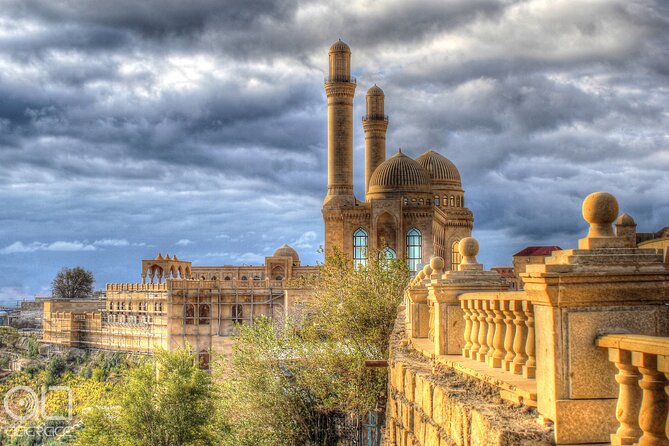
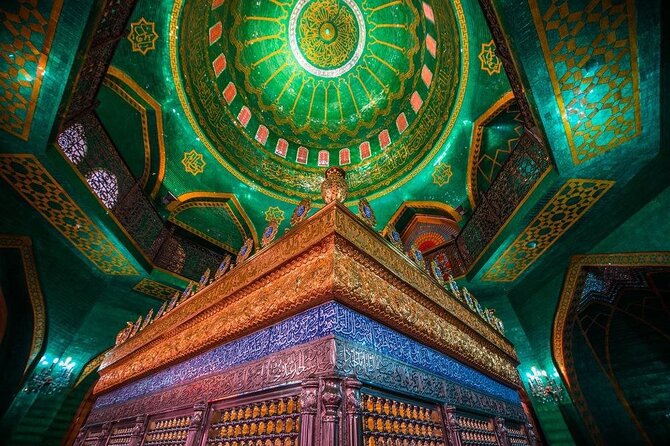
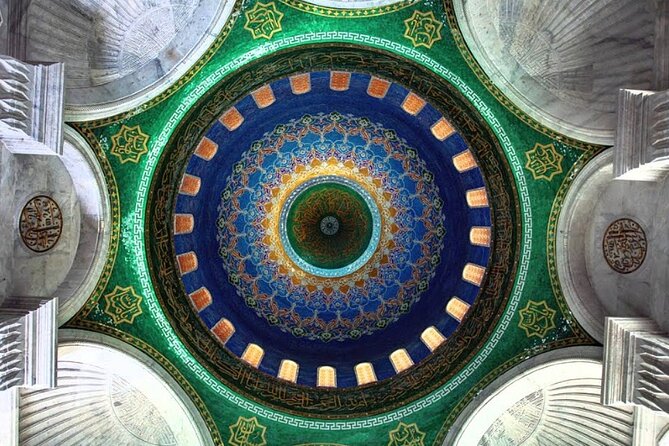
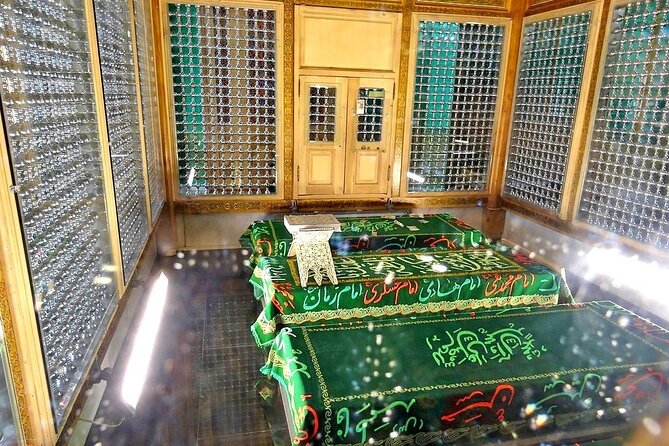
Bibi-Heybat Mosque provides a sharp change of mood after the prehistoric carvings and fire sites. The mosque includes the tomb of Ukeyma Khanum, described as a descendant of Muhammad, and is an important spiritual center for Muslims in the area.
The original mosque was built between 1267 and 1300, but the present structure is a recreation built in the 1990s. That distinction matters. You are seeing a modern reconstruction of a major religious monument, not the medieval building itself.
The visit lasts about 15 minutes and admission is free. That gives you time to appreciate the exterior and understand the site’s religious importance, but likely not enough for a long architectural study. Dress and behave respectfully at an active place of worship.
The tour then returns to the Gosha Gala Tower area, with the full experience taking about eight hours. Since traffic and stop lengths can affect the day, avoid scheduling an important evening commitment too closely afterward.
What the $30 price really covers
The $30 fare is attractive for a full day outside Baku. You receive an air-conditioned vehicle, professional guiding in English or Russian, and hotel pickup and drop-off as described. The small maximum group also gives this more personal potential than a budget coach outing.
You must budget separately for lunch, entrance fees, and other expenses. The mud volcano vehicle is described as included, but the stop itself is weather-dependent and one changed visit led to an extra taxi charge. Confirm the current arrangements before departure.
The value is strongest if you want to see several outlying sights without arranging private transport. It is less compelling if you care mainly about extended time at one archaeological site, because the itinerary is broad and the stops are short.
Who will enjoy this tour most
I would choose this trip if you want a first look at Azerbaijan beyond Baku and enjoy variety. It suits people interested in archaeology, geology, religion, and regional culture, especially those who would rather have a guide explain the connections than simply hire a car.
It also works well for a first experience outside the capital. The route is straightforward, and the guide can provide background on local life as well as the major attractions. Families and most able participants can join, and service animals are allowed.
You may want another option if you dislike rough vehicle rides, prefer a slow schedule, or need firm certainty that every stop will operate. The mud volcano visit is the least predictable part, and the quick timing can frustrate serious photographers.
Practical advice for a smoother day
Confirm pickup details, especially if your accommodation is not near the Old City. The published information offers hotel pickup and also identifies Old City Hub as the meeting point, so do not assume the driver will arrive without prior confirmation.
Carry money for lunch and entrance fees. A 20-manat lunch is a useful reference point, but the exact charge is not fixed in the supplied details.
Wear comfortable shoes for the Gobustan outdoor area and the rough route to the volcanoes. Keep your camera ready, but do not count on long photo stops. One account specifically found the group moving quickly from place to place.
The tour requires good weather. If poor conditions force cancellation, you can receive a different date or a full refund. You can also cancel up to 24 hours before the start time for a full refund. Changes or cancellations inside that 24-hour window are not accepted for a refund.
Should you book the Gobustan and Absheron trip?
Book it if you want the best-value way to combine Gobustan, mud volcanoes, Ateshgah, Yanar Dag, and Bibi-Heybat in one day. The route gives you a memorable mix of prehistoric art and natural fire, and a good guide such as Seb, Nazif, Ley, or Leyla can add real value.
Go in with realistic expectations. This is a busy sightseeing day, not a slow archaeological study. Ask about the mud volcano conditions, confirm what entrance fees apply, and allow extra time after the scheduled return. If that sounds fair, the $30 base price makes this a sensible introduction to the unusual sights beyond Baku.
FAQ
How long does the Gobustan and Absheron tour last?
The experience lasts about eight hours, including the listed stops and transportation from Baku.
What is included in the tour price?
The price includes professional guiding in English or Russian, an air-conditioned vehicle, and hotel pickup and drop-off as described.
Is lunch included?
No. Lunch is extra and takes place at a traditional restaurant in the Absheron region. A reported meal cost 20 manat per person, but the price is not fixed in the supplied details.
Are attraction entrance fees included?
No. The tour information lists entrance fees and taxes as excluded, so you should budget separately for the paid sites.
How large is the group?
The maximum group size is 17 people. Actual departures can be smaller, with some groups consisting of only a few people.
Is the mud volcano visit guaranteed?
No. The stop depends on weather and road or site conditions. If the planned location is closed, the route may change, and you should confirm any possible extra transport cost.
What vehicle is used for the mud volcanoes?
A separate vehicle is used because of the poor road conditions. The experience describes an old Soviet Lada SUV for the route to the volcanoes.
Where does the tour start and finish?
The listed meeting point is Old City Hub near Gosha Gala Tower in Baku. The tour ends back at the starting point, while hotel pickup and drop-off are also offered as part of the service.
Can I cancel the booking?
Yes. You can cancel at least 24 hours before the start time for a full refund. If poor weather causes the operator to cancel, you will be offered another date or a full refund.
Just added around Baku
- Guba and Shahdag City Tour★ 5.0 · 3 reviews
- Lunch included Qobustan, Mud Vulcano, Ateshgah Temple & Yanardag Fire Mountain★ 4.5 · 3 reviews
- Baku’s Ancient Heart★ 5.0 · 3 reviews
- Baku: Secret Tour with Surprise Activity★ 5.0 · 3 reviews
- Baku: Old City Guided Walking Tour★ 4.6 · 3 reviews
- Majestic Journey to Qobustan and Absheron★ 4.5 · 3 reviews
- Lahij – village of masters★ 4.5 · 3 reviews
- Baku night tour★ 5.0 · 3 reviews
Gobustan & Mud Volcano Tours, compared.
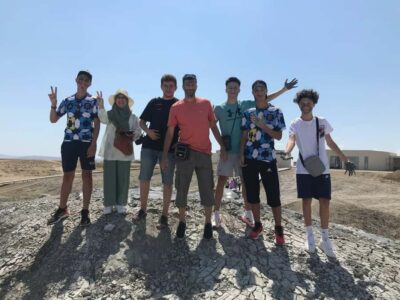
Gobustan, Mud Volcano, Fire Mount, Temple Lunch Entry
Read our review →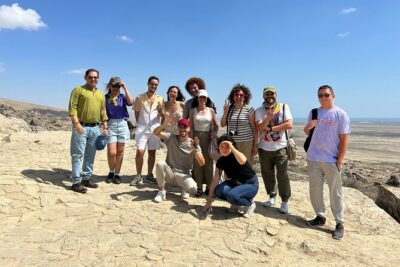
BEST Gobustan, Volcanoes & Absheron Fire Tour (Group or Private)
Read our review →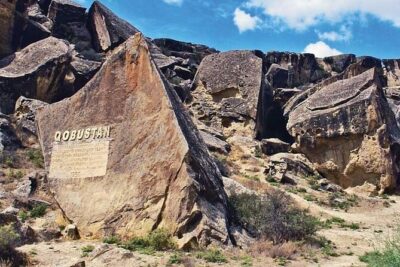
Gobustan, Volcanoes, Fire Temple and Yanardag Day Trip
Read our review →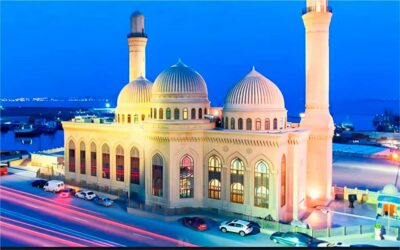
Gobustan-Mud Volcan-Fire Temple and Mountain Tour/Entrance inc
Read our review →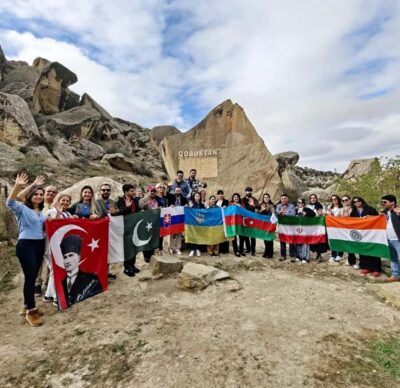
Gobustan Mud Volcanoes Temple & Entry tickets included
Read our review →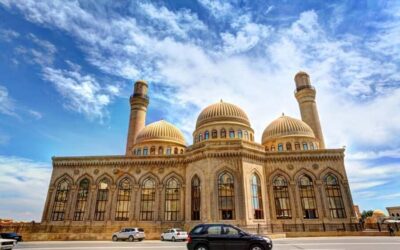
Gobustan-Absheron Tour with Hotel PICK UP and DROP OFF
Read our review →Browse the lists this tour appears in