
Reviewed · GOBUSTAN & MUD VOLCANO TOURS
Gobustan & Mud Volcanoes Tour (tickets included)
Azerbaijan’s strangest day trip begins with prehistoric people and ends with bubbling gray mud. At Gobustan, you walk among thousands-year-old carvings, then head into rough country to see the small, active mud volcanoes that make this corner of Azerbaijan feel wonderfully odd.
I like the tour’s compact four-hour length and the fact that transportation, tickets, water, and a guide are included. Guides such as Shahin, Sabina Mammedli, Jamil, and Lamiya have earned praise for clear English, local stories, and warm, flexible service. The main drawback is the long drive for two short stops, plus the rough road to the volcanoes, which may be closed after rain.
Key points to know before booking
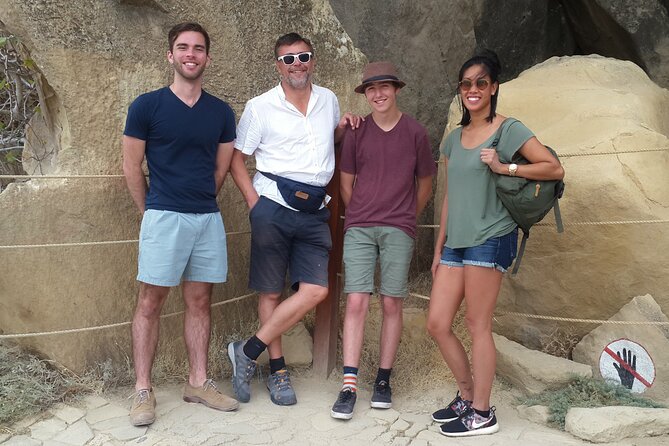
- Gobustan combines a museum and open-air rock art: You first learn about tools, bones, and daily life, then see the actual carvings among the rocks.
- The mud volcanoes are a real off-road experience: The final road can be rough and muddy, but that is part of the unusual appeal.
- This is a private activity: Only your own group takes part, using a car or minibus based on group size.
- The tour fits neatly into a Baku itinerary: It lasts about four hours and ends at Sahil Park or your accommodation.
- Rain can change the plan: If the volcano road becomes impassable, the replacement stop is Bibiheybat Mosque.
- The meeting point needs care: Meet at the Sahil metro exit in Baku, and confirm the exact side or gate before setting out.
Why Gobustan makes a strong half-day from Baku
Baku has grand boulevards, modern towers, and a polished center. Gobustan gives you the opposite: open rock, dry hills, old carvings, and a sense of life before cities, roads, and written records.
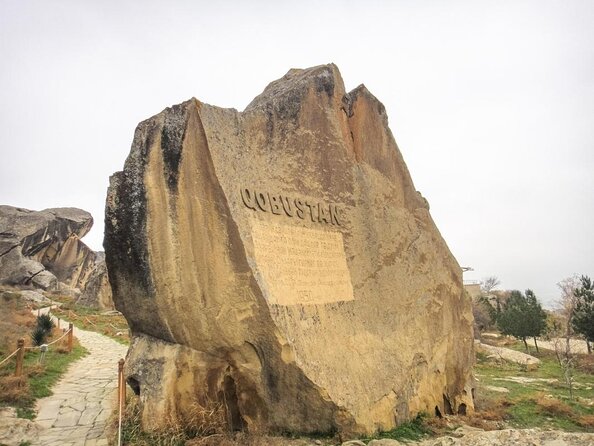
The official name is Gobustan Rock Art Cultural Landscape, and its value comes from the link between the museum and the hills. You do not just look at drawings in a display case. You first get context, then see the stone surfaces where prehistoric people carved animals, people, boats, and scenes of daily life.
The site is connected with the Mesolithic period, and the museum presents ancient human bones and tools used thousands of years ago. Interactive screens and exhibitions help explain how people lived in this part of Azerbaijan. That matters because the rock images can otherwise be easy to miss. Without a guide or some background, a shallow line on a weathered boulder may look like nothing more than a scratch.
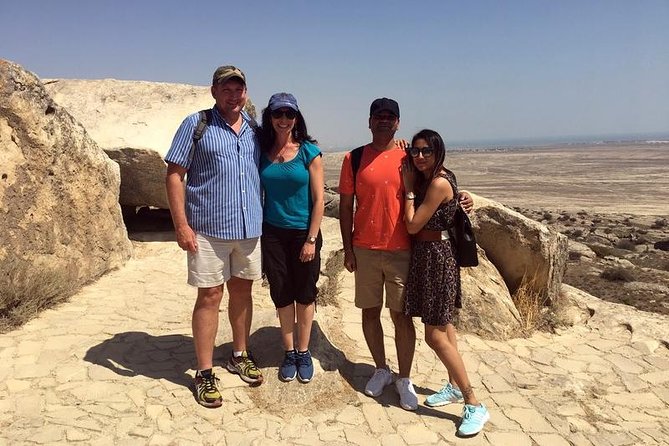
The open-air portion is easy to approach on foot, with a stroll among large rocks and marked areas containing the carvings. You may see figures that appear to be dancing in a group, along with other prehistoric engravings. The images are not polished artwork. Their age, setting, and survival are the point.
More Gobustan and mud volcano runs:
- Baku: Gobustan, Mud Volcano, Fire Mount, Temple Lunch Entry
★ 4.9 · 3,246 reviews - BEST Gobustan, Volcanoes & Absheron Fire Tour (Group or Private)
★ 5.0 · 1,254 reviews - Gobustan and Absheron tour (All inclusive)
★ 5.0 · 1,014 reviews
The Gobustan Museum gives the carvings a story
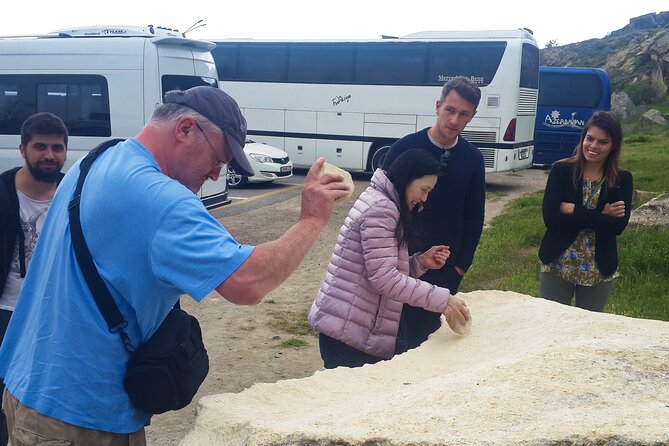
The first main stop normally takes about two hours, including the museum and mountain site. Your guide handles the entrance ticket and explains the exhibitions before you walk outside.
I find this order useful. The museum helps you understand the tools and remains before you face the actual rock art. It also gives you a break from the road and a clearer picture of the people who once used these hills.
Guides are an important part of this stop. Shahin has been praised for detailed explanations about Azerbaijan and the wider region. Sabina Mammedli is also noted for explaining the displays clearly and adding local stories. Jamil has been described as punctual, friendly, and fluent in English, while Lamiya has been appreciated for explaining Azerbaijani culture along with the sites.
Those details matter more here than they would on a simple photo stop. Gobustan rewards questions. Ask your guide how the carvings were found, what the tools were used for, and how archaeologists interpret the scenes. A strong guide can turn a short walk among rocks into a readable chapter of human history.
The museum is not the whole experience, though. If you prefer dramatic ruins or large monuments, the displays may feel modest. Gobustan’s appeal is subtle. You are looking closely at marks made by people who lived thousands of years ago, not walking through a restored ancient city.
Walking among the prehistoric petroglyphs
After the museum, you continue to the mountain area, described as an open-air museum. The petroglyphs were left untouched for millenniums before their discovery in the 1930s, and the outdoor setting gives them a directness that an indoor exhibit cannot match.
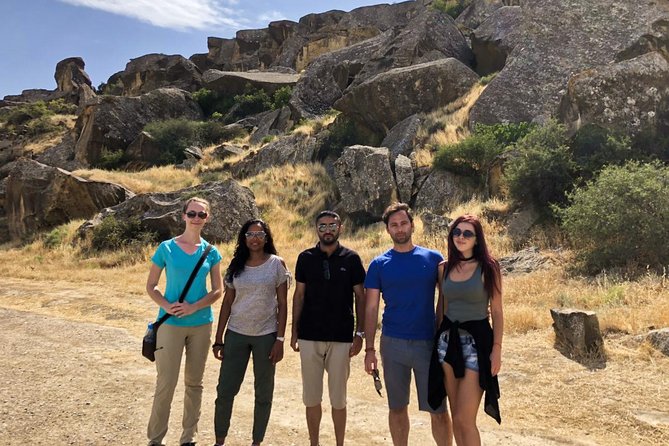
You will stroll among boulders and rocky slopes while your guide points out the carvings. Some images show human figures, including forms that seem to be taking part in a tribal dance. Other engravings represent animals and practical parts of early life.
Take your time here. The strongest part of the stop is not simply reaching the viewing area and taking a photograph. It is learning to look at the rock surface. Light, shadows, and worn lines can affect what you see, so your guide’s explanation is useful.
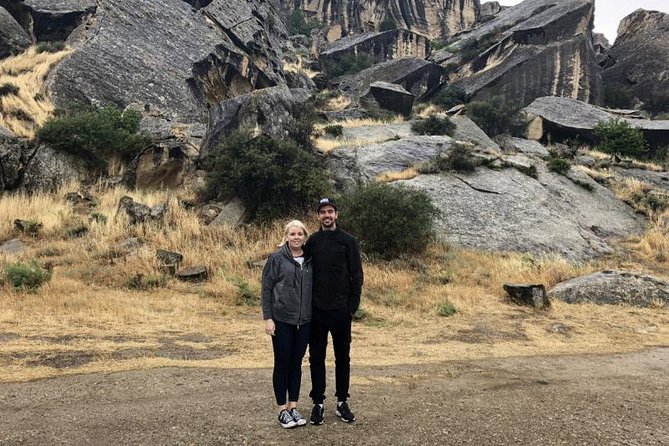
Wear shoes suitable for a moderate walk over uneven ground. The tour requires a moderate level of physical fitness, and the outdoor site is not a place for delicate footwear. The supplied information does not promise a fully accessible route, so anyone with mobility concerns should ask the operator before booking.
The site can also feel exposed. Bring sun protection in bright weather, and use the included 0.5-liter bottle of water as a start rather than your only plan for the day. Food and other drinks are not included.
The mud volcanoes: strange, bubbling, and weather dependent
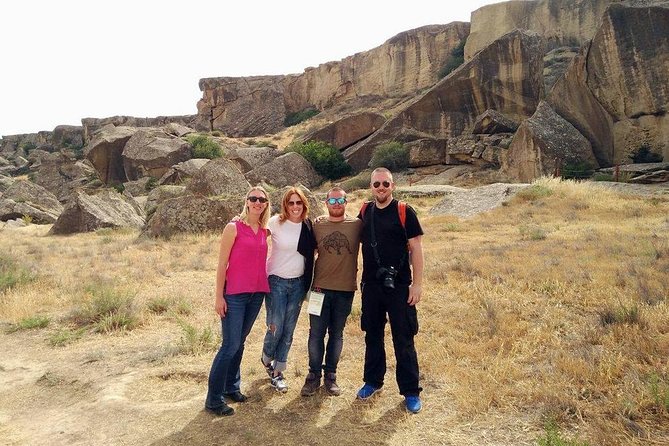
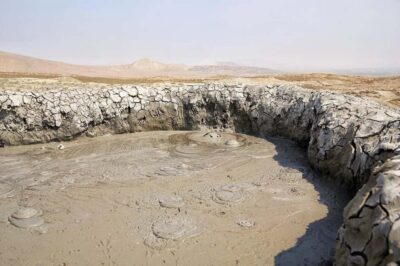
The volcano area is about 20 minutes from the Gobustan museum by the tour vehicle. Azerbaijan is known for having roughly 300 mud volcanoes, found on land, along the shore, in the sea, and on islands. This tour takes you to a nearby group that you can view from close range.
These are not fiery volcanoes with lava. They are low, muddy formations that can bubble and ooze. The smaller cones may not match your idea of a volcano, but they are unusual to see in person, especially after a visit devoted to prehistoric human life.
The road is part of the story. One guest described reaching the site as almost an off-road trip, with the driver handling the route. That sounds appealing if you enjoy unusual terrain and do not mind a bumpy ride. It may be less appealing if you want a smooth sightseeing excursion.
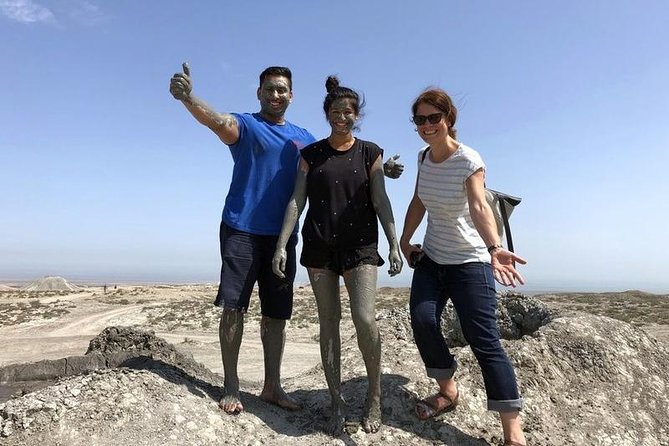
You may also hear about people putting the mud on their skin because of supposed medical benefits. The tour information presents this as something some people try, not as a guaranteed treatment. I would treat it as a curious local custom, not medical advice, and avoid assuming that every pool is safe for skin contact.
The stop itself is short, around 20 minutes in the stated plan, though the time can vary. One useful feature is that the group may stay as long as it likes within the available schedule. Do not expect a large visitor center or a long series of attractions. The value is the novelty: bubbling earth in a stark setting a short ride from Baku.
A few more Baku half-days to weigh up
- Baku: Guba, Shahdag, Laza & Lunch w/ Free City & Night Tour
★ 4.8 · 1,455 reviews - Shamakhi And Gabala Tour (All inclusive)
★ 5.0 · 815 reviews - From Baku: Gabala and Shamakhi Tour (Free Baku City Tour)
★ 4.8 · 695 reviews - Baku: Candy Cane, Guba, Khinaliq village with Homemade Lunch
★ 4.9 · 519 reviews
Rain can replace the volcanoes with Bibiheybat Mosque
The mud volcano road becomes very muddy in wet seasons and may be impossible for a car after rain. If conditions are poor, the volcano stop is replaced by a visit to Bibiheybat Mosque on the way back to central Baku.
This is the tour’s biggest uncertainty. If seeing the mud volcanoes is your main reason for booking, check the forecast and understand that the substitution is made for road safety and access. You are not guaranteed both sites in bad weather.
The replacement is still a worthwhile cultural stop, but it offers a completely different experience. Gobustan gives you prehistoric art and open country. Bibiheybat Mosque provides a religious and architectural setting closer to the city. The change can work well if you are open to seeing another side of Azerbaijan, but it will disappoint you if the unusual geology is the must-see part.
One traveler who could not complete the original route because of poor road conditions received a different tour from the guide. That suggests some flexibility from the company, but you should not assume every last-minute change will be possible.
Private transport makes the remote sites easier
The tour begins at Sahil metro station in Baku, with hotel pickup available as an option. The group uses a private car or private minibus, depending on the number of people joining. Only your group participates, which makes it easier to ask questions, adjust the pace, or tell the guide if you need a short pause.
The drive is not just a transfer. Gobustan is difficult to combine with public transport and independent taxis, especially once the road becomes rough near the volcanoes. Having a driver who knows the route removes much of the practical hassle.
Still, check the vehicle when you meet the group. One account described a taxi accident with no injuries, followed by a replacement taxi that did not have enough seats or seat belts for everyone. This appears to have been an isolated problem, and the overall transport reports are positive, but you should make sure every passenger has a proper seat and seat belt before leaving.
The meeting point also deserves attention. The stated start is Sahil, and the practical description places it at the metro exit. There are multiple gates or exits in the area, and the exact location has caused confusion. Contact the operator if your confirmation does not make the exit clear. Hotel pickup may be worth choosing if available and convenient for you.
The tour ends at Sahil Park, a central location, or you can request drop-off at your accommodation. That makes it easy to continue with Baku sightseeing, lunch, or a rest.
Guides are a major part of the value
The ticket gets you through the gates, but the guide is what gives the day shape. The strongest guide reports praise clear English, local knowledge, patience, and a willingness to explain Azerbaijan beyond the two formal stops.
Shahin is noted for broad knowledge of the country, city, and region. Sabina Mammedli is praised for detailed explanations and good stories. Jamil is described as friendly, punctual, and especially clear in English. Lamiya is remembered for handling tickets, providing water, and sharing information about Azerbaijani culture.
Guides can vary, of course. One account found the guide too rushed at Gobustan, while another found the guide and driver kind and flexible during a difficult personal situation. You should expect a helpful local escort, but not necessarily the same guide each day.
This is a good tour for you if you enjoy asking questions and prefer a human explanation to reading signs. It is less ideal if you want complete solitude, a slow photographic outing, or a full day at one archaeological site.
Is $105 a fair price?
At $105 per person, the tour is not the cheapest way to spend four hours outside Baku. The price includes a private vehicle, a local guide, entrance tickets, bottled water, and a souvenir postcard. Food and extra drinks are not included.
The value depends on your group size and what you would otherwise pay for transport. A private ride to two remote locations, especially the rough road to the volcanoes, can be worth the cost if you want convenience and a guide. You are also buying time. Planning Gobustan and the volcanoes independently would require arranging transport, identifying the correct roads, and handling tickets yourself.
The price feels less attractive if you are mainly interested in the petroglyphs and could visit Gobustan with a cheaper shared option. The four-hour schedule also includes driving, so the actual time at the sites is limited.
The tour is often booked about 11 days ahead, which is a useful planning clue during a busy visit. Free cancellation is available up to 24 hours before the start time. Inside that window, changes and refunds are not accepted.
Who should book this Gobustan tour?
I would choose this trip for a first visit to Baku if I wanted to see more than the city center without giving up an entire day. The combination is strong: ancient rock art first, strange geology second, with a city mosque as a weather backup.
It suits couples, families with older children, and small groups that value private transport. It also works for anyone who wants an English-speaking guide and does not want to negotiate remote transport alone.
Think twice if you dislike bumpy roads, have limited walking ability, or want a guaranteed mud volcano visit in rainy weather. The archaeology is the more dependable part. The volcanoes are the memorable bonus, but nature and road conditions control access.
Should you book it?
Book this tour if Gobustan’s prehistoric carvings and Azerbaijan’s unusual mud volcanoes both appeal to you. The guide quality is a key part of the experience, so use the confirmation process to ask about the guide, pickup, and exact Sahil exit.
I especially like the short format, private vehicle, and sensible weather replacement. Just keep expectations in check: you are getting two unusual stops rather than a full archaeological expedition, and the mud volcano road can be rough. For most first-time visitors with four hours to spare, it is a practical and memorable way to see a very different side of Azerbaijan.
FAQ
How long does the Gobustan and mud volcanoes tour last?
The tour lasts approximately four hours, including the journey from Baku and the visits to Gobustan and the mud volcano area.
Where does the tour begin?
The stated meeting point is Sahil metro station in Baku, generally at the metro exit. Hotel pickup is also offered, so confirm the exact arrangement and exit before the tour.
Where does the tour end?
The tour ends at Sahil Park, and drop-off at your accommodation may also be available on request.
Are entrance tickets included?
Yes. Entrance tickets for the Gobustan visit are included in the price. The mud volcano stop has no separate admission fee.
What happens if rain makes the mud volcanoes unreachable?
In wet weather or poor road conditions, the mud volcano visit is replaced by a visit to Bibiheybat Mosque on the return route to central Baku.
Is this a private tour?
Yes. Only your own group participates. The transport is a private car or private minibus, depending on group size.
What is included in the price?
The price includes a local guide, air-conditioned transport, entrance tickets, a 0.5-liter bottle of water, and a free souvenir postcard. Food and additional drinks are not included.
Just added around Baku
- Guba and Shahdag City Tour★ 5.0 · 3 reviews
- Lunch included Qobustan, Mud Vulcano, Ateshgah Temple & Yanardag Fire Mountain★ 4.5 · 3 reviews
- Baku: Secret Tour with Surprise Activity★ 5.0 · 3 reviews
- Baku’s Ancient Heart★ 5.0 · 3 reviews
- Baku: Old City Guided Walking Tour★ 4.6 · 3 reviews
- Majestic Journey to Qobustan and Absheron★ 4.5 · 3 reviews
- Baku night tour★ 5.0 · 3 reviews
- Lahij – village of masters★ 4.5 · 3 reviews
Gobustan & Mud Volcano Tours, compared.
Gobustan, Mud Volcano, Fire Mount, Temple Lunch Entry
Read our review →
BEST Gobustan, Volcanoes & Absheron Fire Tour (Group or Private)
Read our review →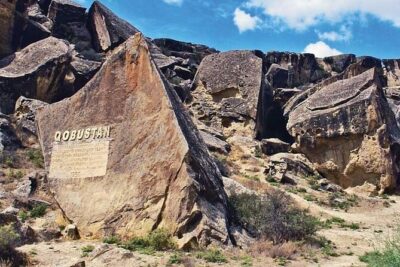
Gobustan, Volcanoes, Fire Temple and Yanardag Day Trip
Read our review →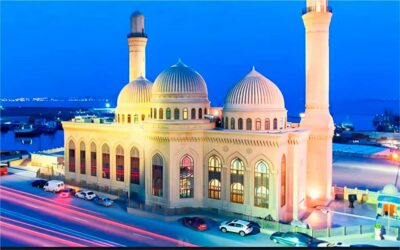
Gobustan-Mud Volcan-Fire Temple and Mountain Tour/Entrance inc
Read our review →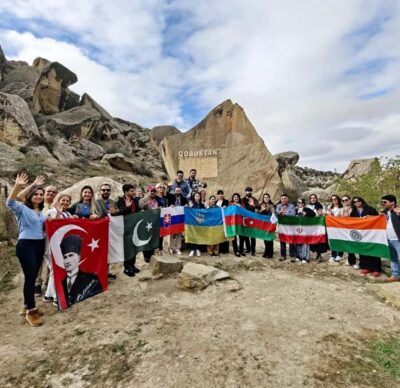
Gobustan Mud Volcanoes Temple & Entry tickets included
Read our review →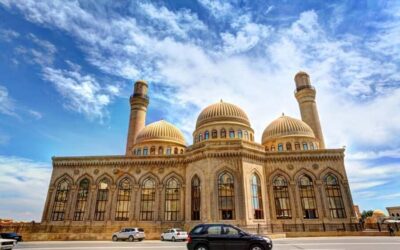
Gobustan-Absheron Tour with Hotel PICK UP and DROP OFF
Read our review →Browse the lists this tour appears in