
Reviewed · GOBUSTAN & MUD VOLCANO TOURS
Gobustan and Absheron peninsula ( Group or Private ) TOUR ( All inclusive )
Azerbaijan’s strangest sights sit outside Baku: ancient carvings cut into stone, mud bubbling from the ground, and natural flames burning from a hillside. This Gobustan and Absheron tour links those places in one long day, with the country’s oil story and religious past folded into the route.
I like two things right away. The price covers the essentials, including transport, lunch, a guide, and entry tickets. I also like the choice between a shared group and a private tour, since a group keeps the cost low while a private booking gives you more breathing room.
The main caution is the vehicle. A group may use a minibus with limited legroom, and one experience had a late pickup and weak air conditioning in hot weather. If comfort matters more than saving money, choose the private option and confirm pickup details carefully.
Key points before you book
- See Azerbaijan’s mud volcano country: Gobustan is home to an unusually large share of the world’s mud volcanoes, with about 350 of the estimated 800 worldwide located in Azerbaijan.
- Compare group and private travel: Shared tours can include up to 18 people, while the private choice is better for families or small groups wanting more control.
- Get six major stops in one day: The route covers oil, Islam, prehistoric art, geology, Zoroastrian fire worship, and a burning hillside.
- Expect a full nine-hour outing: The schedule is packed, so this works best when you want broad coverage rather than a slow visit to one site.
- Guide quality matters: Guides including Riad, Riyad, Reza, Hafis, Famil, and Samir have been praised for history, religion, personal stories, and clear coordination.
- Pack for heat and uneven outdoor stops: Mud volcanoes and Yanar Dag are open-air visits, and the minibus can feel cramped in warm conditions.
Why this day trip makes sense from Baku
Baku gives you grand architecture, the Caspian waterfront, and oil wealth in the city center. This tour shows you the less polished side of the region, where the ground bubbles, fire rises from rock, and prehistoric people left marks on canyon walls.
The route also helps you connect separate parts of Azerbaijan’s story. Oil shaped modern Baku, Islam remains central to the country’s identity, ancient rock art points to early human settlement, and fire worship helps explain why flames carry such weight in local culture.
At $34 per person, the tour is priced as an efficient sampler. You are not paying only for a museum visit or a single attraction. You are covering a long day by road, several admission fees, a guide, lunch, and hotel transport where available.
That low price comes with a tradeoff. The day moves quickly, and a shared vehicle may not feel luxurious. You are paying for access and convenience, not a premium small-group vehicle with lots of spare time.
The tour lasts about nine hours. I would keep the rest of your day light, since six stops and the driving between them can become tiring. The schedule works well early in a Baku visit, since it gives you a broad sense of the country before you decide which subjects deserve more attention.
More Gobustan and mud volcano runs:
- Baku: Gobustan, Mud Volcano, Fire Mount, Temple Lunch Entry
★ 4.9 · 3,246 reviews - BEST Gobustan, Volcanoes & Absheron Fire Tour (Group or Private)
★ 5.0 · 1,254 reviews - Gobustan and Absheron tour (All inclusive)
★ 5.0 · 1,014 reviews
First stop: Bibi-Eybat’s claim to the world’s first oil well
The opening stop takes about 15 minutes at the Bibi-Eybat oil field. Azerbaijani historians point to documents in Russian archives showing that an oil well was drilled here in 1846.
That date matters because it came 13 years before commercial oil production began in the United States. You do not spend long at the site, and admission is free, but it gives context to Baku’s wealth and modern identity.
I like this as an opening because oil is not treated as an abstract subject. You begin with the physical place connected to the claim, then see how the resource affected the city and country.
Do not expect a long museum visit here. This is a short historical pause, best understood through the guide’s explanation rather than through a large collection of exhibits.
Bibi-Heybat Mosque and Azerbaijan’s Islamic tradition
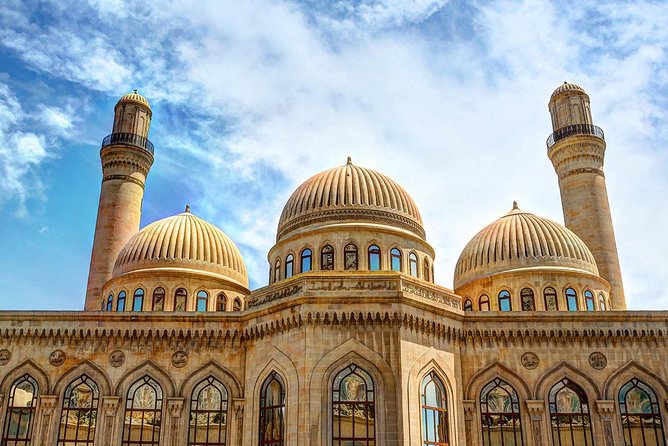
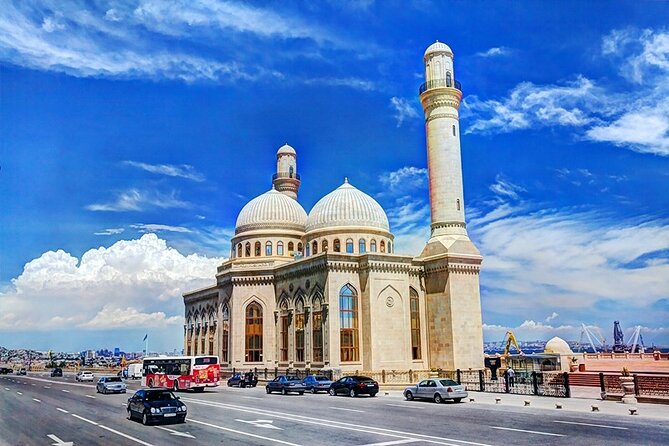
The Bibi-Heybat Mosque follows, with about 20 minutes to look around and hear about Islam in Azerbaijan. It is described as one of the country’s oldest and most beautiful religious buildings.
The stop adds balance to the oil and geology themes. You get a chance to consider Azerbaijan not only as an energy center, but also as a Muslim country with important religious buildings and traditions.
Because this is a mosque, dress and behavior should be respectful. The supplied details do not specify a formal dress code or a separate visitor procedure, so your guide is the best person to ask on the day.
The visit is brief. You will get an introduction and time to see the building, but this is not a long architectural study. If religious history interests you, listen closely to the guide and use the stop as a starting point for further exploration in Baku.
Gobustan Museum and prehistoric rock art
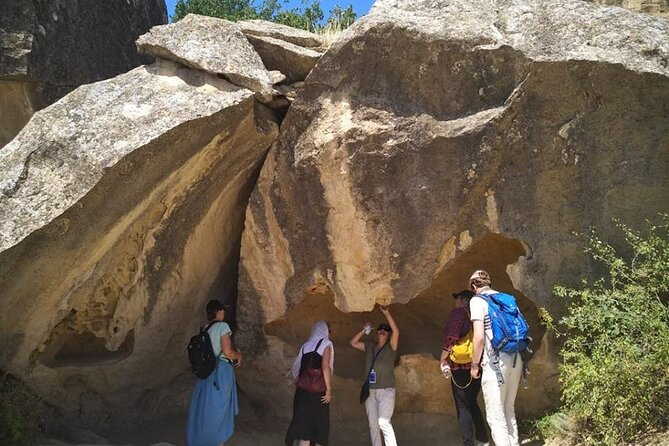
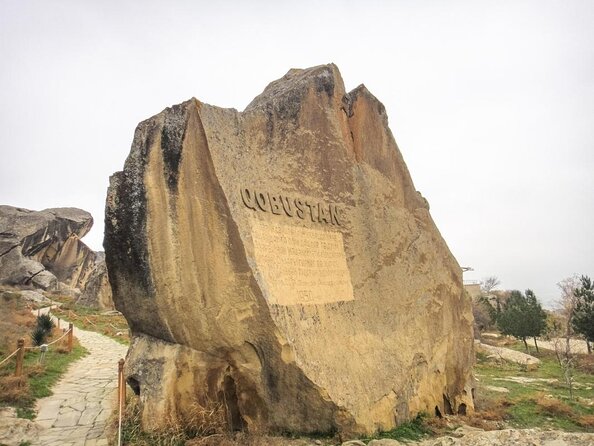
Gobustan is the main cultural stop and receives about one hour and 15 minutes. The visit includes both museums and the outdoor rock carvings, with entry tickets covered.
The carvings date from the late Stone Age through the Middle Ages. Your guide explains how early groups lived in the area and points out the scenes cut into the rock. The art gives you a direct link to daily life long before Azerbaijan became known for oil.
This is one of the places where a good guide changes the experience. Guides such as Hafis and Samir have been praised for explaining the history clearly while allowing time to look around independently. Reza has also led tours with explanations in both English and Russian.
The site combines indoor and outdoor viewing. That makes the museum useful, since it can provide context before you study the carvings outside. You should still expect walking and exposure to the weather, so comfortable shoes and sun protection are sensible.
Gobustan is not just a collection of old marks on stone. It is a record of hunting, movement, music, and community life across a very long period. The route description also refers to musical rock features, which adds another dimension to the visit.
The time allocation is reasonable for a first visit, though anyone focused on archaeology may want longer. On a nine-hour route, the goal is an informative overview, not a slow research day.
More of the Absheron peninsula:
- Baku: Gobustan Absheron Tour Entry Tickets included
★ 4.9 · 329 reviews - Baku: Gobustan-Absheron Tour with Hotel PICK UP and DROP OFF
★ 4.8 · 170 reviews - Baku: Gobustan/Absheron guided tour with lunch and tickets
★ 4.8 · 158 reviews - Baku : Gobustan, Absheron Sights Guided Day Trip Lunch included
★ 5.0 · 120 reviews
Mud volcanoes: the tour’s oddest stop
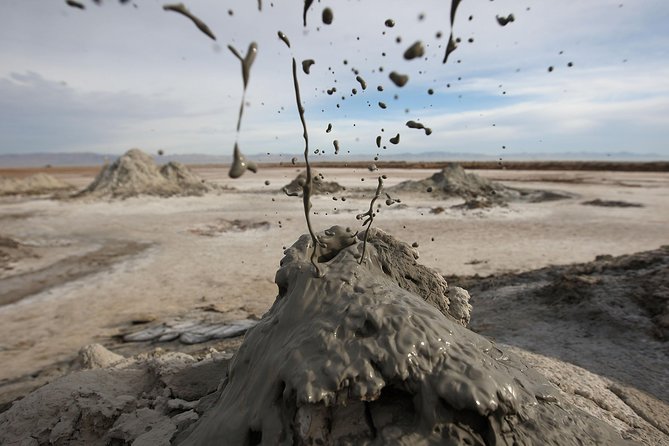
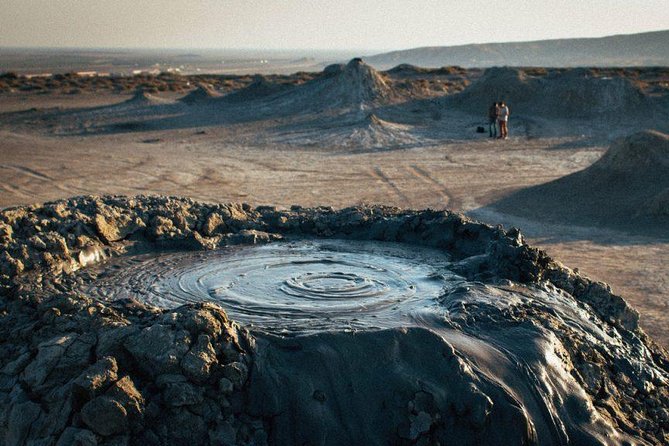
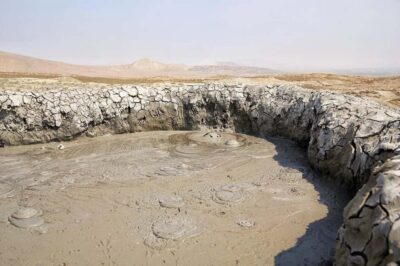
The mud volcanoes take about 40 minutes, and this is likely to be the most unusual stop. Azerbaijan has about 350 of the world’s estimated 800 mud volcanoes, making the region one of the major places on earth to see them.
These are not fiery lava cones. They are low formations where mud and gases push up from below. The result can look strange and otherworldly, especially when several small cones sit together in a dry, open setting.
You may be able to collect mud for a skin-care mask. Treat that as a fun possibility, not the main reason to visit. The provided information does not guarantee that this will be possible on every departure.
This stop is also the least polished part of the day. Outdoor conditions can be hot, dusty, or windy, and the ground may not be perfectly even. I would bring water, closed shoes, a hat, and clothes that can handle a little mud.
The 40-minute visit gives you enough time to see the formations and take photographs without turning the stop into a hike. It is a strong contrast with the museum and mosque, and it helps explain the geological forces beneath the Absheron region.
Ateshgah Fire Temple and the power of sacred fire
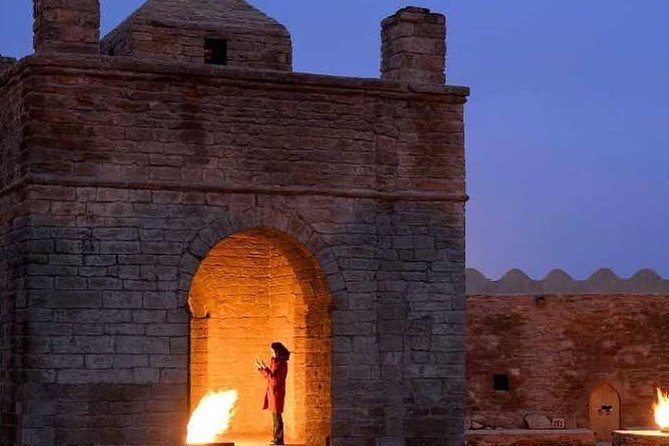
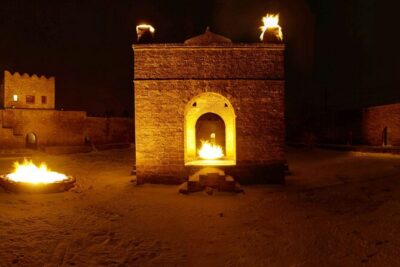
Ateshgah, or the Fire Temple, receives about an hour. Here you learn about the sacred role of fire in Azerbaijan and see the historic temple complex associated with an enduring flame.
This is one of the most meaningful stops on the route because it connects natural gas, religion, and trade across the region. Fire was not simply a natural oddity. It held spiritual importance, and the temple reflects that belief.
The experience is strongest when the guide explains the religious setting and the groups linked to it. The temple was used by Zoroastrians and also by Hindus and Sikhs in the past, giving the site a wider cultural reach than its name might suggest.
Several guides have made this stop a highlight through explanations of religion and history. Reza was praised for his command of both subjects, while other guides have balanced facts with personal stories about Azerbaijan.
You get a full hour here, which is more generous than the brief mosque and oil-well stops. Use it to study the layout, listen to the interpretation, and ask questions rather than rushing through for a few photographs.
Yanar Dag, the burning mountain
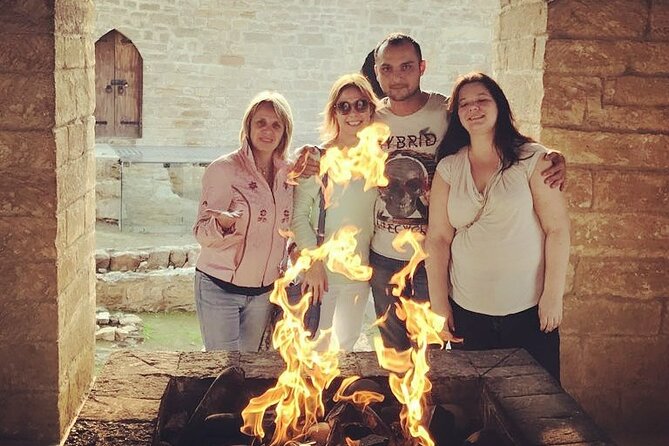
The final listed attraction is Yanar Dag, visited for about 30 minutes. The hillside is described as burning for roughly 5,000 years, and your guide explains why the fire continues.
Yanar Dag is a simple sight, but a memorable one. After seeing a sacred fire temple, you finish with a natural flame, which makes the day feel connected from beginning to end.
The stop is short and outdoors. You may be tired by this point, especially after Gobustan and the mud volcanoes, but the fire gives the final stretch a clear payoff.
Do not confuse Yanar Dag with a large volcanic eruption or a broad field of flames. The attraction is the persistent fire on the mountain and the explanation of the gas that feeds it.
Guides can make or break the route
The experience depends heavily on who leads it. Named guides associated with this route include Riad, Riyad, Reza, Hafis, Famil, and Samir, and their strengths have varied.
Riad and Riyad have been praised for enthusiasm, coordination, and detailed explanations. Hafis has been described as combining technical education with useful insight into Azerbaijani life. Samir has been appreciated for balancing information with personal stories and giving people space to explore.
Famil has been described as clear and pleasant, while Reza has handled both English and Russian explanations. That range suggests the operator has several capable guides, but it also means your exact experience can depend on the assigned person.
A less engaged guide can make the historical and archaeological stops feel thin. If you care about detailed interpretation, ask questions early and tell the guide what interests you. The route has enough material for a strong discussion, especially at Gobustan and Ateshgah.
There is no microphone mentioned for the vehicle. One group found it hard to hear from the back rows, so try to sit near the guide if you choose the shared option. This small decision can improve the day considerably.
Group or private: which version fits you?
The shared tour allows up to 18 people. That is still a manageable number for a road trip, but it is large enough for slower boarding, different interests, and uneven hearing inside the vehicle.
A shared booking makes financial sense for solo visitors and couples who want the lowest price. You get transport, lunch, entry tickets, and a guide without arranging separate taxis or admissions.
The private option is worth considering for families, older relatives, photographers, or anyone who dislikes tight schedules. You may have a better chance of asking questions, staying close to the guide, and avoiding the cramped feeling reported on one minibus departure.
Vehicle quality can vary. One experience involved a comfortable Mercedes van and a separate driver, while another involved a crowded minibus with poor air conditioning and limited legroom. I would confirm the vehicle type if that matters to you, especially during hot months.
Pickup is offered from selected hotels. Do not assume every hotel is covered. Confirm the pickup point and time in advance, since one departure began with difficulty finding the meeting location and another arrived nearly an hour late.
Lunch and the all-inclusive value
Lunch is included, along with local taxes and admission fees. That keeps the day simple and protects you from a string of small extra charges at each attraction.
The meal may not suit every palate. One experience described the included food as disappointing, so I would treat lunch as practical fuel rather than a food highlight.
Personal payments are not included. The tour details do not specify which personal expenses may arise, so carry some money for optional purchases or anything outside the listed inclusions.
At $34, the value is strong if you want to see all six locations in one day. A private vehicle may cost more depending on the booking choice, but it can be sensible if several people are splitting the expense.
Practical advice for a smoother day
The tour requires good weather, and poor conditions can lead to a different date or a full refund. That matters most for Gobustan, the mud volcanoes, and Yanar Dag, where much of your time is outside.
Wear comfortable shoes and bring protection from sun and heat. The information does not set out a detailed equipment list, but the outdoor stops and reports of hot conditions make water, a hat, and sunscreen sensible choices.
Try to sit near the guide in a shared vehicle. This helps if there is no microphone and reduces the chance that road noise or other passengers will swallow the explanation.
Keep your expectations realistic. You will see a wide range of places, but none receives unlimited time. If you want a relaxed religious visit, an extended archaeological study, or a long photography session, a private format may suit you better.
Most people can take part, according to the supplied activity details. The tour has a maximum of 18 people, and confirmation is provided when you book.
Free cancellation is available up to 24 hours before the start time for a full refund. Changes or cancellations inside that 24-hour window are not accepted for a refund, and the local start time controls the cutoff.
Should you book the Gobustan and Absheron tour?
I would book this tour if you have one free day in Baku and want to understand the country through its most unusual sights. The combination of prehistoric art, mud volcanoes, oil history, mosque, fire temple, and burning mountain is hard to arrange as efficiently on your own.
Choose the group version if price matters most and you are comfortable with a full vehicle and a fixed schedule. Choose private travel if you value comfort, clear communication, and time to ask questions.
The tour is not ideal if you dislike long days, outdoor heat, or road travel. It is also not the right choice if you want a slow, specialist archaeology tour.
For most first-time visitors, the value is excellent. Just confirm the pickup point, ask about the vehicle, sit close to the guide, and bring patience for a packed schedule.
FAQ
How long does the Gobustan and Absheron tour last?
The tour lasts about nine hours.
How much does the tour cost?
The listed price is $34 per person.
Is hotel pickup included?
Hotel pickup and drop-off are offered from selected hotels. You should confirm that your hotel is included when booking.
Can I choose between a private and shared tour?
Yes. You can select a private experience or a shared group tour with a maximum of 18 people.
What attractions are included?
The route includes the world’s first oil well site at Bibi-Eybat, Bibi-Heybat Mosque, Gobustan Rock Art and its two museums, mud volcanoes, Ateshgah Fire Temple, and Yanar Dag.
Are lunch and admission fees included?
Yes. Lunch, entry tickets, local taxes, an air-conditioned vehicle, and a professional guide are included.
Can most people participate?
The activity information says most people can participate.
Can I cancel for a full refund?
Yes. You can cancel at least 24 hours before the start time for a full refund. Poor weather or failure to meet the minimum number of participants may also lead to a different date or a full refund.
Just added around Baku
- Lunch included Qobustan, Mud Vulcano, Ateshgah Temple & Yanardag Fire Mountain★ 4.5 · 3 reviews
- Guba and Shahdag City Tour★ 5.0 · 3 reviews
- Baku’s Ancient Heart★ 5.0 · 3 reviews
- Baku: Secret Tour with Surprise Activity★ 5.0 · 3 reviews
- Baku: Old City Guided Walking Tour★ 4.6 · 3 reviews
- Majestic Journey to Qobustan and Absheron★ 4.5 · 3 reviews
- Lahij – village of masters★ 4.5 · 3 reviews
- Baku night tour★ 5.0 · 3 reviews
Gobustan & Mud Volcano Tours, compared.
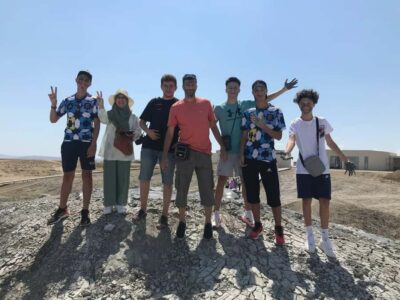
Gobustan, Mud Volcano, Fire Mount, Temple Lunch Entry
Read our review →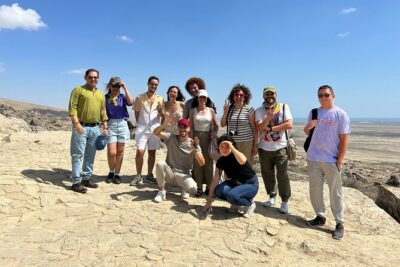
BEST Gobustan, Volcanoes & Absheron Fire Tour (Group or Private)
Read our review →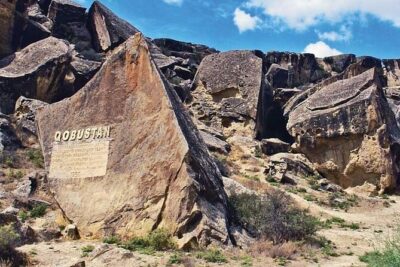
Gobustan, Volcanoes, Fire Temple and Yanardag Day Trip
Read our review →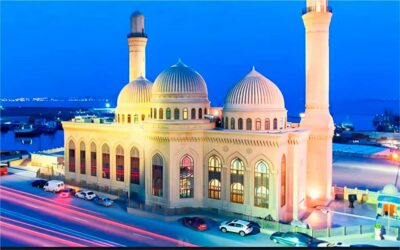
Gobustan-Mud Volcan-Fire Temple and Mountain Tour/Entrance inc
Read our review →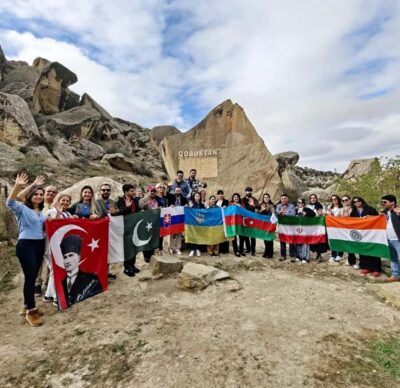
Gobustan Mud Volcanoes Temple & Entry tickets included
Read our review →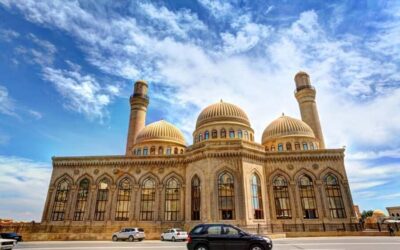
Gobustan-Absheron Tour with Hotel PICK UP and DROP OFF
Read our review →Browse the lists this tour appears in