
Reviewed · FIRE TEMPLE & BURNING MOUNTAIN TOURS
Baku: Atashgah Fire Temple & Burning Mountain Half-Day Tour
Atesgah Fire Temple and Yanardag show you two very different kinds of fire. At Ateshgah, natural gas once fed a sacred flame inside a stone courtyard built by Indian merchants. At Yanardag, gas still leaks from the earth and burns along a hillside in an open wall of flame. The contrast is the real appeal.
I like the low price, especially since transport, an English or Russian-speaking guide, and entry tickets are included. I also like the compact three-hour plan. It gives you a quick look at two unusual Absheron sights without taking a full day away from Baku.
The main caution is organization. Several bookings turned into part of a longer group tour, with waits for lunch, late meeting details, or a delayed start. A three-hour outing can lose much of its value if you spend the first hour sitting in an office or restaurant.
Key points to know before you book
- Two forms of natural fire: Ateshgah is a historic temple built around sacred flames, while Yanardag is a natural gas fire burning from a hillside.
- A short trip east of Baku: Ateshgah is about 21 kilometers from the city, and the ride between the two main stops takes roughly 35 to 40 minutes.
- Tickets and transport are included: The $23 price covers admission, a minivan or van, and a live guide in English or Russian.
- The three-hour schedule needs careful checking: The advertised duration is short, but some departures have been linked with longer tours and unexpected waiting time.
- Best for a first look at Absheron: You get useful context and two memorable sights, but limited free time at each stop.
- Private groups are available: This may suit you if you want a more direct experience and less dependence on a larger group schedule.
Why these two fires matter outside Baku
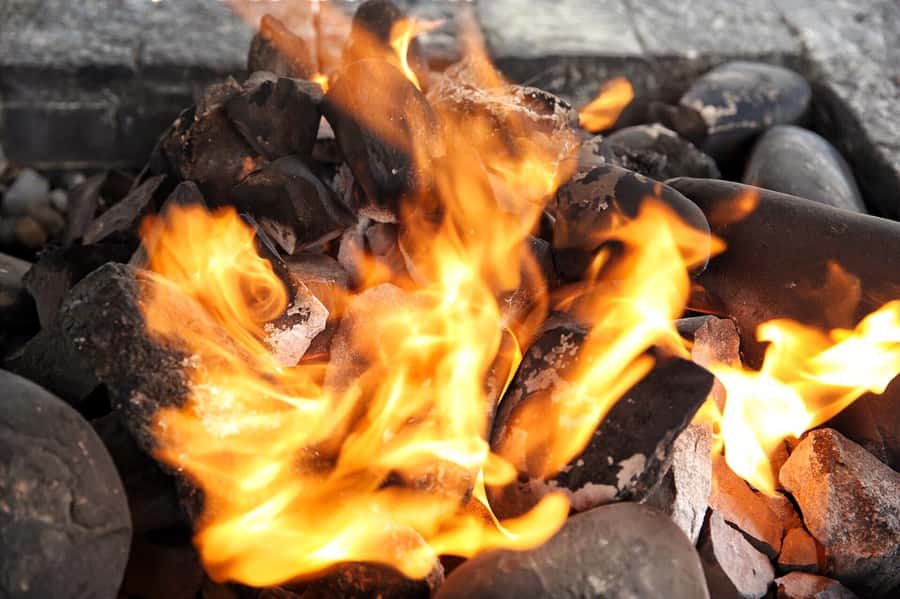
Baku is famous for its connection with oil and gas, but the Absheron Peninsula makes that story visible in a far older form. Gas rises naturally from below the ground here, creating flames that people once treated as signs of divine power.
This half-day trip takes you beyond the city center to see that phenomenon in two settings. Ateshgah puts the fire inside a place of worship. Yanardag leaves it in the open air, where a long line of flame burns against the rocky slope.
I find that pairing more useful than visiting either site alone. At the temple, you learn how people built rituals around fire. At the mountain, you see the raw natural force that helped inspire those beliefs.
The tour is not designed for a slow, highly detailed archaeological visit. It is a brisk introduction, with transport between the sites and a guide to explain what you are seeing. If you have only a short stay in Baku, that focus makes sense. If you prefer to read every panel and linger in every courtyard, the schedule may feel tight.
More fire temple and burning mountain trips:
- Baku: Gobustan, Volcanoes, Fire Temple and Yanardag Day Trip
★ 4.7 · 433 reviews - Gobustan & Mud, Fire Temple, Burning Mountain (Group & Private)
★ 4.5 · 418 reviews - Gobustan-Mud Volcan-Fire Temple and Mountain Tour/Entrance inc
★ 5.0 · 267 reviews
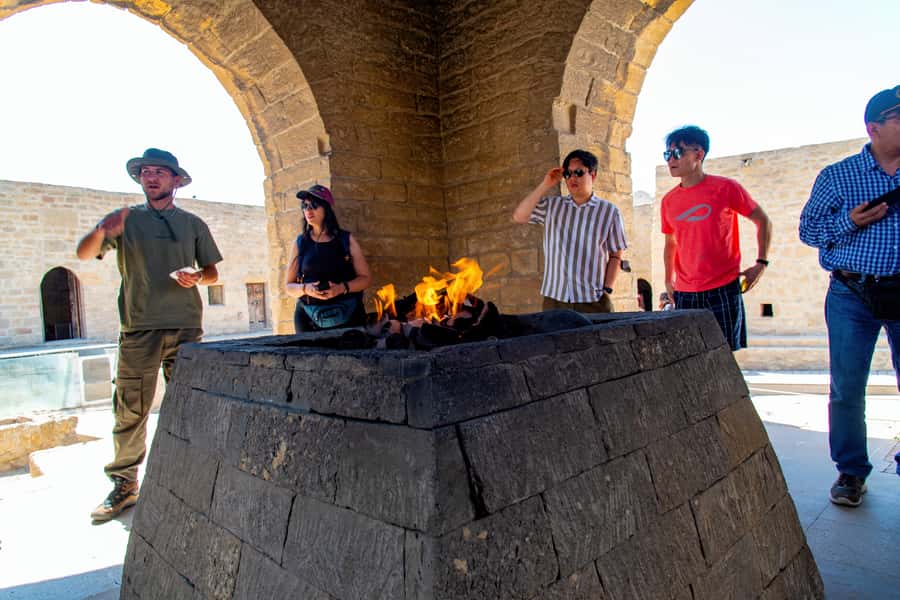
Entering the Ateshgah Fire Temple
The first scheduled stop is Ateshgah, located about 21 kilometers east of Baku. The name is commonly translated as Fire Temple, and the site has the shape of a small fortress, with a stone-walled courtyard surrounded by individual cells.
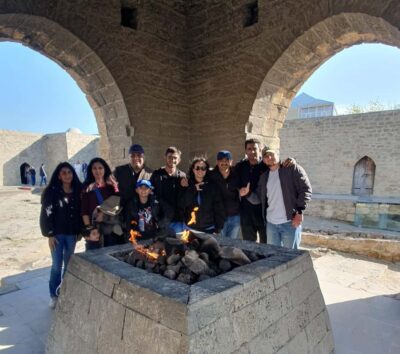
The central fireplace is the visual focus. Natural gas was once brought up through openings in the ground, feeding a large flame in the middle of the courtyard. Four smaller fires were also set at the corners of the pavilion roof. The arrangement gives the site a strong sense of order, with every part of the building pointing back to the sacred fire.
Inside the surrounding cells, you can see the spaces associated with ascetic believers and pilgrims. These small rooms help you picture the temple as more than a single flame. It was also a place for people who came to worship, live simply, and follow fire-centered religious practices.
Your guide should help explain the connection with Indian merchants, who built the temple in the 18th century around an older tradition of natural gas fires. The experience is most worthwhile when you take time to notice the meeting of architecture, trade, and religion. This was not simply a local shrine. Merchants and pilgrims from outside the region helped shape the site.
The references to fire worship reach back to one of the world’s oldest religious traditions. The tour presents that background in an accessible way, though the amount of explanation will depend on the guide and the pace of the group.
I would allow yourself a close look at the courtyard walls, the cells, the central fireplace, and the rooftop corners before moving on. The site is compact, so you do not need a huge amount of time to understand its layout. Still, the free time can feel short if the group is large or the guide gives a long talk at one point.
Ateshgah is also the more structured of the two stops. Its stone enclosure, cells, and central pavilion give you a clear story to follow. Yanardag is simpler, but its fire feels more direct and less controlled.
The 35 to 40 minute ride to Yanardag
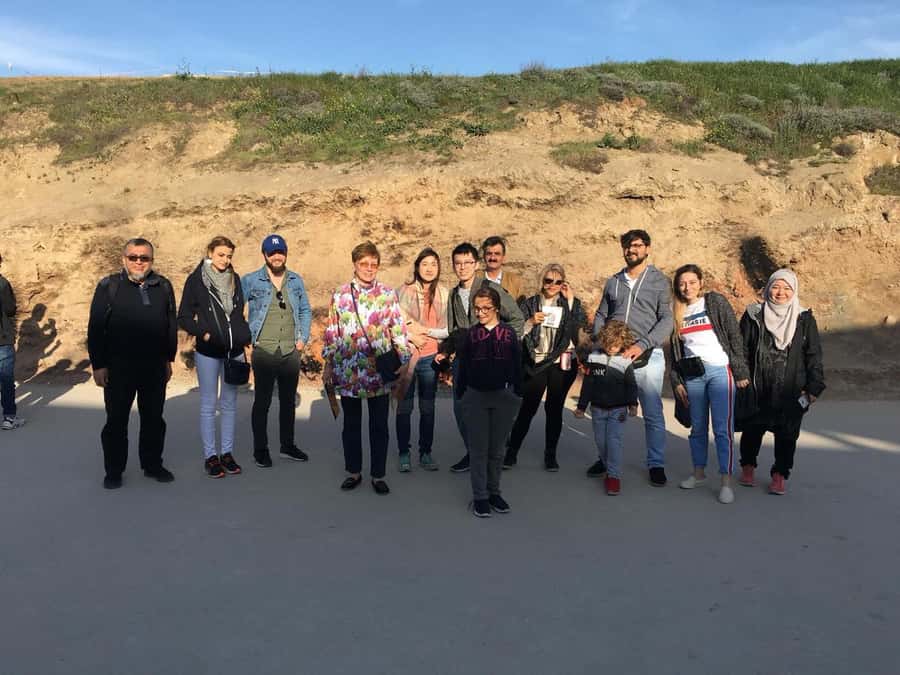
The journey from Ateshgah to Yanardag takes about 35 to 40 minutes. That transfer is a sizeable part of a three-hour tour, so the overall experience is best understood as a short excursion rather than three full hours at the attractions.
Transport is provided in a minivan or van. That saves you from arranging separate rides across the Absheron Peninsula, which is a real part of the $23 value. You can also use the drive to ask the guide about the area, the gas fields, and the history of fire worship.
The timing deserves attention. Some departures have been linked with a longer full-day group outing. In those cases, the half-day participants waited while other members ate lunch. One booking involved an hour and 20 minutes of waiting before the tour properly began, while another started about two and a half hours late.
That is not a small inconvenience on a three-hour booking. It can change the outing from a neat afternoon visit into a late, unpredictable commitment. I would confirm the meeting time, pickup point, and whether your departure joins a full-day group before you set other plans for the same day.
Seeing the flames at Yanardag
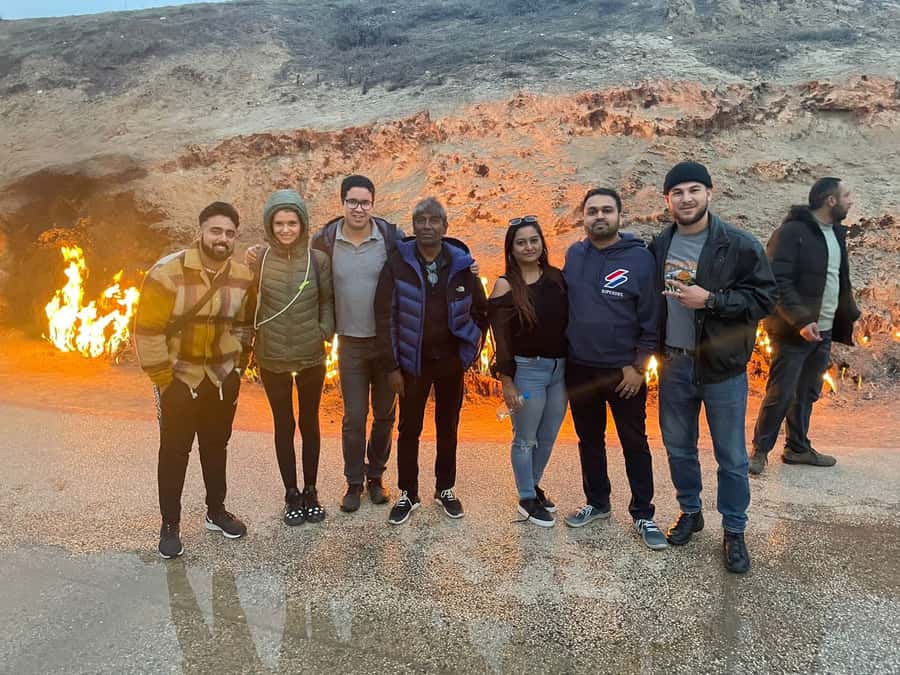
Yanardag means burning mountain. The main sight is a wall of flame that burns from the side of a hill. Natural gas escapes through cracks in the rock because of underground geological activity, and the exposed gas catches fire.
This is a very different setting from Ateshgah. There is no central pavilion or enclosed courtyard to organize the experience. You are looking at fire emerging from the earth itself, with the rocky slope forming the backdrop.
The flames have drawn attention for centuries. Marco Polo wrote about fires in and around Baku during his travels, and Yanardag is linked with the long tradition of natural flames on the peninsula. The exact age of the burning fire is not certain in the supplied information, but the site has been known for many generations.
I think Yanardag is the more instantly memorable stop. You do not need much explanation to understand what makes it special. The fire is visible, unusual, and tied to the geology beneath your feet.
At the same time, it is a small site rather than a huge natural park. You should not expect a long hike or a full day of walking. The attraction is focused on seeing the burning slope and hearing how gas reaches the surface.
The best way to approach it is to treat Yanardag as a short, striking stop. Let the guide provide the scientific and historical context, then take a moment to watch the flames. Wind, daylight, and the amount of time allowed by the group will shape how long you spend there.
A few more Baku half-days to weigh up
- Baku: Half-Day Gobustan and Mud Volcanoes Tour with Entry
★ 4.7 · 144 reviews - Half-Day Baku City Sightseeing Tour
★ 5.0 · 23 reviews - Half-Day Baku Private Walking Tour with Pickup
★ 5.0 · 5 reviews
What the guide adds to the experience
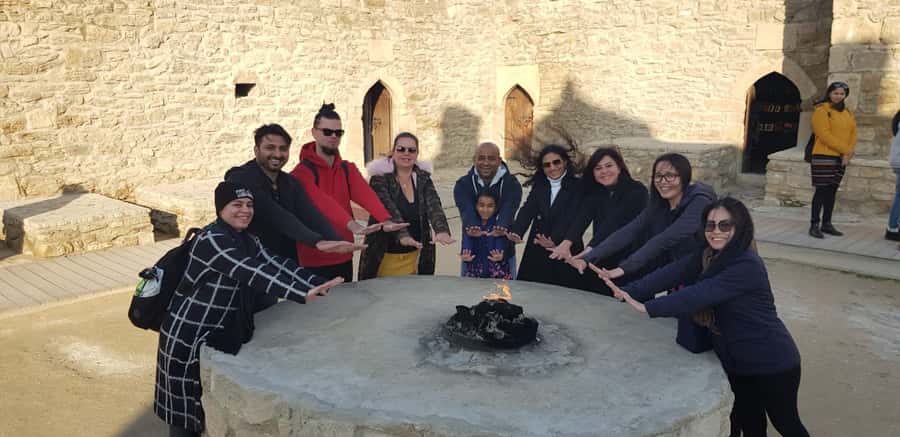
The tour includes a live guide in English or Russian. That matters most at Ateshgah, where the meaning of the cells, the central fire, and the Indian merchant connection may not be obvious from the stones alone.
A good guide can also connect the two places. Ateshgah shows how people built religious practice around natural fire. Yanardag shows the gas leak itself, helping you understand why the peninsula became known for sacred flames.
The strongest praise in the supplied feedback focuses on the guide’s friendliness and explanations. One booking described the guide as excellent, informative, and friendly. That kind of personal explanation can turn a quick visit into something you remember instead of two brief photo stops.
Guide quality can vary, and no individual guide names are provided for this experience. The languages listed are English and Russian, so check the language you need at booking.
If you want to ask questions and control the pace, a private group is available. That option may be especially useful at Ateshgah, where you may want more time to study the courtyard and cells. A private format does not automatically solve every scheduling issue, so I would still confirm the start arrangements.
Is $23 good value?
At $23 per person, this is an inexpensive way to reach two sights outside Baku. The price includes transportation, admission tickets, and a live guide, so you are not paying only for a ride.
The value is strongest if you want convenience. Organizing separate transport to Ateshgah and Yanardag could take more effort, and you would lose the guide’s explanation. The tour also lets you see both places in one outing.
The value falls quickly if the schedule breaks down. A long lunch wait or a delayed departure consumes the very time you paid to use at the sites. This is the central issue, not the attractions themselves.
I would judge the price in two parts. The included transport and tickets make $23 attractive. The need to confirm the meeting details makes it a booking that deserves a quick message or check before you commit.
The tour has an overall rating of 4 from 35 reviews, which suggests a generally positive but not flawless experience. The best feedback praises the guide and the unusual sights. The poorest feedback concerns organization, especially the way the half-day option was combined with a full-day outing.
Who should choose this half-day tour?
I would recommend it to you if you want a simple introduction to Absheron and have limited time in Baku. It works well for someone who wants a guide, a vehicle, and admission handled together.
It also suits anyone curious about the meeting point of geology and religion. You see a historic fire temple, a natural burning hillside, and the link between the two.
The tour may fit solo visitors particularly well. One booking found the arrangement suitable for a person traveling alone, and the price remains reasonable for a single participant.
You should think twice if your schedule is packed or if you need to return at an exact hour. The advertised duration is three hours, but delays have occurred. It is not wise to place a flight, long-distance train, or fixed reservation immediately afterward.
You may also prefer a private group if you want to limit waiting and have more control over the time at each site. If the private option costs more, compare that extra amount with the value of a predictable schedule.
Practical planning for a smoother outing
Check the starting time and pickup information before the day of the tour. One major complaint came from receiving those details very late, despite an earlier promise that they would be provided the day before.
Ask one direct question: Is this a standalone three-hour tour, or will I be joining a full-day group? That answer could determine whether your afternoon stays short or stretches well beyond the advertised plan.
Do not assume lunch is part of the half-day schedule. A lunch stop was included for people on the morning portion of a longer tour, and half-day participants had to wait. If you are booking this outing for its compact timing, confirm that you will not be held for another group’s meal.
The experience is listed as wheelchair accessible, and transport is by minivan or van. If you need specific assistance, ask the provider to confirm how access works at both sites before booking.
Free cancellation is available up to 24 hours in advance for a full refund. You can also reserve now and pay later, which helps if your Baku plans are still changing.
Should you book the Ateshgah and Yanardag tour?
Book it if you want two unusual sights outside Baku at a low price and you value having transport, tickets, and a guide arranged for you. Ateshgah offers the stronger historical setting, while Yanardag supplies the memorable natural spectacle.
I would not book it without checking the day’s logistics. The attractions are worth seeing, but the half-day format has suffered from late information, lunch waits, and being folded into longer tours.
My practical call is simple: choose this tour for value and ease, then confirm the start time, meeting point, and group arrangement in advance. If the operator gives you a clear answer, it is a sensible three-hour addition to a Baku stay. If the timing remains vague, a private option or a different independently timed visit may be the safer choice.
FAQ
How long does the tour last?
The advertised duration is three hours. Delays and added waiting have caused some departures to run longer, especially when the half-day group joined a full-day tour.
Which places does the tour visit?
The tour visits the Ateshgah Fire Temple and Yanardag State Historical, Cultural and Natural Reserve, also known as the burning mountain.
How far is Ateshgah from Baku?
Ateshgah is about 21 kilometers east of Baku.
How long is the journey between Ateshgah and Yanardag?
The journey between the two sites takes approximately 35 to 40 minutes.
Is transportation included?
Yes. Transportation is provided by minivan or van.
Which languages are available for the guide?
The live guide service is available in English or Russian.
Can I cancel the booking or pay later?
You can cancel up to 24 hours in advance for a full refund. Reserve now and pay later is also available.
Just added around Baku
- Lunch included Qobustan, Mud Vulcano, Ateshgah Temple & Yanardag Fire Mountain★ 4.5 · 3 reviews
- Guba and Shahdag City Tour★ 5.0 · 3 reviews
- Baku’s Ancient Heart★ 5.0 · 3 reviews
- Baku: Secret Tour with Surprise Activity★ 5.0 · 3 reviews
- Baku: Old City Guided Walking Tour★ 4.6 · 3 reviews
- Majestic Journey to Qobustan and Absheron★ 4.5 · 3 reviews
- Baku night tour★ 5.0 · 3 reviews
- Lahij – village of masters★ 4.5 · 3 reviews
Fire Temple & Burning Mountain Tours, compared.
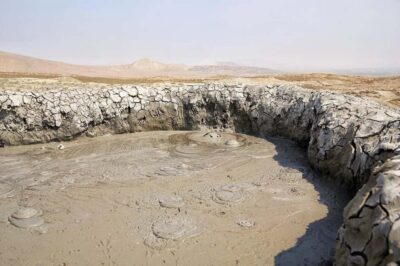
Gobustan, Volcanoes, Fire Temple and Yanardag Day Trip
Read our review →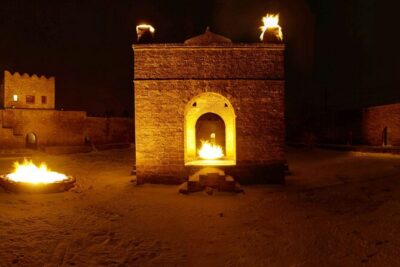
Gobustan-Mud Volcan-Fire Temple and Mountain Tour/Entrance inc
Read our review →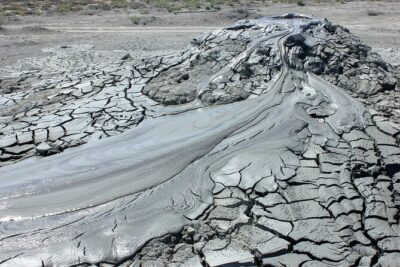
Gobustan, Mud volcanoes, Fire temple, Fire mountain PRIVATE TOUR
Read our review →
Gobustan & Mud, Fire Temple, Burning Mountain, H.A. Center
Read our review →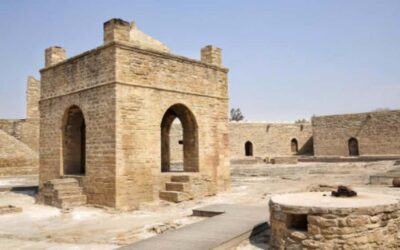
Gobustan, Mud Volcanoes, Fire Temple, & Yanar Dag Tour
Read our review →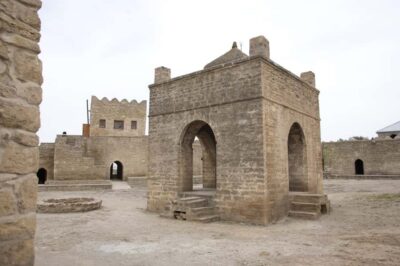
Burning Mountain & Zorastrian Temple Private Tour
Read our review →
Qobustan rock arts, Mud Volcanoes, Fire temple Ateshgah, Yanardag
Read our review →Browse the lists this tour appears in