Reviewed · BAKU TOURS
Full Day Sightseeing Tour of the main Attractions around Baku
The most unusual part of this Baku day tour is the contrast: ancient carvings, bubbling mud, a sacred mosque, an old oil field, a Zoroastrian fire temple, and a mountainside that still burns from natural gas. You cover the main sights beyond the city without having to arrange several separate rides.
I like the small maximum of 18 people, which gives your guide room to answer questions. I also like the practical package: transport, admission tickets, lunch, and selected hotel pickup are included for $60.
The catch is the long day and the rougher ride out to the mud volcanoes. If you get motion sick, that section may be uncomfortable, and a few short stops can feel more like quick photo visits than full explorations.
Key points before you book
- Six very different stops: See rock carvings, natural gas fires, Islamic architecture, oil history, and Zoroastrian heritage in one day.
- Gobustan and mud volcanoes: These are the most unusual parts of the route, but the volcano journey can be bumpy.
- Guides make the difference: Reza, Riad, Riyadh, Rza, and similar guide names appear in the supplied booking information, so the exact guide may vary by departure.
- Lunch and tickets are included: That keeps the $60 price easier to judge and limits extra spending during a long day.
- A full outer-Baku circuit: The tour is useful if you have limited time and do not want to organize taxis or separate excursions.
- Plan for about nine hours: The listed start is 9:00 am, with the activity ending back at the meeting point.
Why this route shows you Azerbaijan beyond Baku
Baku is easy to admire for its grand boulevards, old walls, and modern architecture. But the most distinctive pieces of Azerbaijani culture and geology sit outside the center. This route takes you across the Absheron Peninsula and toward Gobustan, joining places that would be awkward to connect on your own in one day.
The theme is not one single period. You move from early human art to medieval religious history, from the oil boom to modern national architecture. That variety keeps the day moving, although it also means you should not expect a slow, scholarly visit at every stop.
The tour is rated 4.7 out of 5 from 388 ratings, with 93 percent recommending it. The strongest praise goes to the guides, especially Reza and Riad, for clear English, good organization, humor, and useful explanations about religion and Azerbaijani history. Since guides can change, treat those names as examples rather than a guarantee.
A small group matters here. With up to 18 people, you are not in a huge coach party, and the guide can usually keep the day more personal. You still need to accept group timing: if you want 45 minutes at one site and only 10 minutes at another, this is not the right format.
A few more Baku half-days to weigh up
- Sheki – Full Day Tour to Five Regions of Azerbaijan
★ 4.5 · 279 reviews - Full Day Trip in Baku (Gobustan & Absheron)
★ 5.0 · 72 reviews - Khizi Candy Mountains, Shahdagh Full Day Guided Tour
★ 4.5 · 61 reviews
The first oil well and Bibi-Heybat Mosque
The first stop takes only about 10 minutes, but it introduces the force that shaped modern Baku: oil. Azerbaijani historians have found documents in Russian archives indicating that a well was drilled at the Bibi-Heybat field in 1846. On that basis, it can be considered the world’s first oil well, 13 years before commercial oil production began in the United States.
Do not expect a long museum visit here. The value is in the context. The stop helps explain why Baku grew so quickly and why petroleum remains tied to the city’s identity. Your guide can add the historical background that a brief roadside visit cannot provide on its own.
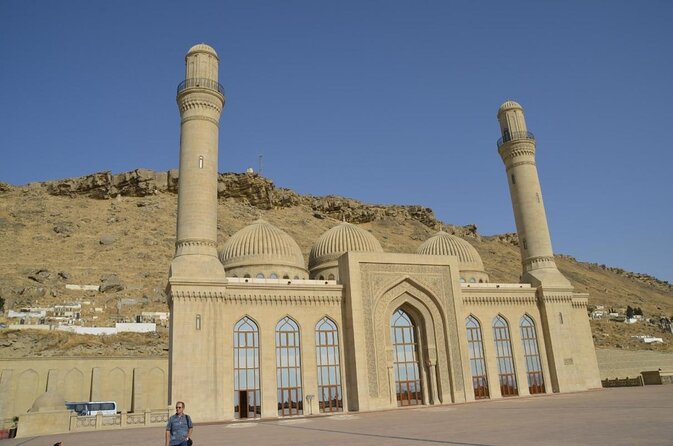
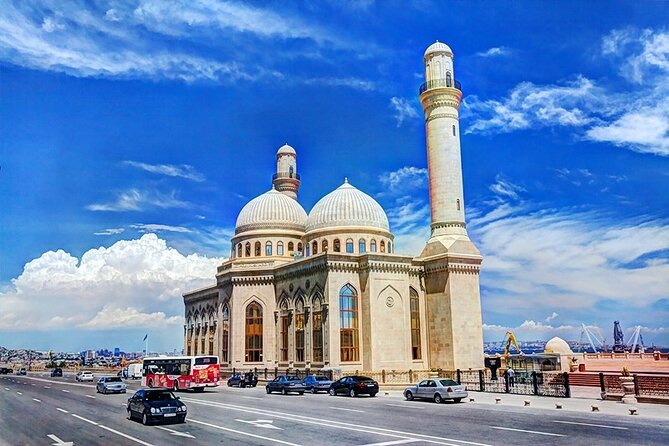
Next comes Bibi-Heybat Mosque, with about 20 minutes to look around. The mosque is linked to Bibi-Heybet, described as a relative of the Prophet Muhammad, and it sits beside a large cemetery near the hills outside Baku. It is a sacred site, not just an architectural stop, and many Muslims wish to be buried nearby.
This is one of the places where a good guide helps you read the setting. The shrine’s importance comes from religious belief, pilgrimage, and local memory. Dress and behavior should be respectful, and your visit will be short, so think of it as an introduction rather than a full religious tour.
Mud volcanoes: the strangest stop of the day
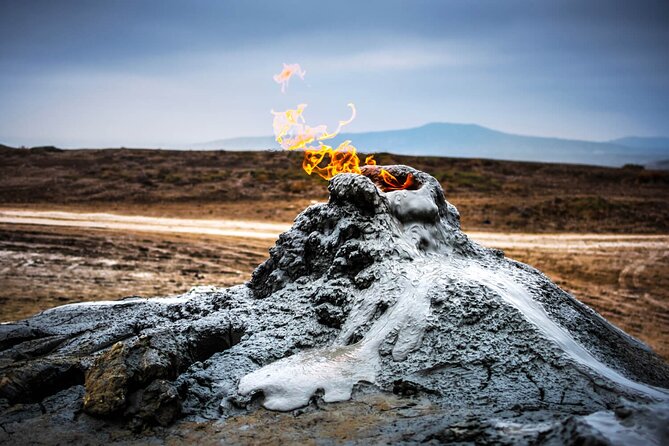
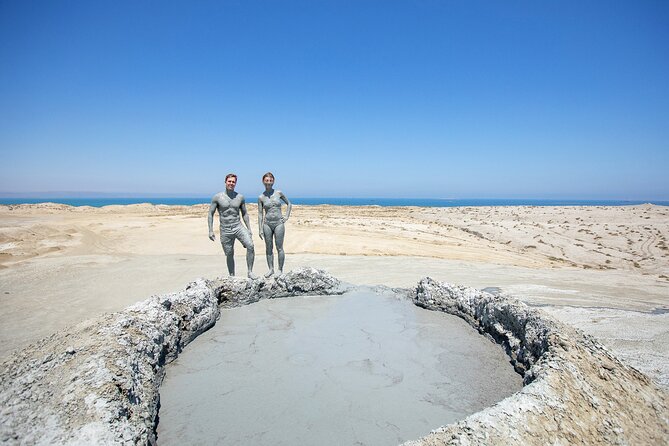
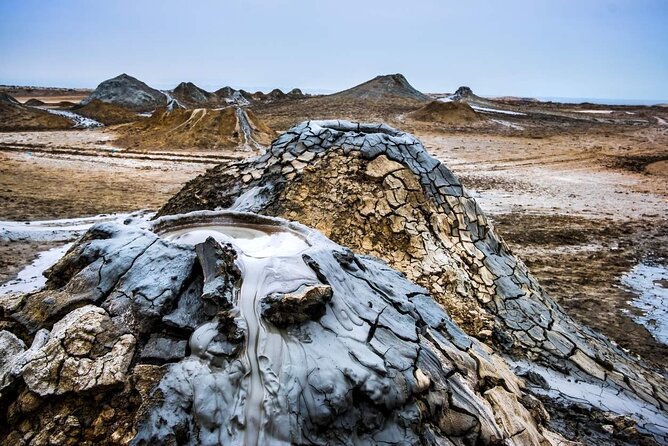
The mud volcanoes are likely to be the most unusual stop on the route. Instead of hot lava, you see cones, pits, bubbling mud, and gases rising from the ground. Azerbaijan is especially associated with these formations because they occur in oil-bearing and volcanic areas.
The visit lasts about 25 minutes. That is enough time to watch the mud bubble and take photographs, but not enough for a long walk or detailed geological study. Conditions can change, too. In strong wind, it may be difficult for the guide to light a small flame at the site, though the bubbling mud remains the main attraction.
Here is the practical warning: the ride can be rough. One person specifically found this section a poor match for motion sickness, while others considered the volcanoes a highlight. If winding or uneven roads bother you, take that seriously. You may want medication approved for you, a seat that helps you feel steady, and a light breakfast rather than a heavy one.
The setting is spare and exposed. Bring water, sun protection, and shoes you do not mind wearing on dusty ground. Those details are sensible advice for an outdoor geological site, though the tour data does not promise any particular weather or walking conditions.
Gobustan’s ancient rock art
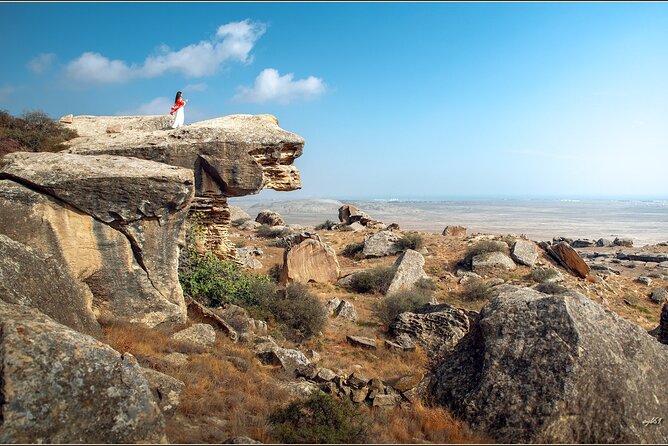
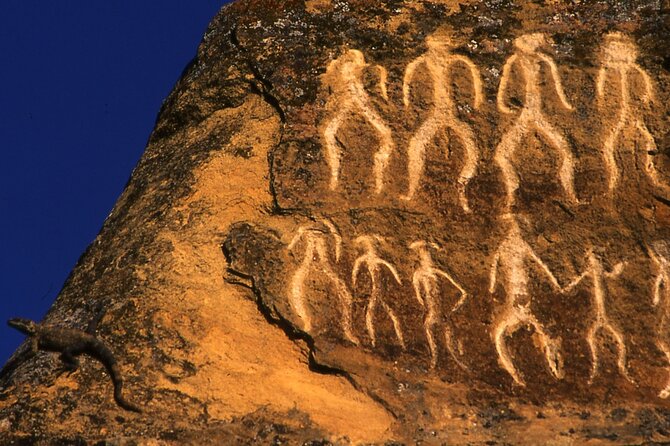
Gobustan is the historical center of the day. The reserve is an open-air archaeological museum with a large collection of ancient artifacts and rock art. Your visit lasts about an hour, giving you more time here than at the oil well, mosque, or mud volcanoes.
The carvings are valuable because they provide a direct link to people who lived in the region long before modern Baku. You see marks made on stone rather than objects placed behind glass. That makes the visit feel immediate, especially after the strange geology of the volcanoes.
This is a place where the guide’s explanation adds real value. Without context, rock carvings can look like a collection of isolated shapes. With historical interpretation, you can start to understand the reserve as evidence of long human activity in the area.
The tour includes the entry ticket, which is useful because you do not have to handle admissions during a tightly timed day. The one-hour stop is a good middle ground, though anyone with a strong interest in archaeology may want a separate, slower visit on another day.
Same drive out of the city, a completely different day:
- Baku: Gobustan, Mud Volcano, Fire Mount, Temple Lunch Entry
★ 4.9 · 3,246 reviews - Baku: Guba, Shahdag, Laza & Lunch w/ Free City & Night Tour
★ 4.8 · 1,455 reviews - BEST Gobustan, Volcanoes & Absheron Fire Tour (Group or Private)
★ 5.0 · 1,254 reviews - Gobustan and Absheron tour (All inclusive)
★ 5.0 · 1,014 reviews
Lunch breaks up the long touring day
Lunch is included, which is one reason the $60 price is easier to justify. You are out for about nine hours, and the route includes several distant sites, so having a meal arranged removes one decision from a busy day.
The food earns repeated praise in the supplied comments, with descriptions of it as delicious and typical. The exact menu is not specified, so do not book this expecting a particular dish. Think of lunch as a useful part of the package rather than the central reason to choose the excursion.
Meal timing can affect your day. This is a group tour, and the stop will be arranged around the route rather than your personal schedule. If you have dietary needs, the supplied information does not state how they are handled, so ask the operator before booking.
Ateshgah Fire Temple and Azerbaijan’s old fire traditions
Ateshgah Fire Temple gives the route its strongest religious and cultural connection. The site is associated with fire worship and Zoroastrianism, a faith that spread through Azerbaijan in ancient times. The first structures are described as dating to the second and third centuries, while the temple functioned until the seventh century, when Islam was adopted in Azerbaijan.
Plan on about an hour here. That is enough time to see the temple and listen to an explanation of its role. The site is especially interesting because it shows that Azerbaijan’s religious past was not limited to Islam. Fire, natural gas, pilgrimage, and trade all helped shape the area’s spiritual life.
Your guide may be particularly helpful here. Several highly rated guides, including Reza and Riad, are praised for explaining different religions in clear English. That matters because Ateshgah can be reduced to a simple fire-temple photo stop unless someone explains the beliefs and historical changes behind it.
The attraction is reconstructed and presented as a historic site, so set your expectations accordingly. You are not visiting an untouched ancient temple. Its value lies in the story it tells about Zoroastrian practice and Azerbaijan’s place between major cultures.
Yanar Dag, the burning hillside
Yanar Dag, or Yanar Dag, is the final natural spectacle and usually one of the most memorable. Natural gas rises through the upper soil and catches fire when it meets oxygen. The flames can continue in rain and resist being put out by sand, creating the famous image of a burning hillside.
The stop lasts about 30 minutes. That is enough time to see the flames, take photographs, and hear the geological explanation. It is not a hike or a broad mountain excursion. You are visiting a concentrated viewing area where the fire is the subject.
Some people find Yanar Dag more compelling than the oil well or Bibi-Heybat Mosque because the effect is immediate. Others may find it smaller than expected. I would keep your expectations realistic: this is a short, striking natural attraction, not a vast fiery mountain range.
The timing also works well. After Gobustan and the temple, Yanar Dag gives the final part of the tour a clear visual finish before you return to the meeting point.
What the $60 price really covers
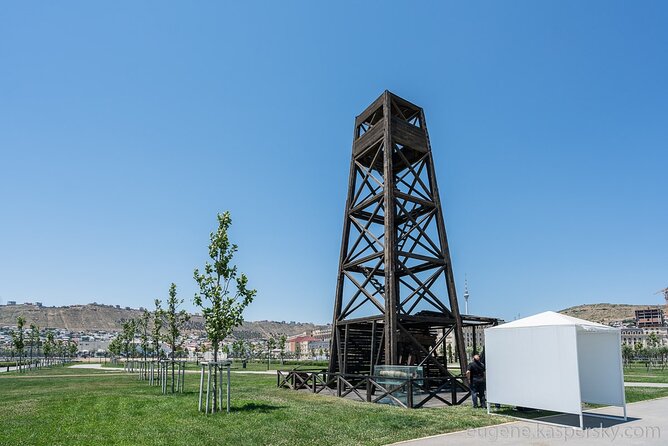
At $60 per person, this is not simply a sightseeing drive. The price includes an air-conditioned vehicle, professional guide, entry tickets, lunch, local taxes, and hotel pickup from selected hotels. A mobile ticket and group discounts are also listed.
The strongest value comes from the geography. Gobustan, the mud volcanoes, and the Absheron attractions are spread out, and arranging separate transport can take time and negotiation. The tour gives you one day of transport and one person to explain what you are seeing.
The price is less attractive if you prefer to spend a long time at only one or two places. The route covers six stops, so you trade depth for range. You are paying for a broad introduction to the region, not a specialist archaeological or religious tour.
The vehicle receives mixed comments. Several people found the van comfortable and the driver safe, while one person found the vehicle unsatisfactory. The exact vehicle may vary, so I would not treat comfort as guaranteed. The air-conditioned transport is useful, but the road to the mud volcanoes remains the main comfort concern.
Timing, group size, and who should book
The scheduled start is 9:00 am, and the full experience takes about nine hours. The listed visits add up to roughly three and a half hours, leaving substantial time for driving, lunch, pickup, and the return journey.
Hotel pickup is offered only from selected hotels. Check that your accommodation qualifies rather than assuming every Baku address is covered. The activity ends back at the meeting point, and confirmation is received at booking.
This tour suits you if you:
- Have one free day in Baku and want to see several outer-city sights.
- Prefer a guide to explain history, religion, and geology.
- Want tickets, lunch, and transport handled together.
- Enjoy variety more than lengthy visits at one site.
- Are comfortable with a full day and a potentially bumpy ride.
You may prefer private transport if you have motion sickness, limited stamina, or a very specific pace. A private day also gives you more control over time at Gobustan and the mosque, though the supplied information does not provide a private-tour price for comparison.
Free cancellation is available up to 24 hours before the start time for a full refund. Changes or cancellations made within 24 hours are not accepted for a refund. The tour depends on good weather and a minimum number of participants, so a cancellation by the operator may result in another date, another experience, or a full refund.
Should you book this Baku sightseeing tour?
I would book it if you want an efficient first look at the places beyond central Baku. The combination of Gobustan, mud volcanoes, Ateshgah, and Yanar Dag is hard to replicate casually in one day, and the included lunch and admissions make the cost sensible.
Book with realistic expectations. The oil well and mosque are brief stops, Yanar Dag is compact, and the mud volcano road may be rough. But if you want a broad, well-explained introduction to Azerbaijan’s ancient art, fire traditions, oil past, and unusual geology, this is a strong use of one day.
FAQ
How long does the Baku sightseeing tour last?
The tour lasts approximately nine hours.
What time does the tour start?
The scheduled start time is 9:00 am.
Is hotel pickup included?
Hotel pickup is included from selected hotels only. You should confirm that your hotel is covered when booking.
What is the maximum group size?
The tour has a maximum of 18 participants.
Are admission tickets included?
Yes. Entry tickets for the included attractions are part of the tour price.
Is lunch included?
Yes. Lunch is included, although the exact menu is not specified.
Does the tour visit Gobustan?
Yes. You spend about one hour at Gobustan Rock Art, an open-air archaeological museum and reserve.
Will I see mud volcanoes?
Yes. The mud volcano visit lasts about 25 minutes. The ride to the site may be uncomfortable if you get motion sick.
What is Yanar Dag?
Yanar Dag is a naturally burning hillside where gas escaping from the soil catches fire when it meets oxygen. The flames have burned for millennia.
Can I cancel for a full refund?
You can cancel for a full refund if you do so at least 24 hours before the local start time. Poor weather or failure to meet the minimum group size may also lead to another date or a full refund.
Just added around Baku
- Lunch included Qobustan, Mud Vulcano, Ateshgah Temple & Yanardag Fire Mountain★ 4.5 · 3 reviews
- Guba and Shahdag City Tour★ 5.0 · 3 reviews
- Baku’s Ancient Heart★ 5.0 · 3 reviews
- Baku: Secret Tour with Surprise Activity★ 5.0 · 3 reviews
- Baku: Old City Guided Walking Tour★ 4.6 · 3 reviews
- Majestic Journey to Qobustan and Absheron★ 4.5 · 3 reviews
- Baku night tour★ 5.0 · 3 reviews
- Lahij – village of masters★ 4.5 · 3 reviews
Baku Tours, compared.
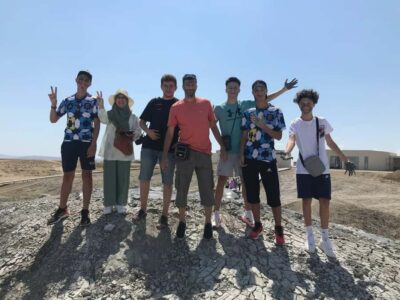
Gobustan, Mud Volcano, Fire Mount, Temple Lunch Entry
Read our review →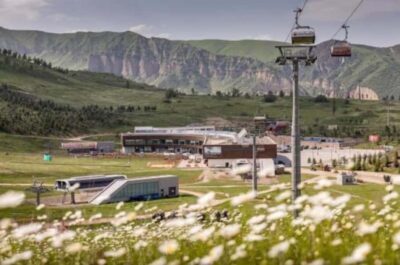
Guba, Shahdag, Laza & Lunch w/ Free City & Night Tour
Read our review →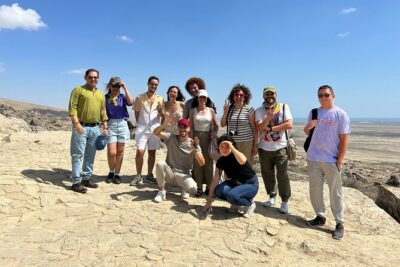
BEST Gobustan, Volcanoes & Absheron Fire Tour (Group or Private)
Read our review →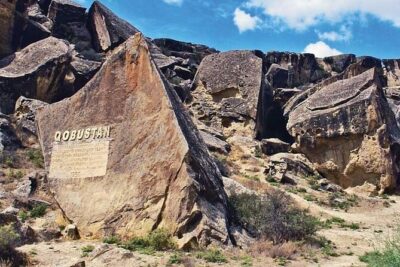
Candy Cane, Guba, Khinaliq village with Homemade Lunch
Read our review →