
Reviewed · BAKU TOURS
Baku’s Ancient Heart
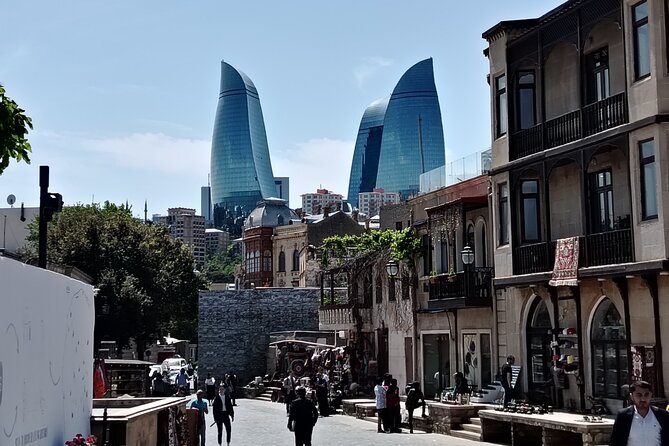
Baku’s Old City packs centuries of trade, faith, power, and local legend into a compact maze of stone lanes. This walking tour begins at the Maiden Tower, then threads past caravanserais, bathhouses, mosques, musicians’ homes, and the Palace of the Shirvanshahs, all within the UNESCO-listed core.
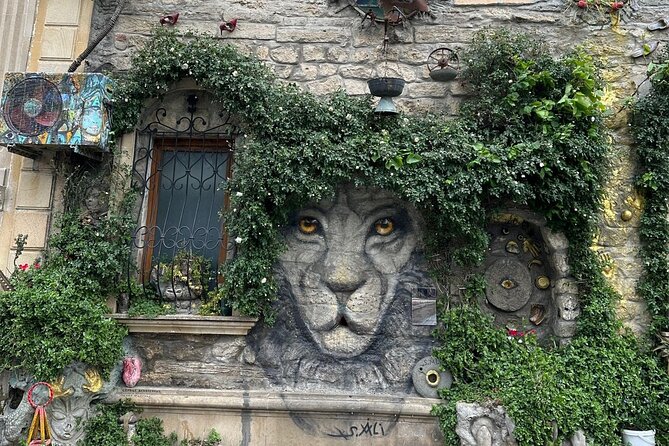
I like the way the route connects famous sights to everyday details, such as the old hammam, a wine shop, and Ali Shamsi’s lion-headed gallery. I also like the guide’s conversational approach. Heydar explains history with humor, adjusts to a family’s pace, and can lead in English or Russian. The main drawback is pace: seventeen stops in about two hours means several are brief exterior looks, and the palace itself is not visited inside.
Key points to know before you book
- The Maiden Tower sets the scene: Learn why Baku’s best-known landmark was built, with optional paid access to its narrow staircase and rooftop views.
- Silk Road traces appear early: The Multani and Bukhara caravanserais show how merchants once used Baku as a place to rest and protect goods.
- The route reaches beyond monuments: You’ll see an old bathhouse, a working hammam, artists’ spaces, music history, wine, and local legends.
- The Shirvanshah Palace is viewed from outside: A full palace visit needs at least another hour and is not part of this walk.
- The group remains fairly small: A maximum of 15 people gives the guide room for questions and family-friendly pacing.
- The price is modest: At $25 per person, the tour offers a useful orientation, but optional admissions, tastings, and tips cost extra.
Starting at the Maiden Tower
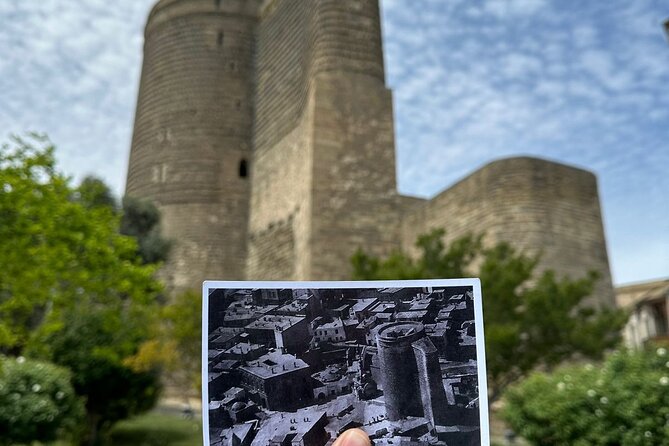
The meeting point is at 16 Asəf Zeynallı Street, inside Baku’s Old City. The tour begins at the right place: the Maiden Tower is the landmark that helps you understand both the city’s shape and its legends.
Heydar uses the tower to tackle the questions you will naturally have. When was it built? What was it for? Why does it have that name? The answers are tied to different periods and stories, so this is a good opening stop for getting your bearings before the lanes begin to twist.
The tower visit is free to view from outside. You can also choose to buy a separate ticket and climb to the top. Be ready for narrow stairs and no elevator. If you dislike tight stairways, have mobility limits, or are simply saving your energy for the rest of the walk, the exterior explanation may be enough.
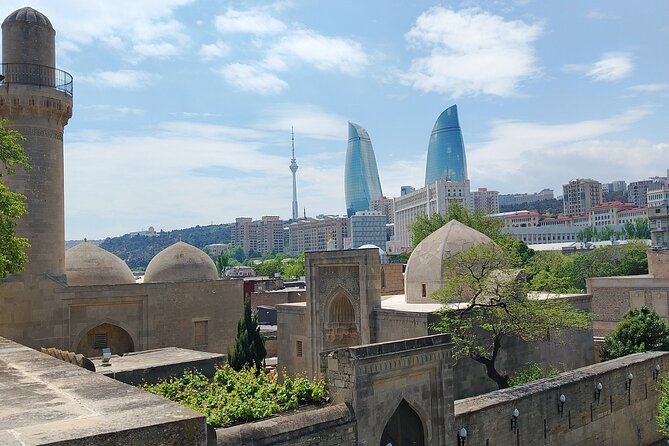
From the top, you can see across the Old City toward newer Baku and the Caspian Sea. That contrast is one of the pleasures of the tour: old stone walls and modern city forms share the same view.
More days with local hosts:
- Baku Old Town Walking Tour with a Local
★ 5.0 · 64 reviews - Learn with LOCAL
★ 4.8 · 13 reviews - Become a Baku resident in a day
★ 4.8 · 12 reviews
Market stones and Silk Road caravanserais
A short walk brings you to the open-air museum beside the Maiden Tower and the remains of the Saint Bartholomew chapel. More than 50 grave stones were found here. Local tradition also connects the area with an old marketplace used by merchants moving along the Silk Road.
This is a quick stop, listed at about five minutes, so do not expect a full museum visit. Its value is in the setting. You are standing in a place where trade, religion, burial, and daily city life overlapped.
The Multani Caravansarai follows nearby. Merchants from Multan, a city in present-day Pakistan, used this small fortified lodging when the Silk Road passed in front of the Maiden Tower. Caravanserais were practical places, offering shelter for people and protection for valuable goods.
The Bukhara Caravansarai adds another layer. Its name points to Bukhara in modern Uzbekistan, and its story is linked to the period shaped by Tatar-Mongol forces and the campaigns of Timur, also known as Tamerlane. These two courtyards are not grand palaces, but that is exactly why I find them useful. They help you picture Baku as a working trade stop rather than only a royal capital.
The route gives each caravansarai about five minutes. You will hear the story and see the structure, but you will not have long to study every corner. Ask questions as you go, since Heydar’s style is built around conversation rather than a long speech delivered without pause.
Legends, khans, and the old entrance
The Monument to Lovers and Cats is one of the route’s more playful stops. It is surrounded by local stories, some sad and others linked to love. Heydar uses the monument to bring in folklore, which gives the walk a lighter turn after the more formal historical sites.
Next comes the House of the Baku Khans. From 1747 until 1806, Bakuvian khans lived in this fascinating building, before Azerbaijan was annexed by the Russian Empire. The Old City was once a city within the city, governed by its own rulers. Seeing the house helps you understand that Baku was not simply a collection of anonymous old buildings. It had its own political center and ruling families.
At the Old City’s main entrance, you can visit the Yeraltı hamam, an underground bathhouse from the seventeenth century. It is next to the Double Gates, on the left as you face the entrance. This is another short look rather than a long spa visit, but it gives you a feel for how important bathhouses were to urban life.
Baku’s old baths also connect the city to present-day custom. Several historic bathhouses remain in the Old City, but only one is still functioning as a hammam. It has operated as a bathhouse from the eighteenth century to the present. The route identifies the site, though a bathing session is not part of the $25 walking fee.
Art, poetry, and a city of many faiths
The Ali Shamsi Workshop is easy to miss if you are walking alone. People often gather beside a wall marked by a large lion’s head, which signals the artist’s gallery. It is a quick visual surprise in the middle of the stone lanes.
You then reach the exterior of the Palace of the Shirvanshahs, the great royal complex of medieval Shirvan. The palace was built between the twelfth and fifteenth centuries, damaged several times, and restored in 2004. The Shirvanshah rulers lived here with their servants.
The palace and Maiden Tower became part of the UNESCO World Heritage listing in 2000, along with Baku’s Old City. That recognition matters, but the palace’s scale matters more for planning your day. The complex covers more than a hectare, and a proper visit needs at least another hour. This tour does not take you inside.
That limitation is easy to miss, so plan carefully. If the palace is a major reason for coming to Baku, return later with extra time and pay for a separate admission if required. If you mainly want an introduction to the Old City, the exterior stop gives you useful context without turning a two-hour walk into a half-day visit.
The Baku Museum of Miniature Books is a very different kind of sight. Inside, books can be as small as a fingernail, and some are even smaller. The collection entered the Guinness World Records in 2014 as the largest collection of miniature books in the world. It also includes a seventeenth-century miniature Holy Koran.
This museum is especially good for readers who want something unusual between major monuments. It is not a grand architectural stop, and the time allowed is short, but the tiny books create a memorable change of pace.
The Vahid Monument honors Aliagha Vahid, an Azerbaijani poet known for satirical poetry. The statue is called the Tree of Life, with the beginning and end of life shown through the poet’s head. This is a compact stop, yet it opens a door to Azerbaijani literature and public memory.
A few more Baku half-days to weigh up
- Baku: Gobustan, Mud Volcano, Fire Mount, Temple Lunch Entry
★ 4.9 · 3,246 reviews - Baku: Guba, Shahdag, Laza & Lunch w/ Free City & Night Tour
★ 4.8 · 1,455 reviews - BEST Gobustan, Volcanoes & Absheron Fire Tour (Group or Private)
★ 5.0 · 1,254 reviews - Gobustan and Absheron tour (All inclusive)
★ 5.0 · 1,014 reviews
Soviet film, local wine, and Baku jazz
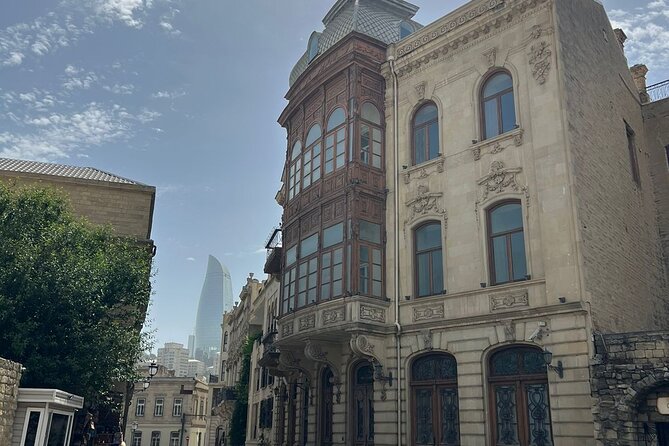
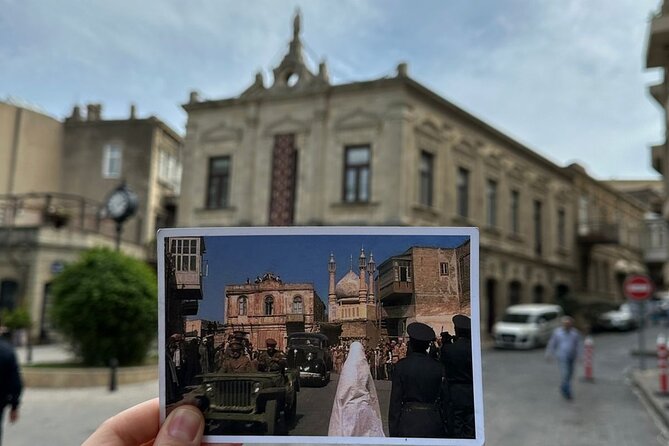
The Aptek Museum and Bathhouse stop has a strong connection to Soviet film. Russian-speaking visitors may recognize the Old City location used for a popular scene in the 1968 comedy film Brilliant Hand. The phrase associated with that scene has made the spot a small piece of local movie history.
The route also points out the city’s historic bathhouses. These are not just old walls. They show how public spaces once served social, practical, and cultural roles.
At Absheron Sharab, you can stop at a wine shop and, if you wish, taste pomegranate wine. Azerbaijan is known for this style of wine, but tasting is optional and not included in the walking-tour price. If you are interested, ask about the cost before ordering.
The House Museum of Vagif Mustafazadeh brings the tour into modern music. Mustafazadeh had a short life but became known around the world for combining Azerbaijani mugam, a traditional musical form, with American jazz. The stop is a good reminder that Baku’s culture is not locked in the medieval past. The city’s creative life continues through music, art, and film.
The city’s oldest mosques
The religious sights arrive in a cluster, and the guide’s explanations help separate them.
The Muhammad Mosque is described as the Old City’s oldest mosque, built in the eleventh century. It may have replaced an ancient Zoroastrian fire temple, since traces of fire and spiritual objects were found beneath the prayer hall. Locals also call it the Broken Tower. The reason for that nickname is one of the stories Heydar explains on site.
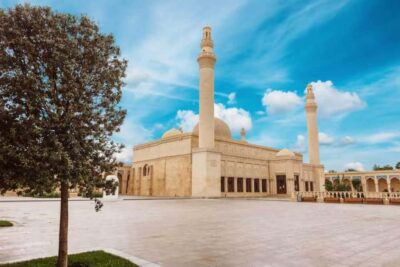
The Juma Mosque is the main and largest mosque in the Old City. It was built in the twelfth century and restored at the start of the twentieth century. It is also identified as the only mosque in the Old City where women are allowed to pray inside.
The Lezgi Mosque dates from the twelfth century and was built by Ibrahim Ashur, who was better known as Lezgian. It is under reconstruction, so you may not be able to see it in the same way as the other mosques. Even so, it helps show how many religious buildings once fit into this small walled area.
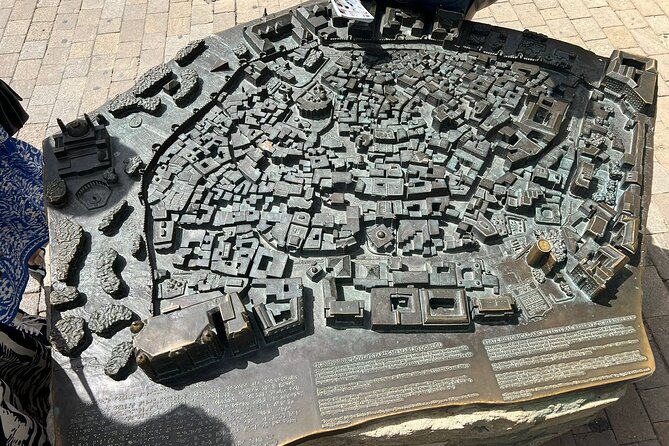
The Old City once had 28 mosques. Only some remain visible or open today. That number gives you a better sense of how densely populated and active this quarter was in earlier centuries.
Treat these stops as places of worship, not only photo opportunities. The route is designed for sightseeing, but modest clothing and respectful behavior are sensible. Ask Heydar about access before entering any religious building, since conditions can change.
How the two-hour format really works
The published duration is approximately two hours, with the route assigning about 15 minutes to the Maiden Tower and around five minutes to most other stops. That tells you what kind of experience this is: a brisk orientation walk with many short explanations, not a slow museum tour.
One account describes a tour lasting about four hours, including lunch at a recommended Old City restaurant. That suggests the pace can expand when questions, meals, or extra conversation enter the day. I would not assume lunch is included, though. The listed price covers only the walking tour itself.
This flexibility is useful for families. Heydar has been attentive to different walking speeds and has made the tour feel like a conversation rather than a lecture. Teenagers can follow the stories more easily than they might follow a formal history talk, especially with the cats-and-lovers monument, film location, miniature books, and music museum mixed into the route.
The maximum group size is 15. That is not a private tour, but it is small enough for questions to be practical. The strongest praise for Heydar focuses on his clear explanations, patience, humor, and ability to connect ancient history with current culture.
The tour is offered with a licensed guide in English or Russian. A mobile ticket is provided, and the experience ends back at the meeting point. It is near public transportation, and service animals are allowed. Most people can participate, but the Maiden Tower stairs deserve special attention.
What the $25 price includes
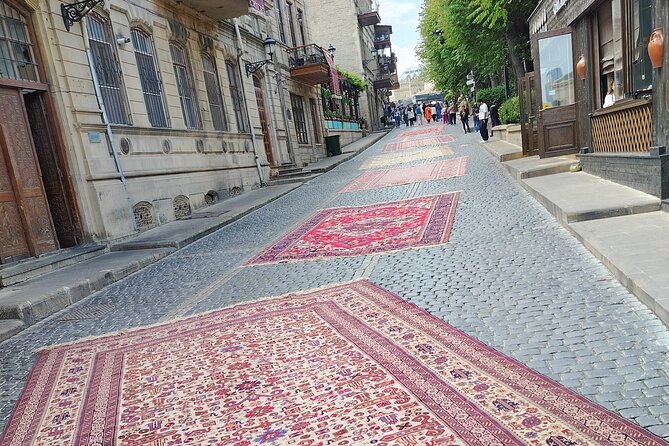
At $25 per person, this is a reasonably priced way to get an organized introduction to Baku’s Old City. The route covers a lot: major landmarks, lesser-known buildings, religious sites, art, music, trade, and local stories. You also get a licensed English- or Russian-speaking guide rather than simply following a map.
The price does not include tower admission, palace entry, wine tasting, meals, or tips. Since the palace interior needs at least another hour, budget extra time and possibly another admission if you want to explore it properly.
I see the best value here in the interpretation. The Old City is compact, but its stones do not explain themselves. The guide links a caravanserai to the Silk Road, a mosque to earlier religious layers, a bathhouse to living tradition, and a jazz musician to modern Azerbaijani identity.
You should also remember that $25 buys an overview. Five minutes at a site will not satisfy someone who wants detailed architecture, extended photography, or a museum collection in depth. For that kind of visit, use the walk as an introduction and return independently.
Who will get the most from this walk
I would choose this tour if you are visiting Baku for the first time and want the Old City to make sense quickly. It suits people who enjoy stories, local legends, and cultural connections as much as formal dates and architectural labels.
Families are a good match, especially with Heydar’s flexible pace. The route also works well for anyone with only a short amount of time in Baku, since it returns to the same meeting point and covers many central sights on foot.
History-minded visitors should book it if they want a broad picture of Baku’s role as a crossroads of civilizations. You may prefer a slower, site-by-site visit if the Shirvanshah Palace or Maiden Tower interior is your main goal.
Wear comfortable walking shoes. The Old City’s narrow cobblestone lanes and the tower’s tight stairs require more care than a flat city-center stroll. The tour needs good weather, and a minimum number of participants is required. If the weather is poor or the minimum is not met, you can choose another date or receive a full refund.
Free cancellation is available up to 24 hours before the start time. Inside that window, the amount paid is not refunded, and changes are not accepted.
Should you book Baku’s Ancient Heart?
Book it for the stories and connections, not for long interior visits. Heydar’s warm, humorous style gives the Old City a human scale, and the route moves beyond the standard pair of Maiden Tower and Shirvanshah Palace to include caravanserais, hammams, miniature books, film, wine, poetry, jazz, and several mosques.
The key decision is pace. If you want a well-priced first look at Baku’s oldest quarter, $25 is good value. If you want to linger inside every major monument, book extra time for the palace and tower, then use this walk as your orientation.
FAQ
How long does the Old City tour last?
The advertised duration is approximately two hours. The route can take longer if the group asks many questions or adds time for lunch and conversation.
What is the price per person?
The price is $25 per person.
What does the price include?
It includes the walking tour and a licensed English- or Russian-speaking guide. Tips and optional activities are not included.
Does the tour enter the Palace of the Shirvanshahs?
No. The tour views the palace from outside. A full visit requires at least another hour and is not part of this experience.
Can I go to the top of the Maiden Tower?
Yes, if you choose to buy an admission ticket. The tower has narrow stairs and no elevator.
Where does the tour start and finish?
It starts at 16 Asəf Zeynallı Street in Baku’s Old City and ends back at the meeting point.
How many people can join the tour?
The maximum group size is 15 people.
Just added around Baku
- Lunch included Qobustan, Mud Vulcano, Ateshgah Temple & Yanardag Fire Mountain★ 4.5 · 3 reviews
- Guba and Shahdag City Tour★ 5.0 · 3 reviews
- Baku’s Ancient Heart★ 5.0 · 3 reviews
- Baku: Secret Tour with Surprise Activity★ 5.0 · 3 reviews
- Baku: Old City Guided Walking Tour★ 4.6 · 3 reviews
- Majestic Journey to Qobustan and Absheron★ 4.5 · 3 reviews
- Baku night tour★ 5.0 · 3 reviews
- Lahij – village of masters★ 4.5 · 3 reviews
Baku Tours, compared.
Gobustan, Mud Volcano, Fire Mount, Temple Lunch Entry
Read our review →
Guba, Shahdag, Laza & Lunch w/ Free City & Night Tour
Read our review →
BEST Gobustan, Volcanoes & Absheron Fire Tour (Group or Private)
Read our review →
Candy Cane, Guba, Khinaliq village with Homemade Lunch
Read our review →
Guba & Sahdag Tour Lunch included and Laza Waterfall
Read our review →Browse the lists this tour appears in