
Reviewed · BAKU NIGHT TOURS
Baku City Sights Guided Night Walking Tour with Funicular
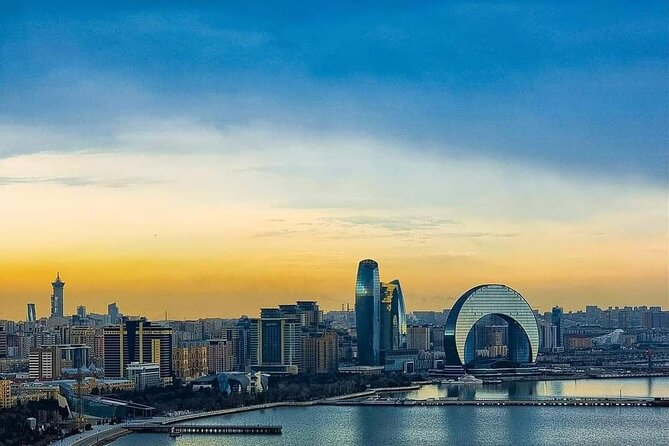
Baku takes on a different character after dark. The Flame Towers glow above the city, while trees, fountains, stone buildings, and seaside paths pick up carefully placed lights. This tour links those evening sights in one compact route, ending with a funicular ride to Highland Park and broad views over the bay.
I like two things right away: the small maximum group of 10, which should make street crossings and questions easier, and the funicular ticket included in the $15.99 price. The walk also brings together old streets, oil-era grand buildings, modern towers, and the Caspian waterfront instead of focusing on just one part of Baku.
The main consideration is pace. The route lists many stops in about two and a half hours, so most visits are brief photo and explanation stops rather than long visits inside attractions. You should also expect a fair amount of walking and keep the weather in mind.
Key points to know before you go
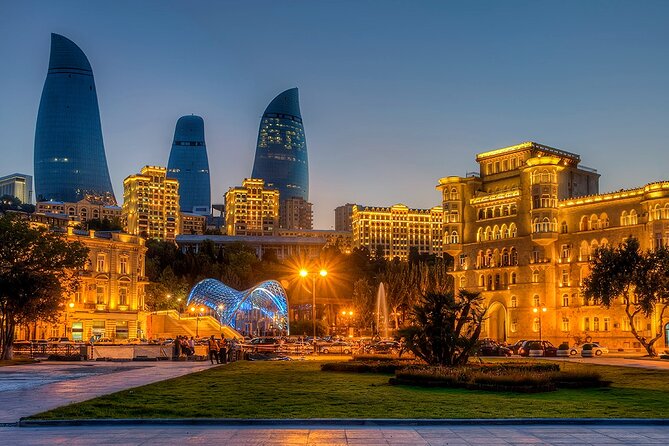
- Night lighting is the main event: See the Flame Towers, illuminated parks, fountains, buildings, and waterfront paths after sunset.
- The funicular is included: Ride up to Highland Park rather than making the full uphill climb on foot.
- A compact introduction to Baku: The route covers the Old City edge, government buildings, oil-era landmarks, the Boulevard, and modern architecture.
- Groups are limited to 10: This is a useful size for a walking tour where you may want to ask questions.
- Guide Miri has led the experience: The guide may vary, but Miri is specifically associated with an informative English-language outing.
- You finish near central Baku sights: The walk concludes around Nizami Street, with the route returning toward the Icherisheher area.
Why Baku is especially good after sunset
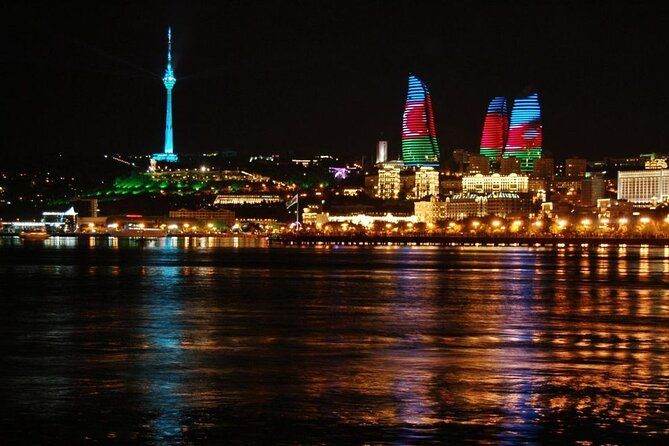
Baku is at its most theatrical at night. The city’s modern buildings use light as part of their design, but the effect is not limited to the famous Flame Towers. Parks, trees, fountains, walls, and broad public spaces are lit along the way.
That makes this a useful first-night activity. You can get your bearings without committing to a long museum visit, and you will see several districts in a single outing. The guide adds context to places that can otherwise look like a string of handsome buildings and well-lit plazas.
The tour begins at Icherisheher Metro Station, beside Baku’s historic core. The first few minutes are used to explain the city’s transport network and set up the route. That may sound like a small detail, but it helps you understand how the Old City, waterfront, and upper parks fit together.
The meeting point is close to public transportation, and the activity starts at 7 pm. Since the exact sunset time changes during the year, the first part may take place in fading light while later stops are fully illuminated.
More Baku after dark:
- Baku: Guba, Shahdag, Laza & Lunch w/ Free City & Night Tour
★ 4.8 · 1,455 reviews - Baku Night tour
★ 5.0 · 215 reviews - Baku Guided Night Tour
★ 4.8 · 171 reviews
From Icherisheher Station to Philarmonia Garden
The first proper stop is Philarmonia Garden, a leafy space near the Old City. The guide explains how the garden began, how its name developed, and the stories connected with it.
This is a short five-minute stop, so you should think of it as an orientation point rather than a garden visit. It works well early in the route because it introduces Baku’s habit of placing formal public spaces beside older stone architecture.
You then pass the National Art Museum of Azerbaijan and the Executive Office of the President. The museum itself is not entered, but the building and nearby government offices give you a look at Baku’s institutional center.
The emphasis here is on architecture and public life. If you enjoy learning how a city presents its cultural and political identity through buildings, you will get useful background. If your priority is art, allow time to return to the museum independently, since this tour does not include an indoor visit.
Clock Tower and the oil story at Azneft Square
The Clock Tower offers a lighter moment. Its appeal is partly visual, and the stop may include live piano music in the surrounding setting. At only about five minutes, it is best treated as a quick pause for photographs and atmosphere.
Azneft Square provides more historical context. Baku’s growth was tied closely to oil, and the square is used to explain that connection. You also see part of the Formula 1 route and the Four Seasons Hotel, which adds a modern luxury note to the older oil-era story.
I like this pairing because it shows two sides of the city in quick succession. One stop is small and charming, while the next points toward the wealth and international attention that oil brought to Baku.
The short timing does mean the explanations may stay at overview level. You will not get a full account of Azerbaijan’s oil industry, but you will understand why Baku developed such a striking mix of grand stone buildings, broad avenues, and ambitious newer projects.
Walking the Boulevard to Mini Venice
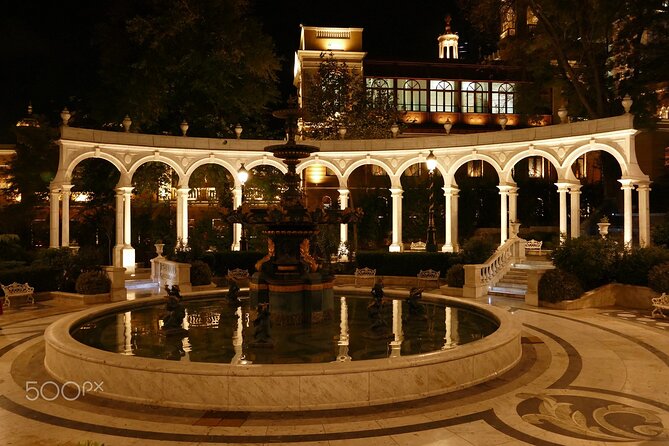
Baku Boulevard is one of the tour’s most enjoyable stretches. The promenade follows the Caspian shore, and the route explains how it changed over time. You get a chance to pause for photographs and take in the open waterfront.
The Boulevard is also where the tour feels least like a standard list of monuments. You can watch the city move around you, with public spaces, water, illuminated buildings, and wide paths creating a more relaxed break from the formal squares.
The stop lasts about 10 minutes, though the route includes additional waterfront sights afterward. Wear shoes that can handle steady walking, since the full experience keeps moving rather than settling in one place.
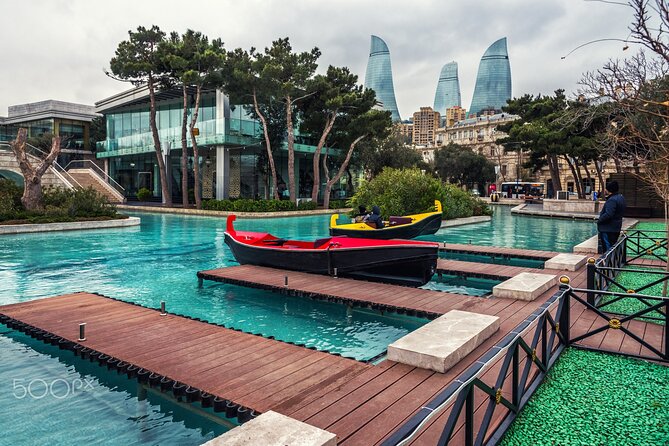
Mini Venice is a deliberately theatrical attraction, built around canals and small waterways inspired by Venice. It is not old Venice, and you should not expect an authentic Italian neighborhood. Its value here is visual: the illuminated water and decorative setting add another texture to the night walk.
The guide explains why the attraction was created and how it fits Baku’s interest in borrowing and reshaping international design ideas. Some people will find it charming, while others may see it as a playful imitation. Either way, it makes a memorable photo stop.
More walking tours in Baku:
- Baku: Stunning Walking Tour of Historical and Modern City
★ 4.9 · 270 reviews - Baku Oil Heritage & Old Town Walking Tour
★ 5.0 · 232 reviews - Baku Walking Tour (Old City)
★ 5.0 · 127 reviews - Baku Old Town Walking Tour with a Local
★ 5.0 · 64 reviews
The Carpet Museum, Mugam Centre, and Deniz Mall
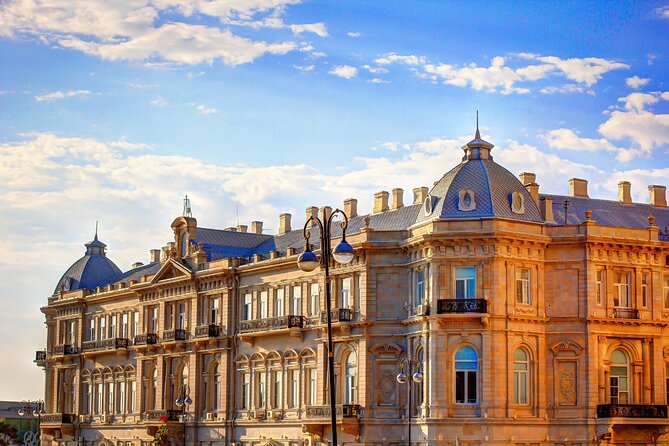
The Azerbaijan National Carpet Museum is one of Baku’s most recognizable modern buildings. Its curved form resembles a rolled carpet, linking the structure itself to one of the country’s best-known art traditions.
You do not enter the museum on this experience, but the exterior is worth seeing after dark. The nearby International Mugam Centre adds a different cultural note. Mugam is a traditional form of Azerbaijani music, and the stop gives the guide a chance to connect architecture with music and craft.
Deniz Mall brings the route back to present-day Baku. Its polished design and commercial setting show the city’s newer waterfront development. Together, these three sights make a useful visual sequence: traditional carpet work, classical music, and modern retail architecture.
The stop is brief, so you will want to return to the Carpet Museum separately if you want to see the collection. The tour is better for understanding how these buildings relate to the city than for spending time inside any one of them.
Riding the funicular to Highland Park
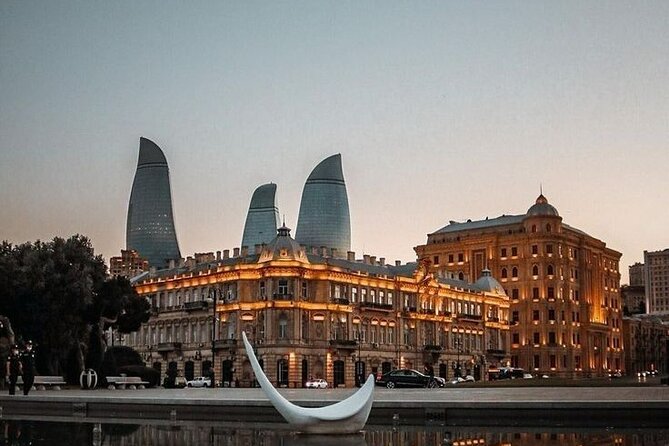
The funicular is the practical centerpiece of the evening. Instead of walking the entire uphill route to Highland Park, you ride the funicular train, with the ticket included in the price.
The journey is short, but it changes your view of Baku. As you climb, the city begins to spread below you, and the height gives the evening its clearest sense of scale. This is one reason the tour offers better value than a simple flat walk along the waterfront.
At Highland Park, you get time for photographs, a guided visit, and a pause to look across the Bay of Baku. The terraces are landscaped, and the nighttime city view is the kind of sight that can define a short stay in Baku.
Keep in mind that the schedule allows roughly 10 minutes for the funicular portion and about 10 minutes at Highland Park. That is enough for an introduction and photographs, but not for a slow, extended visit.
Flame Towers and the city from above
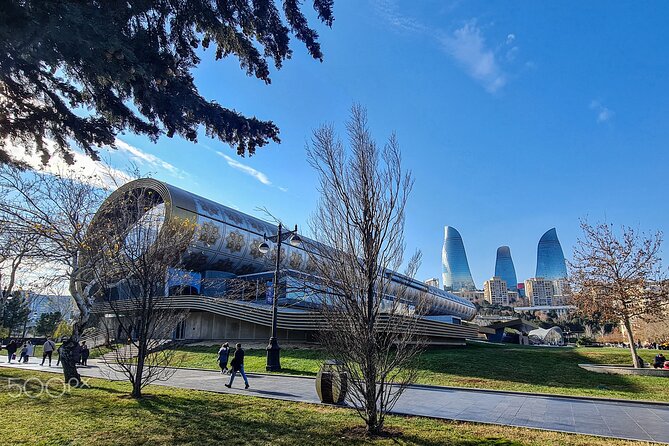
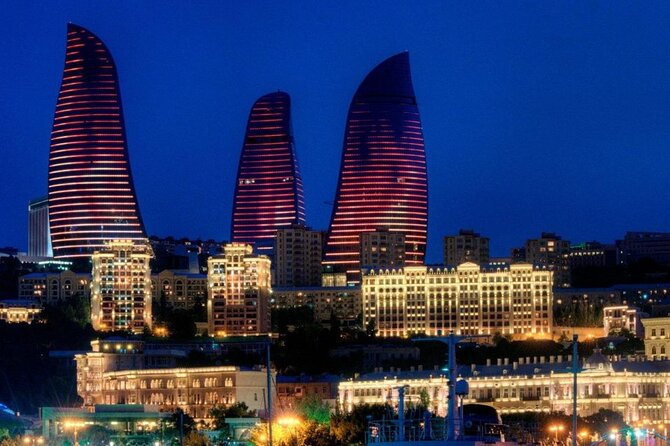
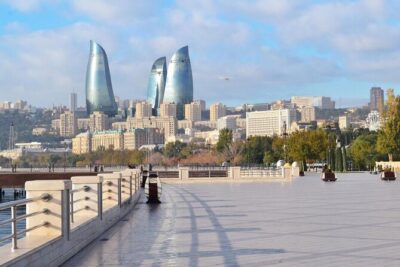
The Flame Towers are the visual high point of the tour. Their three curved forms represent residential, office, and hotel uses, and their changing illumination gives Baku its most famous nighttime image.
From Highland Park, you can photograph the towers with the city below. Depending on the viewing angle and light display, the towers can look very different from the waterfront view earlier in the evening.
I would save your best camera battery for this section. You will also want a little patience, since the group may pause while everyone finds a good angle. The guide can explain how the towers fit into Baku’s modern identity, but the view itself does much of the work.
This stop is a good example of the tour’s overall balance. You are not only looking at a futuristic building. You are seeing it from a memorial park above a city shaped by oil, empire, independence, and the Caspian shore.
Martyrs’ Lane, the Turkish Cemetery, and the Eternal Fire
The mood changes at the Alley of Martyrs. This is a memorial area dedicated to people who died in Azerbaijan’s struggle for independence, including victims of the events of January 20, 1990, and those connected with the Garabagh War.
The route includes the Mosque of the Martyrs, the Baku Turkish Cemetery, Martyrs’ Lane, and the Eternal Fire Monument. The guide explains the links between Azerbaijan and Turkey, the meaning of the memorials, and the place of religious tolerance in the country’s public life.
This is not a section to rush through with loud conversation or constant photographs. The memorial setting asks for a respectful pause. You will get a more serious picture of Azerbaijan here, far removed from the polished hotels and dramatic towers.
The Eternal Fire Monument honors those killed during Black January. It is a small but important part of the tour because it connects the city’s bright night displays with the difficult events behind modern Azerbaijani independence.
The return through central Baku
After Highland Park and the memorial area, the route returns on foot toward the Icherisheher area and central streets. The supplied timing indicates a 10 to 15-minute walk back toward the metro station, with several central landmarks included along the way.
These stops include Bulaq Spring, known for its zodiac sculptures, and the Baku City Executive Power building. The spring is a quick cultural detail, while the government building offers another look at the city’s changing architectural identity.
You also pass Azerbaijan State Economic University and the Monument of Independence. The university represents the country’s academic and economic ambitions, while the monument focuses on sovereignty and self-determination.
The former Taghiyev School for Girls, now the Institute of Manuscripts of Azerbaijan, adds a particularly worthwhile detail. Its past as a school for girls connects the route to education and social change, while its current role points to the preservation of Azerbaijani literature.
Ismailiyya Palace is one of the more impressive buildings on this part of the walk. Its ornate design reflects the wealth and cultural ambition of an earlier Baku. The Nizami Museum of Azerbaijani Literature then brings the tour back to the country’s literary tradition.
The final area is Nizami Street, a central shopping and café thoroughfare. It is a sensible ending point because you can continue your evening on your own, though the activity is listed as returning to the meeting point. The route description includes both the walk back toward Icherisheher and Nizami Street, so ask the guide where the group will finish on the night.
What the $15.99 price really buys you
At $15.99 per person, this is inexpensive for a guided city walk that includes a funicular ticket. You are paying mainly for the guide’s route planning, explanations, and the convenience of connecting sights that are spread across different levels of the city.
The bottled water is modest but useful, especially in warmer weather. The key inclusion is the funicular ride, since that saves you a separate fare and avoids one of the steeper parts of the route.
Value depends on your expectations. If you want museum entry, long stops, or a private guide, this is not that kind of experience. If you want a broad first look at Baku at night, it offers a lot for the money.
The group limit of 10 is another positive. A small group should make it easier to hear the guide and stay together, although the experience can still feel busy because there are many stops in a short time.
Who will enjoy this walk most
I would choose this tour for a first evening in Baku, especially if you want to see the city’s best-known night views before deciding where to return during daylight.
It suits you if you enjoy:
- City walks with frequent photo stops
- Architecture and public spaces
- A mix of modern landmarks and memorial sites
- Short historical explanations rather than long lectures
- Small-group touring
- Views from above and along the waterfront
It may be less suitable if you have limited walking ability, want to spend time inside museums, or prefer a slow pace. Most people can participate, and service animals are allowed, but the route still involves walking through parks, streets, waterfront areas, and uphill districts.
Bring comfortable shoes and a phone or camera with enough charge. A light layer may also help, since the waterfront and Highland Park can feel different from sheltered city streets.
Booking, weather, and practical details
The meeting point is Icherisheher Metro Station in Baku, with a 7 pm start. Confirmation arrives when you book, and the activity is offered with a mobile ticket.
The tour requires good weather. If poor weather cancels it, you can choose another date or receive a full refund. You can cancel for a full refund up to 24 hours before the start time. Cancellations or changes made inside that period are not refunded or accepted.
The guide may vary, but Miri is one named guide connected with the experience. An English-speaking group format is available, and the small size should help if you want to ask about the buildings or memorials along the way.
The route is listed at about two hours and 30 minutes. Because the schedule includes more than 20 points of interest, you should expect a moving overview rather than a series of full visits. That is not a flaw if you use the tour as a city introduction, but it matters if you want detailed time at each site.
Should you book the Baku night walk?
I would book it if you have one or two nights in Baku and want an efficient introduction to the city’s illuminated landmarks. The combination of Flame Towers, Highland Park, Martyrs’ Lane, the Boulevard, and the funicular gives the evening real variety.
The strongest reasons to go are the low price, included funicular ride, compact group size, and the chance to see Baku in its most dramatic light. The biggest tradeoff is the quick pace. You will see many places, but you will need to return on your own for museums, longer architectural visits, or a quieter look at the memorials.
Choose this as a first orientation, not as your only experience of Baku. It gives you a useful map of the city and several excellent night views, then leaves you with a clear sense of where to spend more time the next day.
FAQ
Where does the Baku night walking tour begin?
The tour begins at Icherisheher Metro Station in Baku, Azerbaijan.
What time does the tour start?
The listed start time is 7 pm.
How long does the experience last?
The tour lasts approximately two hours and 30 minutes.
Is the funicular ticket included?
Yes. The funicular ticket to Highland Park is included.
What sights are included on the route?
The route includes Philarmonia Garden, the National Art Museum area, Azneft Square, Baku Boulevard, Mini Venice, the Carpet Museum, the International Mugam Centre, Deniz Mall, the Flame Towers, Highland Park, Martyrs’ Lane, the Turkish Cemetery, the Eternal Fire Monument, Ismailiyya Palace, the Nizami Museum, and Nizami Street.
Is bottled water provided?
A 0.5-liter bottle of still water is included upon request.
What is the cancellation policy?
You can cancel at least 24 hours before the start time for a full refund. Cancellations or changes made less than 24 hours before the start are not accepted, and the amount paid is not refunded. If poor weather causes the operator to cancel, you can choose another date or receive a full refund.
More Evening Experiences in Baku
- Old and Modern Baku Tour ( Day & Night Time)
★ 5.0 · 400 reviews - Gabala-Sheki Tour 2 Days, 1 Night (All Inclusive)
★ 5.0 · 88 reviews - Baku: Historic and Modern Baku Tour ( Day & NIght Tour)
★ 4.5 · 60 reviews - Baku Lights: the Night Tour illuminated by Baku lights
★ 4.5 · 44 reviews
Just added around Baku
- Guba and Shahdag City Tour★ 5.0 · 3 reviews
- Lunch included Qobustan, Mud Vulcano, Ateshgah Temple & Yanardag Fire Mountain★ 4.5 · 3 reviews
- Baku’s Ancient Heart★ 5.0 · 3 reviews
- Baku: Secret Tour with Surprise Activity★ 5.0 · 3 reviews
- Baku: Old City Guided Walking Tour★ 4.6 · 3 reviews
- Majestic Journey to Qobustan and Absheron★ 4.5 · 3 reviews
- Lahij – village of masters★ 4.5 · 3 reviews
- Baku night tour★ 5.0 · 3 reviews
Baku Night Tours, compared.
Guba, Shahdag, Laza & Lunch w/ Free City & Night Tour
Read our review →
Historic and Modern Baku Tour ( Day & NIght Tour)
Read our review →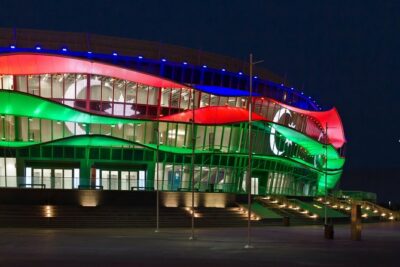
Baku Lights: the Night Tour illuminated by Baku lights
Read our review →
Baku Historical and modern tour in 2-3 hours+FREE Night tour
Read our review →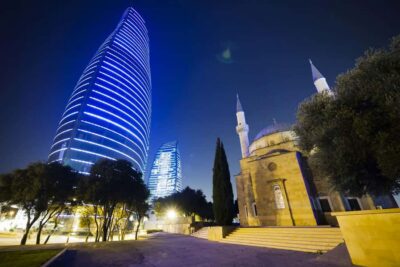
Browse the lists this tour appears in